
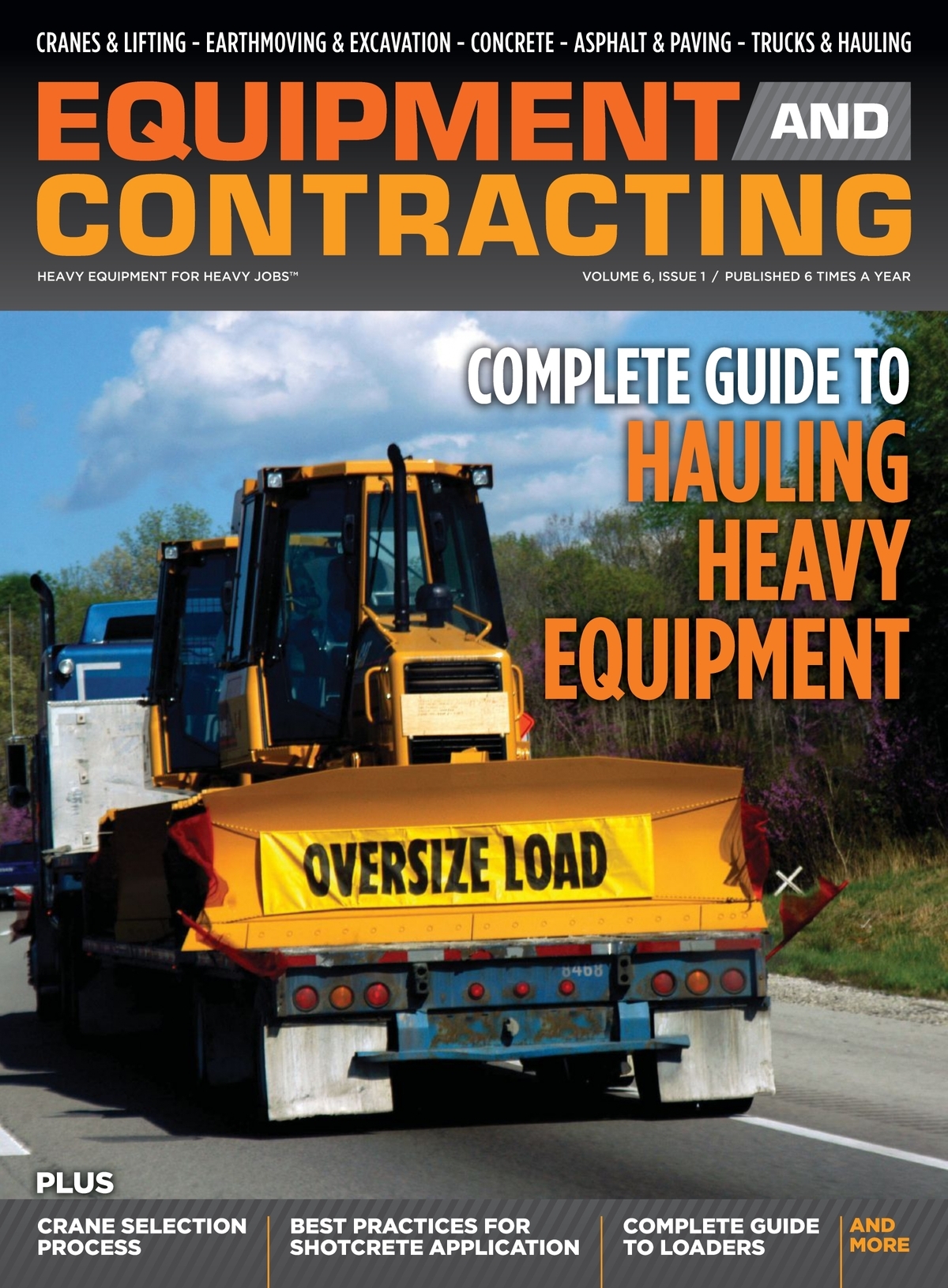




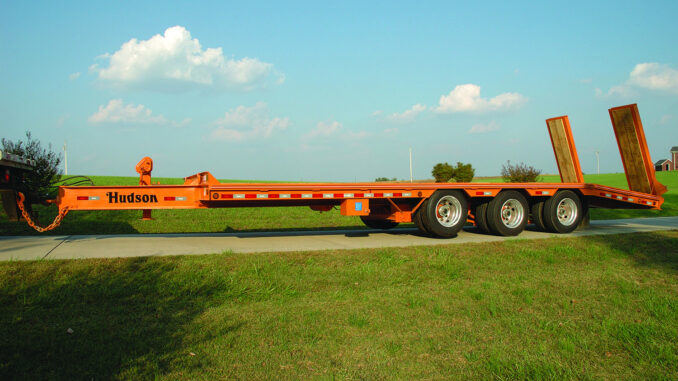
Half-ton and three-quarter-ton pickups move a huge share of compact equipment between yards and jobsites. The problem is that many crews size the haul from the machine’s brochure weight alone—and leave out the trailer, the bucket, the forks, the fuel, and the tools that ride along every day. That gap is where overloaded axles, soft braking, and “it towed fine until it didn’t” moments start.
This guide walks through how to match a pickup’s real tow and payload numbers to the load you actually haul, not the load you wish you hauled.
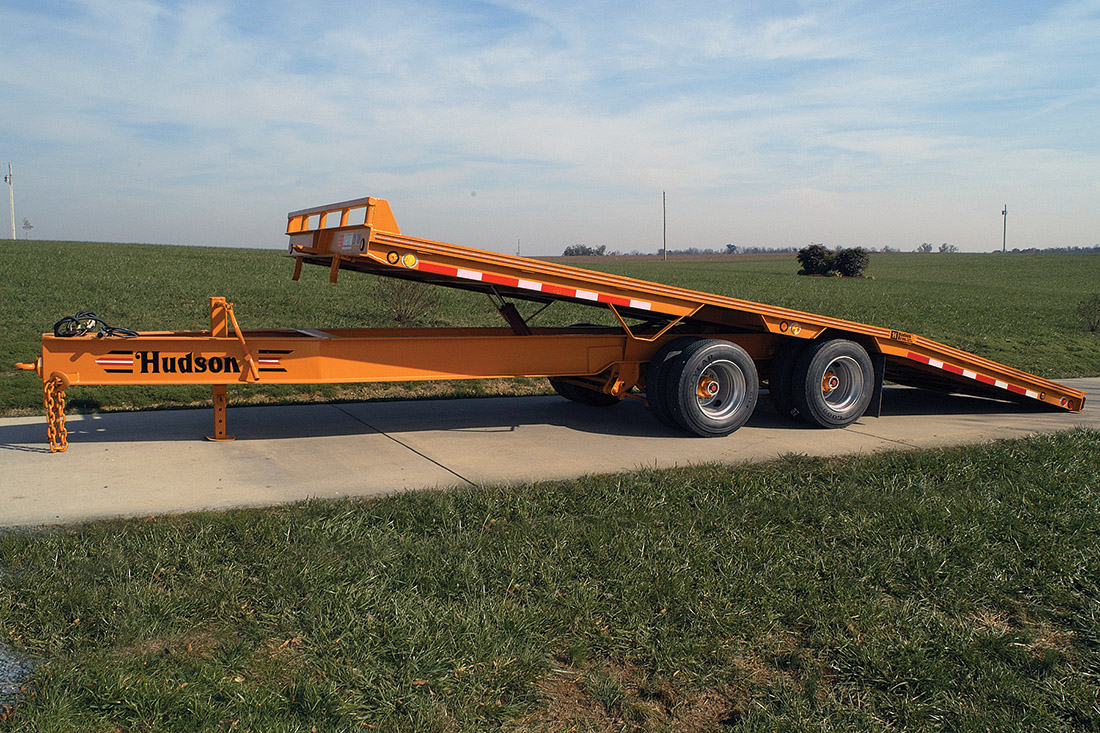
Tow Rating vs Payload: Two Different Limits
Manufacturers publish a maximum trailer weight (tow rating) and a maximum cargo weight in the truck itself (payload). Both matter, and either one can stop you short.
Tow rating is the heaviest trailer-plus-cargo combination the truck is rated to pull when hitched correctly, with the right axle ratio, cooling package, and hitch. It assumes the truck is not already stuffed with people, toolboxes, and bed cargo that eat into the same chassis capacity.
Payload is everything that rides in or on the truck: passengers, fuel, bed cargo, and—critically—tongue weight from the trailer. A half-ton that “tows 11,000 lbs” on the door sticker can still be over payload with a heavy gooseneck pin weight and a crew cab full of guys.
If either number is exceeded, you are outside the truck’s design envelope even if the other number still looks fine.
Add Up the Real Daily Load
Before you trust a brochure tow number, write down what goes down the road on a normal workday:
- Machine operating weight from the OEM plate or manual (not a sales flyer estimate).
- Attachments on the machine—buckets, forks, grapples, hydraulic breakers. These often add hundreds of pounds and raise the center of gravity.
- Loose gear—spare buckets, plates, chains, fuel cans, coolers, and toolboxes that live on the trailer deck.
- Trailer empty weight (curb / dry weight) from the VIN sticker or manufacturer sheet.
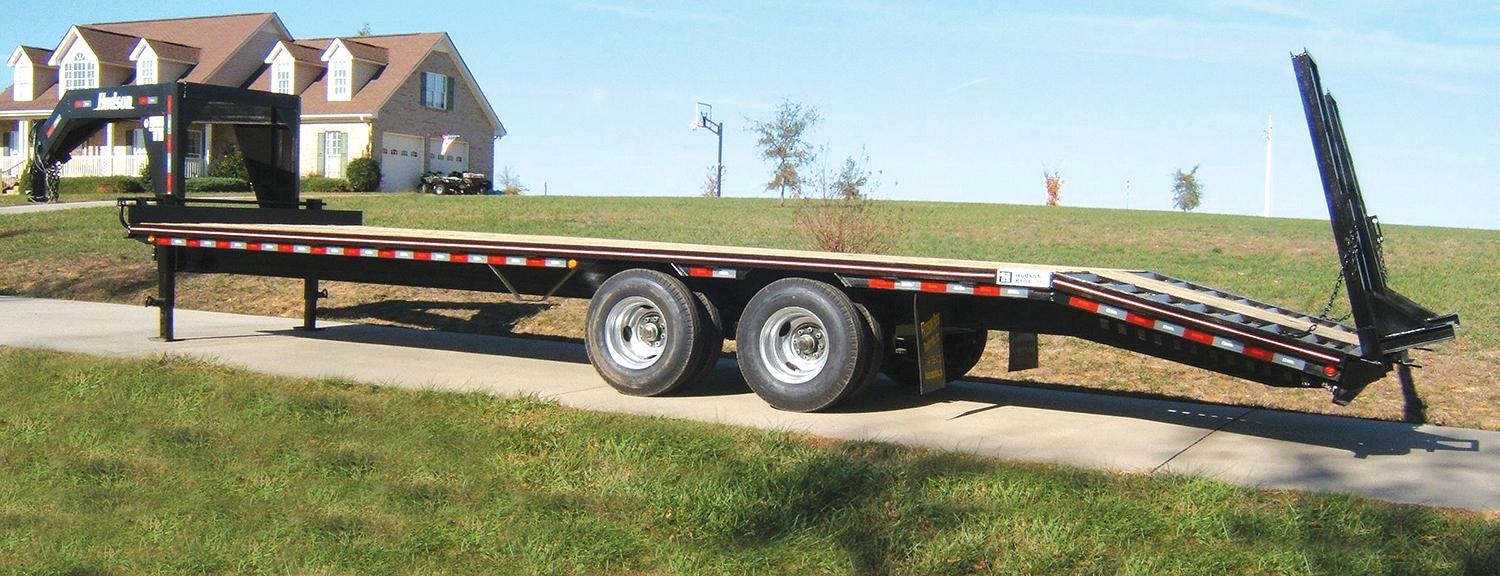
- Tongue or pin weight—typically about 10–15% of trailer-plus-load for bumper-pull setups, and about 15–25% pin weight for gooseneck / fifth-wheel configurations depending on how the load is placed.
Add trailer empty weight + machine + attachments + deck cargo. That total is what you compare to tow rating. Separately, estimate tongue/pin weight and add it to passengers and bed cargo for the payload check.
A common miss: a mid-size skid steer often listed around 6,500–8,000 lbs (small-frame machines can be lighter) can push past 9,000 lbs once you add heavy forks, a grapple, or a breaker and throw another attachment on the deck—especially since operating weight may already include a standard bucket. Pair that with a multi-thousand-pound trailer and a half-ton starts looking optimistic fast.
Half-Ton vs Three-Quarter-Ton in Practice
Half-ton (1500-class) trucks handle lighter compact machines on appropriately rated trailers for short hauls when numbers are honest and tongue weight is managed. They struggle when crews treat “max tow” as a daily target, stack attachments, or run bumper-pull setups that put too much weight on the rear axle.
Three-quarter-ton and one-ton (2500/3500-class) trucks give more payload headroom for tongue weight, passengers, and bed cargo—which is usually the real constraint for equipment haulers, not the headline tow figure. If your day regularly includes a compact track loader plus extras, the heavier truck class is often the safer match even when a half-ton’s tow brochure looks close on paper.
Class is not a substitute for math. A poorly loaded one-ton can still be illegal or unsafe; a carefully loaded half-ton can be fine for the right machine and trailer.
Hitch, Brakes, and Axle Reality Checks
Matching capacity is more than truck vs trailer GVWR.
- Hitch class and receiver rating must meet or exceed tongue weight and trailer weight. A Class III receiver is not a Class V just because the truck is big.
- Trailer brakes (usually electric on equipment trailers) need a working controller in the cab, sized and adjusted for the load. Unbraked or under-braked trailers shrink what you can safely tow far below the door-sticker number.
- Axle ratings and tire load ranges on both truck and trailer set hard ceilings. A trailer with the right GVWR but passenger-car tires, or a truck with under-rated rubber, fails the real-world test.
- Weight distribution / sway control matters on longer bumper-pulls with tall equipment. Gooseneck setups shift more weight into the bed and change the payload math.
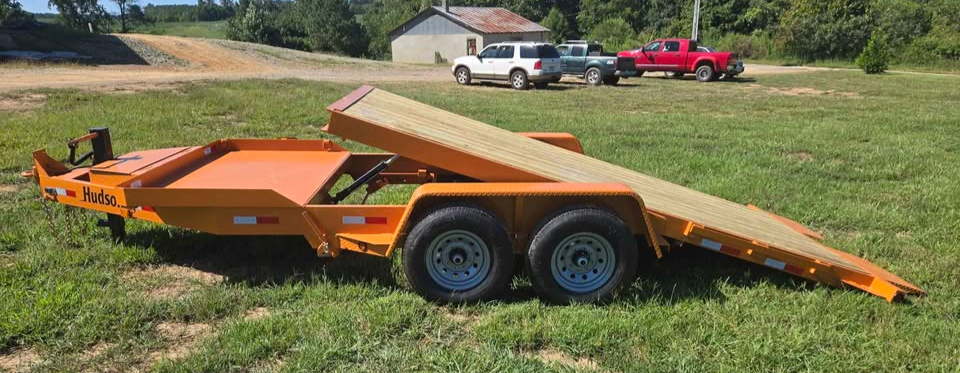
Builders such as Hudson Trailers publish empty weights and GVWR by model so you can run these numbers before the first haul—use the plate on the trailer you actually own, not a similar-looking unit on a lot.
A Simple Pre-Haul Checklist
- Confirm machine operating weight and attached implements.
- Confirm trailer empty weight and GVWR from the trailer placard.
- Add deck cargo; compare total to tow rating and trailer GVWR.
- Estimate tongue/pin weight; add passengers + bed cargo; compare to truck payload.
- Verify hitch rating, safety chains, breakaway, lights, and brake controller setting.
- If any number is close, scale the truck, trailer, or both—don’t guess.
Scale tickets remove arguments. Many contractors are surprised how fast “just a skid steer” becomes an overweight combination once attachments and fuel enter the picture.
Bottom Line
Brochure tow ratings sell trucks. Payload, tongue weight, trailer empty weight, and the gear you actually carry decide whether the combination is safe and legal. Match the pickup to the full daily load—machine, attachments, trailer, and people—and you avoid the expensive middle ground where everything “almost” fits until a hill, a panic stop, or a weigh station says otherwise.