


















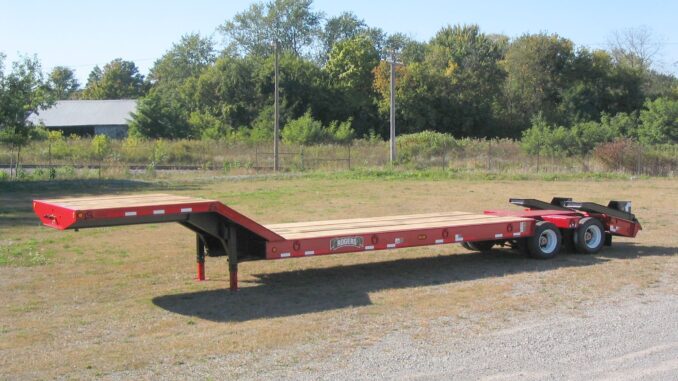
Removable-gooseneck (RGN) trailers get the spotlight for drive-on loading of heavy construction machines—but they are not always available, not always permitted for the corridor, and not always the right tool when a crane is already on the plan. Fixed-neck (fixed-gooseneck) lowboys still move a huge share of excavators, dozers, and paving equipment when rear loading, crane loading, or a simpler trailer package fits the job. This guide is about planning a fixed-neck move honestly when an RGN is off the table—not a redo of multi-axle RGN spec articles.
Treat the move like a lift plan: machine first, loading method second, height and permits in the same meeting.
When a Fixed-Neck Lowboy Still Wins
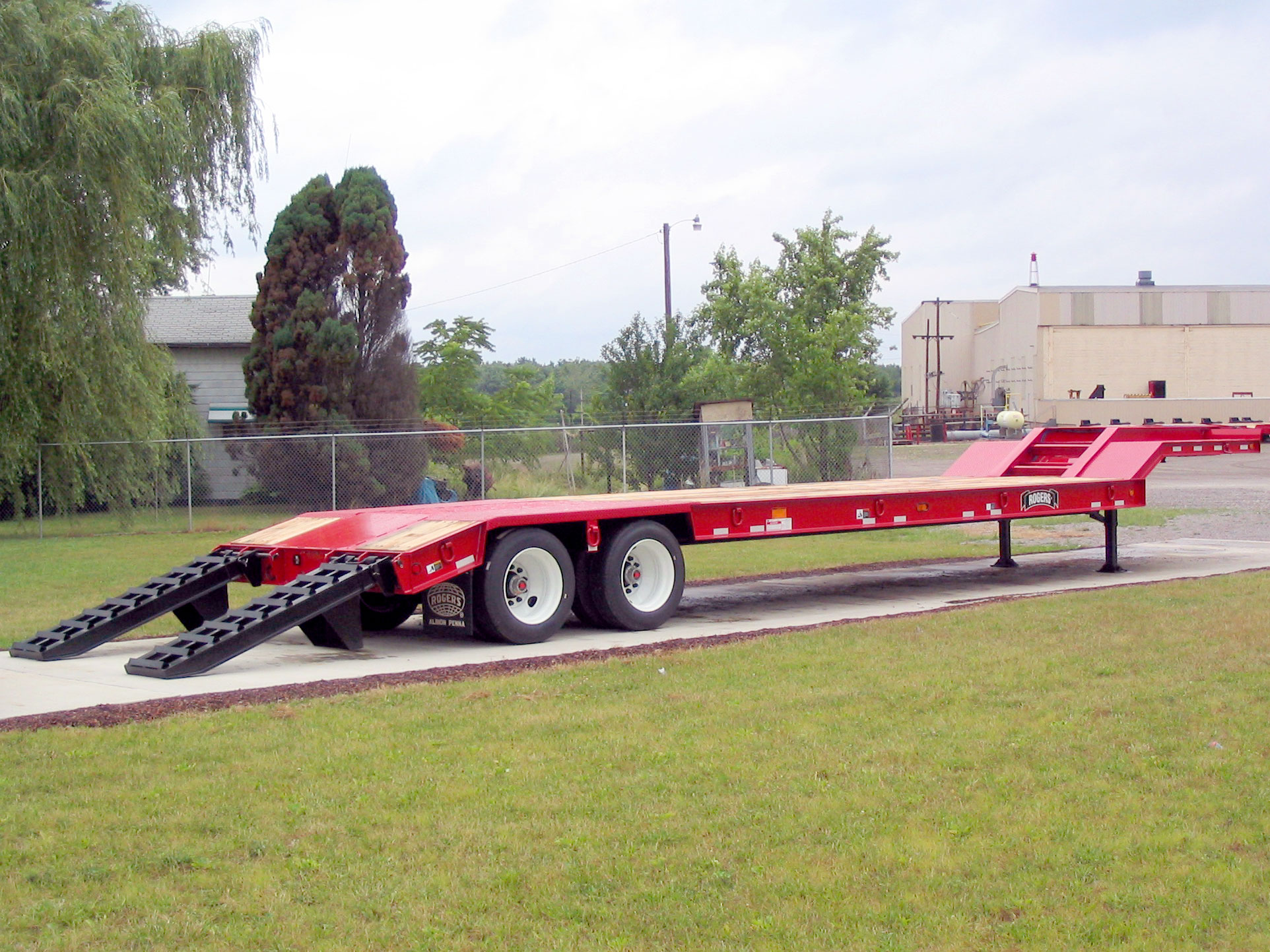
A fixed-neck lowboy keeps the gooseneck permanently attached to the deck. You typically load from the rear with ramps, a beavertail, or a crane—not by dropping the front of the deck for a drive-over gooseneck. That architecture is simpler, often lighter for a given capacity band, and perfectly capable when the site and machine cooperate.
Fixed-neck packages make sense when:
- The machine can climb a rear ramp or beavertail without undercarriage damage—or a crane is already scheduled to set it.
- Site geometry will not let you pull a detached gooseneck clear safely (tight yards, soft shoulders, traffic).
- You want a streamlined trailer for known payloads in common construction capacity bands (many production fixed-neck models cluster around the mid-ton ranges, with custom builds far higher).
- An RGN simply is not available on the date the machine must move.
Choose RGN-style front loading instead when the machine must drive on under its own power, crane access is thin, and the pad can support gooseneck detachment. This article assumes that option is unavailable or unnecessary—and focuses on making the fixed-neck plan work.
Machine Limits: What Will and Will Not Climb
Write the machine envelope before you book the trailer:
- Transport weight and CG—shipping weight with attachments decided, fluids if they stay, and where the mass sits once the boom or blade is in travel position.
- Ground clearance and track/tire base—will rear ramps clear the belly and sprockets at the break-over?
- Width and loaded height—machine height plus loaded deck height against route clearances.
- Self-propelled or crane-only—can it climb under power, or must it be lifted onto the well?
Low-clearance pavers, long-track CTLs, and machines with vulnerable belly pans may refuse a steep rear ramp. If the fixed-neck ramp package cannot provide a shallow enough approach, you need longer ramps, a different trailer deck height, cribbing to reduce effective angle, or a crane—not optimism.
Deck Height, Ramps, and the Loaded Envelope
Fixed-neck construction lowboys are built to keep decks low while preserving ground clearance on the gooseneck and axles—but “low” is still a measured number. Loaded deck height plus machine transport height is what hits the first bridge. Confirm the trailer’s loaded deck height with the tires and suspension you will run, then tape the machine in travel configuration.
Rear ramps and beaver tails set the climb. Fold-down ramps must be rated for the machine’s axle or track loads, deployed onto firm ground, and locked before the move starts. Hydraulic or longer ramp options exist on many heavy trailers when shallow angles are mandatory. Cribbing under ramp toes can help on uneven pads; it does not turn a steep package into an RGN.
Bucket wells, boom wells, and drop sections—if equipped—let parts of the machine sit lower than the main deck. Call them out in the plan when height is tight. Air-ride raise/lower can help scrape under a known low spot or assist loading, but it is not a substitute for choosing the right base deck height.
Loading Without a Removable Neck
Rear drive-on: chock the trailer, set the tractor brakes, deploy ramps on a firm pad, and use a spotter. Climb slowly; avoid steering corrections on the ramps; center the machine on the well; set parking brakes and lower implements only as the securement plan allows.
Crane-on: treat it as a pick. Confirm lift points, spreader needs, exclusion zones, and whether the trailer must be connected to the tractor during the set. Place the machine on the planned CG marks—crane crews who “eyeball center” create axle-scale surprises later.
Soft ground is a fixed-neck enemy. A trailer that is perfect on pavement can dig ramps into fill or twist during a climb. Mats, cribbing, and a second piece of equipment for push/pull assist belong in the plan when the pad is questionable—not in the change order after a machine is stuck halfway up.
Communicate the loading method in the haul quote. Fixed-neck, rear ramp drive-on, mats required, crane on standby is a different price and schedule than show up and figure it out. When the RGN is unavailable, the fixed-neck plan should be written early enough that the crane, mats, and escort windows are still bookable.
Compare waiting for an RGN against a crane-assisted fixed-neck load on schedule-critical moves. A one-day delay for the perfect trailer can cost more than a fixed-neck plan that still clears the corridor—while forcing a steep rear load that damages a machine to avoid a short wait is false economy.
Axles, Permits, and Corridor Reality
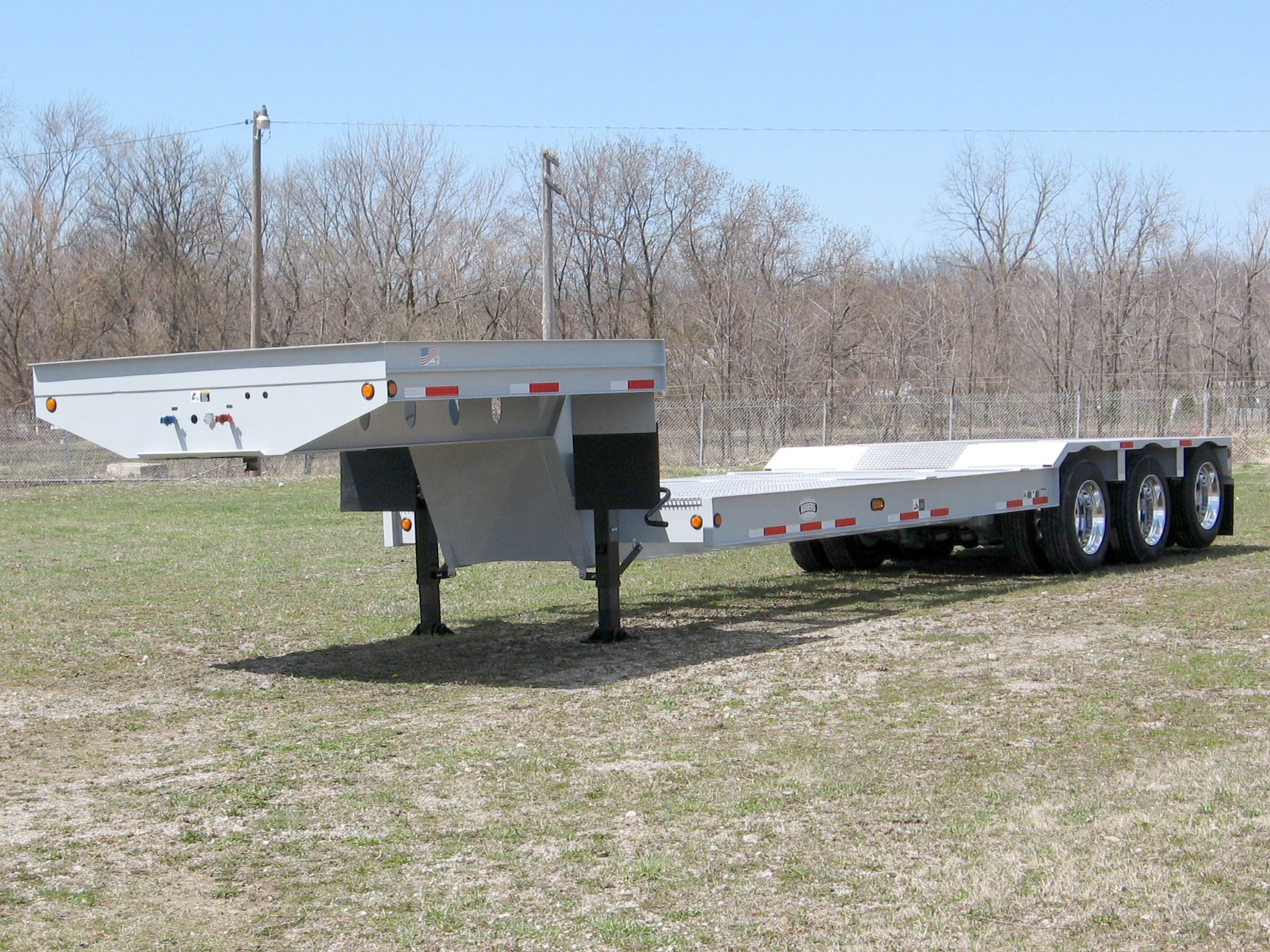
Capacity stickers are not corridor permission. Match axle groups to the load’s CG and to state limits along the actual route. Empty trailer weight eats payload; jeep and booster needs belong in the first quote when group limits demand them. Fixed-neck trailers in common construction series often use tandem or triple axle groups with spring or air-ride packages—confirm usable payload for your machine after tare.
Permits stack: overweight, overwidth, and overheight each change escorts, travel windows, and routing. Lowering deck height can fix height while leaving width problems if outriggers or counterweights stay on. Sequence origin, destination, and every jurisdiction early. Escort rules and holiday blackouts are schedule items, not paperwork surprises.
Manufacturers of fixed-gooseneck and heavy-haul lowboys—including Rogers Brothers—build fixed-neck series alongside detachable designs so fleets can match loading method to the job. The honest move still starts with machine limits and corridor math, not with whatever trailer happens to be free on Friday.
Planning Checklist When the RGN Is Unavailable
- Machine weight, CG notes, transport dimensions, and whether it can climb rear ramps or needs a crane.
- Fixed-neck deck height versus route clearances; wells/drops called out if used.
- Ramp length/angle or crane plan at both ends; mats and cribbing for soft pads.
- Axle groups, usable payload after tare, and any jeep/booster needs.
- Securement to approved machine points; overhang and flagging decided.
- Permits and escorts written into price and schedule before the truck rolls.
Final Thoughts
Keep a short go/no-go list on the clipboard: machine clearance versus ramp angle, loaded height versus controlling clearance, pad firmness, crane availability if required, and permit status. If any line fails, stop and reconfigure—do not invent a third loading method in the ditch.
A fixed-neck lowboy move succeeds when you stop treating “no RGN” as an emergency and start treating it as a configuration choice. Confirm the machine can be rear-loaded or crane-set, match deck height to the corridor, and build the pad and securement plan before escorts are on the clock. Done that way, fixed-neck trailers remain what they have been for decades: a dependable way to deliver construction iron when drive-over goosenecks are not part of the day.


