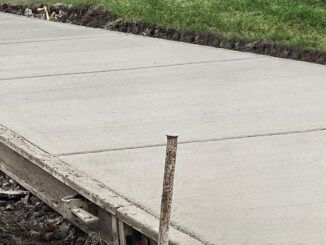














































Commercial slabs are judged twice: once by the tape and once by the F-number report. Miss the Specified Overall Value—or a Minimum Local Value in a bay that matters—and you inherit grinding, overlays, schedule fights, and an owner who never forgets the punch list. Hitting FF and FL is not a finishing trick. It is a process that starts at subgrade and ends with a timely ASTM E1155 survey.
What FF and FL Actually Measure
Floor Flatness (FF) describes short-wavelength bumpiness—how wavy the surface is over roughly two-foot increments. Higher FF means a smoother ride for forklifts, carts, and thin-set finishes.
Floor Levelness (FL) describes longer-wavelength departure from a plane—how the slab tilts or dishes over roughly ten-foot increments. FL is about elevation control across the pour, not just the last pass of the float.
Both are calculated under ASTM E1155. Project specs usually state a Specified Overall Value (SOV) for the floor as a whole and a Minimum Local Value (MLV) so one weak section cannot hide behind a good average. Local minima are commonly set near about two-thirds of the overall numbers when the documents follow ACI 117 practice—confirm the exact SOV/MLV pair in your Division 03 section, not a rule of thumb from the last job.
Industry guidance (including ACI 302-type classifications) commonly groups random-traffic floors roughly as:
- Moderately flat—about FF 25 / FL 20 (many warehouse and shop floors)
- Flat—about FF 35 / FL 25 (retail, offices, schools, moderate forklift traffic)
- Very flat—about FF 45 / FL 35 (narrow-aisle and higher-demand industrial)
- Superflat—about FF 60 / FL 40 and up (defined-traffic / precision applications)
Treat those bands as planning context. The contract documents rule. On elevated slabs, designers often specify FF only—formwork deflection and camber make FL less meaningful until shores are still in place and the structure is measured under the conditions the spec allows.
Read the Spec Before You Bid the Pour
Before the first truck rolls, pin down:
- SOV and MLV for FF and FL (and whether FL applies).
- When measurement must occur—ASTM E1155 and ACI practice call for testing within 72 hours of placement (and before removal of supporting formwork where that applies), because shrinkage and curl will change the surface after that window.
- Who runs the profiler, how test sections and runs are laid out, and how soon results are reported.
- Remediation language—grinding, fill, or reject—so pricing matches risk.
A short preconstruction huddle with the GC, designer, and testing agency prevents the classic argument: the crew finished a good slab, the survey waited a week, and curl ate the numbers.
Subgrade, Forms, and Grade Control Set FL
Levelness is mostly won or lost before concrete arrives.
- Compact and fine-grade the subbase so the slab thickness is consistent. Soft spots and waves in the grade become waves in the surface once you chase thickness with the screed.
- Set forms and edge forms true. Check elevations with the same laser (or total station) you will use during placement—not a different instrument with a different zero.
- Plan blockouts, embeds, and penetrations. Every interruption is a place where a tired crew leaves a ridge or a dish.
- Keep vapor retarders, reinforcement, and chairs where the drawings put them. Chair collapse and floating mesh create local highs and lows the screed cannot fully erase.
If the grade is wrong, no finishing sequence will invent FL.
Screed Choice: Match Tool to Spec and Access
The screeding pass has outsized influence on both FF and FL. Manual wet screeds and straightedges can produce acceptable floors when the crew is skilled, the pour is small, and the target sits in the moderate range. As SOVs climb—especially into the mid-30s FF and higher—continuous elevation control matters more than hustle.
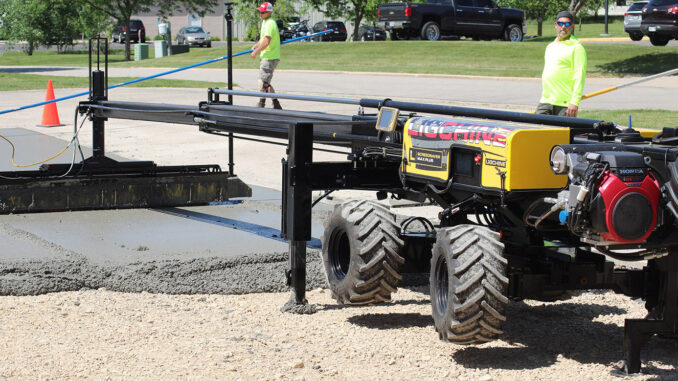
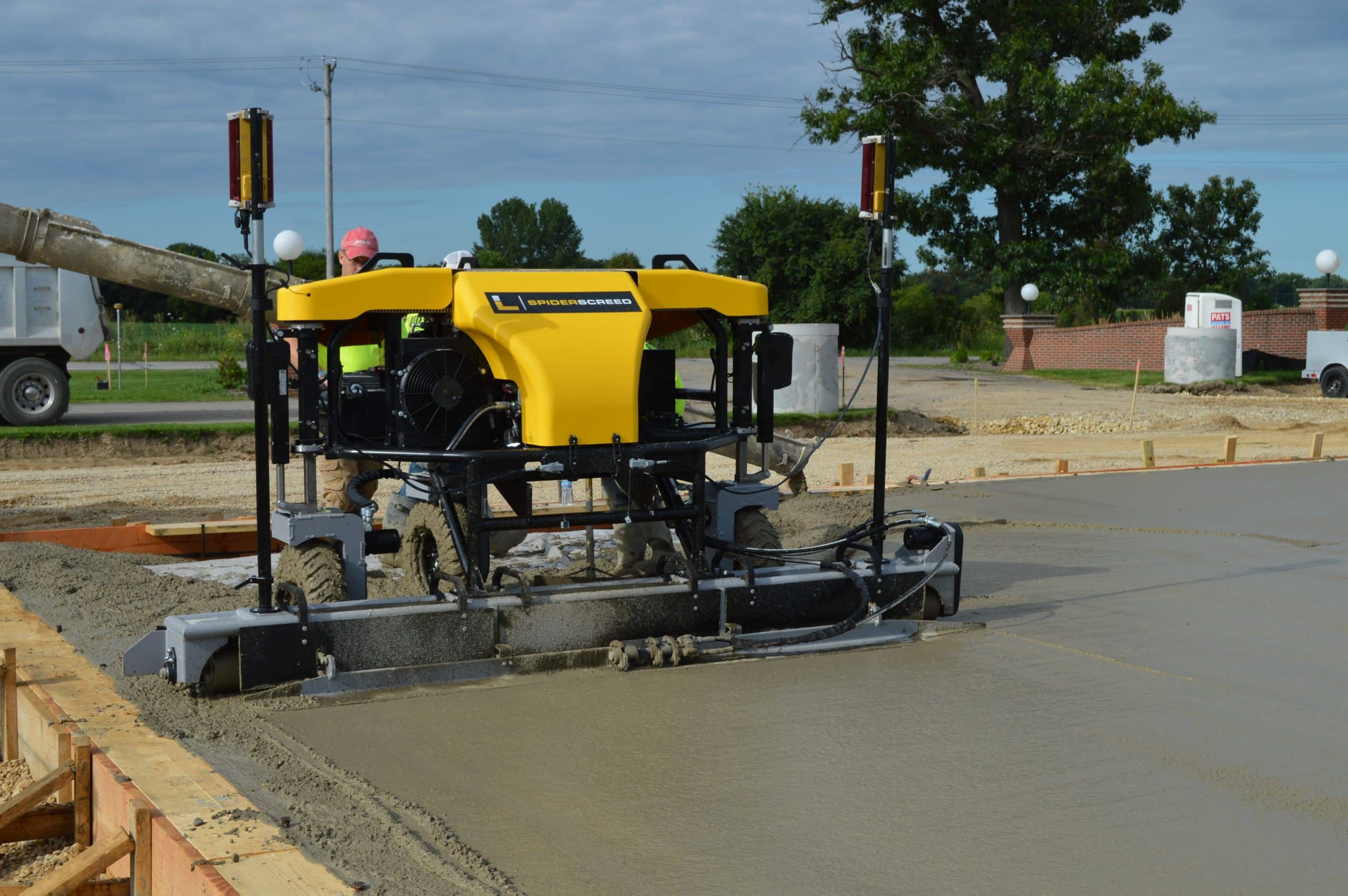
Laser-guided boom screeds keep the head on a controlled plane while the machine stays off most of the fresh concrete, which helps on large slab-on-grade placements and multi-slope exterior work. Drive-in / ride-on screeds can suit decks and tighter access where a boom footprint does not fit. Vibrating truss screeds still have a place on long, narrow pours when the rails or forms are set accurately.
On specification-driven commercial flatwork, many crews pair disciplined laser setup with boom-operated laser screeds from manufacturers such as Ligchine—the machine helps only if the process around it is sound.
Whatever you run, treat overlap, head angle, and travel speed as quality controls, not operator preference. Leave a consistent surcharge ahead of the head. Overlap passes enough to erase cold joints in the surface without building a crown. Stop and re-establish grade after moving around columns and openings instead of “winging” the corner by eye.
Laser Setup and Checks That Prevent Bad Days
A laser system only as good as its setup:
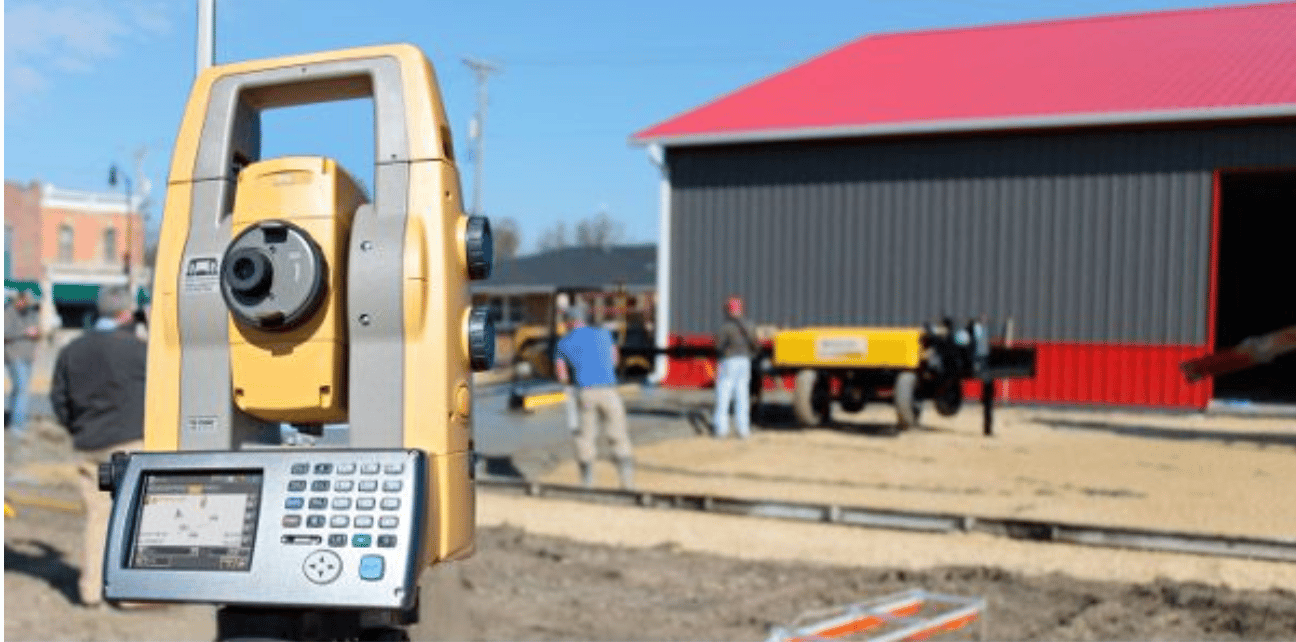
- Establish benchmarks and verify the transmitter height and slope settings against known points before concrete arrives—and again after lunch if the tripod got bumped.
- Confirm dual-slope or 3D models match the pouring plan when the slab is not a single plane.
- Watch for multipath and obstruction—walls, forms, and stacked material can bounce or block the beam and send the head hunting.
- Keep receivers clean and calibrated per the manufacturer. A dirty or drifting receiver writes error into every pass.
Assign one person to own grade. When three people “help” with the laser, nobody owns the miss.
Pour Sequence, Mix Consistency, and Timing
FF dies when the surface sets unevenly or the crew falls behind the truck.
- Order a mix the finishers can work—consistent slump (or consistency class), predictable set, and aggregate that the screed and floats can handle. Wild swing in water or admixture between loads shows up as soft and stiff panels side by side.
- Size the placement to the crew and the weather. A heroic pour that outruns bull floats and power trowels leaves waves you will measure later.
- Place to the screed in a sequence that keeps a live face. Cold joints and staggered set across a bay are FF killers.
- Follow the screed promptly with bull floating or highway straightedging while the concrete still responds. Cut down the highs, fill the lows, then stop working the surface until bleed water leaves.
- Stage power floating and troweling to the set—not the clock on the wall. Early pan work seals bleed water; late work tears and leaves chatter.
Hand restraightening after the machine pass is not optional on high FF work. The laser put you on plane; the float pass removes the short waves the report will punish.
Jobsite Habits That Quietly Ruin Numbers
Watch for these patterns:
- Edge and bulkhead neglect. The center looks fine; the last three feet at the form fail local FF/FL.
- Waiting on the survey. Curl at joints and edges drops numbers after the 72-hour window. Schedule the profiler like you schedule the pump.
- Changing operators mid-pour without a handoff. Head height, speed, and surcharge habits differ; the surface records every difference.
- Chasing low spots with extra concrete after the head has passed. You create a mound next to a valley.
- Ignoring weather. Wind and sun skin the slab while shade stays plastic—adjust set control and crew pace, or shrink the pour.
After the Screed: Verify, Then Protect
Walk the slab with a straightedge as a sanity check, but do not substitute that for the contract method. When ASTM E1155 testing is required, protect the surface, keep traffic off until allowed, and get the survey done inside the specified window. Review overall and local results against SOV/MLV before you release the bay.
If a section fails, grinding high spots is the usual FF fix; low areas may need fill or an overlay depending on the floor covering and the spec. Remediation is cheaper when you catch it early—and cheaper still when process discipline means you rarely need it.
Bottom Line
Spec’d FF and FL come from grade control, a screed method matched to the target, laser discipline, consistent concrete, and finishing that respects set—not from hoping the last trowel pass hides the day. Build the pour around the numbers in the documents, measure on time, and treat every overlap, edge, and load change as part of the quality plan. That is how commercial flatwork crews turn F-number risk into a repeatable jobsite habit.