



































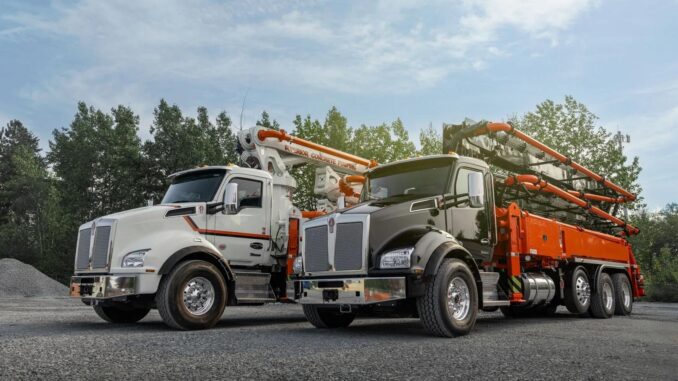
A boom pump that arrives without a pour map is already late. Reach charts, outrigger reactions, and pipeline decisions have to be settled against the deck sequence before the ready-mix queue stacks up at the gate. Unlike a line-pump selection guide, this piece is about setting up a truck-mounted boom so the boom, pads, and hose do not steal the pour window you sold the GC.
Walk the job for boom envelope first, then for soil and cribbing under the outriggers, then for the pipeline path when the boom alone cannot finish. Keep communication between the pump operator, ready-mix, and finishers as tight as the steel schedule. End with cleanout habits that protect tomorrow’s first load—because a hopper full of yesterday’s rock is how you burn the morning before the first truck books in.
Mapping Pour Sequence to Boom Reach Before the Truck Arrives
Pull the structural pour sequence and the boom’s published reach chart into the same conversation. Mark pour strips, construction joints, and obstruction heights—formwork, adjacent buildings, overhead lines—before you pick a set-up pad. The question is not “will the boom unfold?” It is whether the tip can stay productive through the entire strip without a mid-pour relocate that kills the mix window.
Walk the set-up with the superintendent and the pump operator when possible. Confirm swing limits, blind corners, and where the ready-mix will stage so the hopper stays fed without blocking the boom’s outriggers. If the chart says you are at the edge of reach for the far corner, plan a pipeline assist or a second set-up now—not when the slump is falling and the finisher is waiting.
Verticality and building face clearance matter as much as horizontal feet. A boom that clears on paper can still foul scaffold, tower crane cable, or a cantilevered form if nobody measured the real envelope on site.
Outrigger Pads, Cribbing, and Soil Checks That Prevent Tip Risk
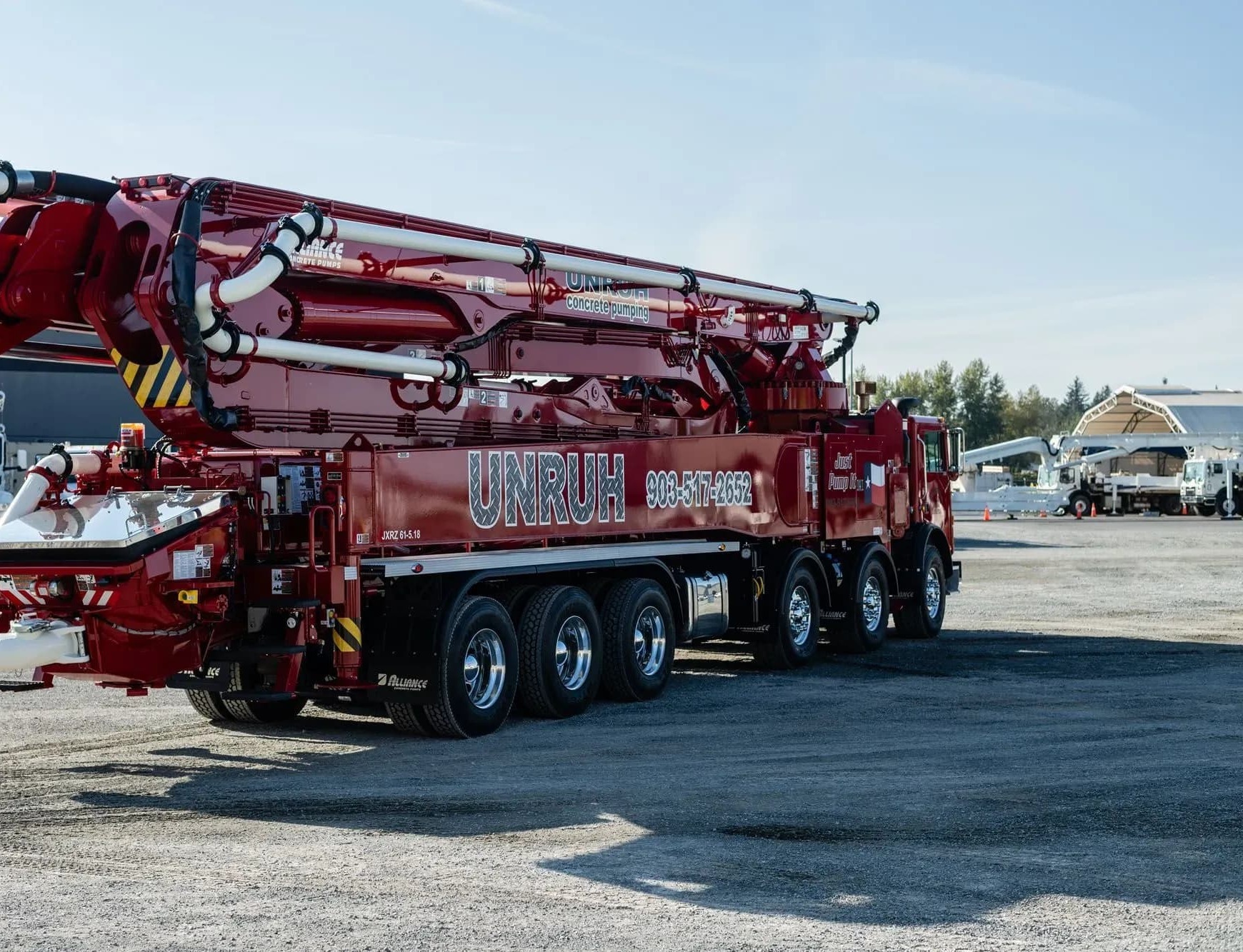
Outriggers carry the reactions the chart assumes only when pads sit on competent support. Soft fill, thin asphalt over void, and uneven grade turn a stable truck into a tip risk long before the boom is fully extended. Carry pads sized for the unit, crib to level, and probe anything that looks like recent backfill. If the soil will not take the reaction, you do not have a boom problem—you have a ground-improvement or relocate problem.
Set all required outriggers fully per the manufacturer’s instructions for the configuration you are running. Partial set-ups and “just this short pour” shortcuts are how incident reports start. Keep pedestrians and vehicles out of the outrigger zone; a pad that gets undermined by a delivery truck is no longer the pad you calculated.
Document the set-up when the pour is critical or the ground is questionable. Photos of cribbing and pad bearing help the next shift and help you defend the decision if someone later asks why the truck sat where it sat.
Pipeline Routing When the Boom Alone Cannot Finish the Deck
When the boom cannot finish the deck alone, pipeline is not an afterthought—it is part of the placement plan. Route hose or pipe so crews can still move, so elbows are minimized where blockage risk is high, and so the cleanout path is obvious before concrete enters the system. Vertical drops, long flats, and tight radii all change how the mix behaves; brief the operator and the hose crew on the layout before the first load.
Assign who owns clamps, who watches for leaks, and who has authority to stop the pour if a joint weeps. A pipeline assist that saves twenty feet of boom reach can still lose an hour if nobody brought the right reducers or a spare section.
Coordinate the end of the pipeline with the finishers’ work front so you are not raining concrete on a crew that is still pulling wire. The boom operator and the hose team need the same pour map the finishers are using.
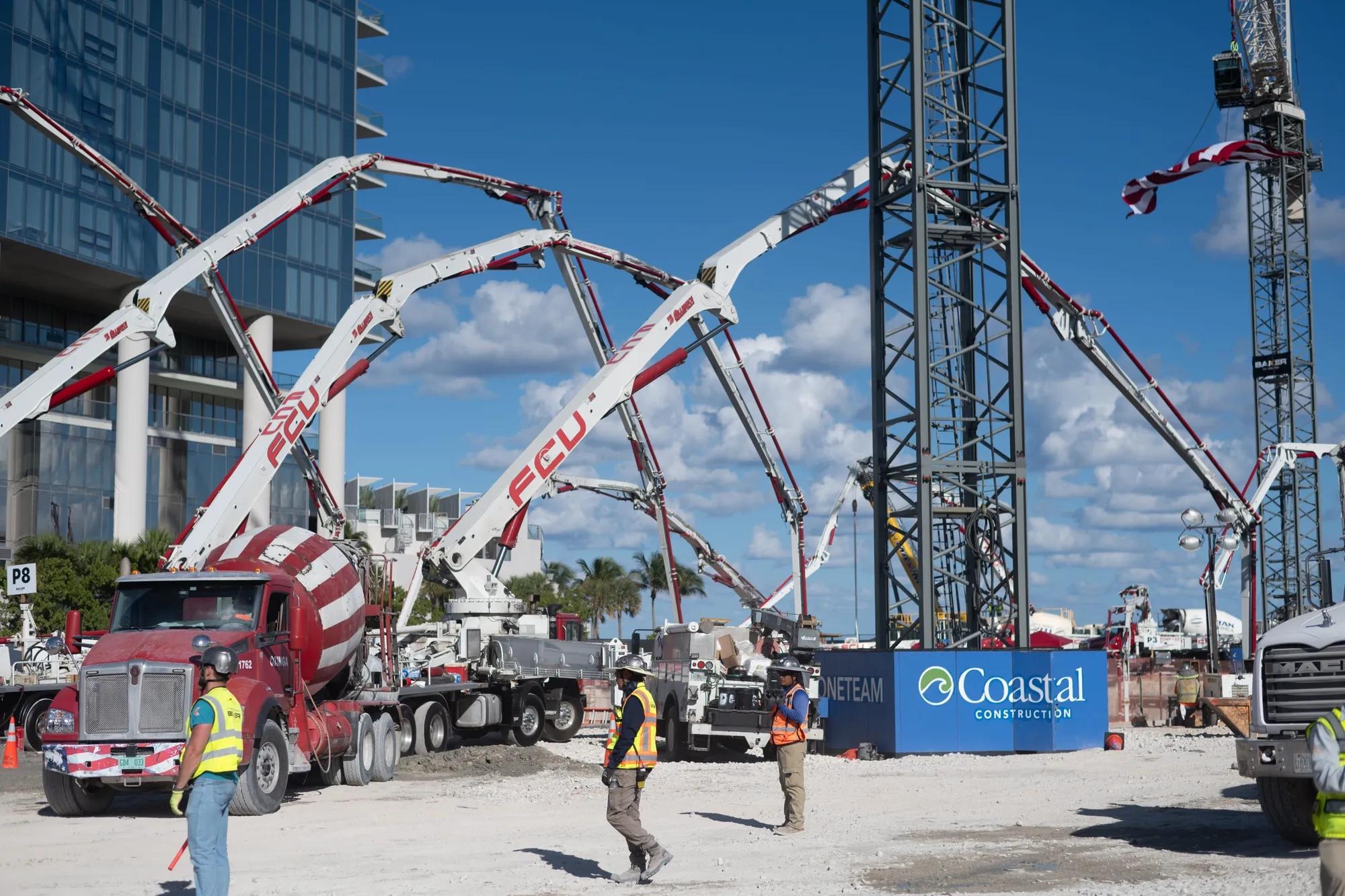
Communication Between Pump Operator, Ready-Mix, and Finishers
Concrete pumping fails as communication as often as it fails as hydraulics. The pump operator needs mix, slump, and truck interval information early. Ready-mix needs a clear staging plan and a single voice for “hold” versus “send.” Finishers need to know when the boom will swing, when a strip will stop, and when a cold joint is about to become a problem.
Use radios or agreed hand signals that cut through plant noise, and name a pour boss who can stop the operation. Manufacturers and dealers of truck-mounted boom pumps—including teams around Alliance Concrete Pumps—can help match boom size to typical commercial and civil pours, but the day’s success still hinges on the three-way conversation on site.
Write the pour rate goal and the contingency for a blocked line or a delayed truck before the first mixer backs in. Surprises belong in the contingency plan, not in the hopper.
End-of-Pour Boom and Hopper Cleanout That Protects the Next Job
Cleanout is quality control for the next job. Boom sections, hopper, and pipeline that keep yesterday’s rock will block, contaminate, or delay the first load tomorrow. Follow the manufacturer’s cleanout sequence, manage wash water per the site’s environmental rules, and inspect for leftover buildup at elbows and reducers before you roll.
End-of-pour discipline also includes stowing the boom for travel, checking for leaks that showed up under pressure, and noting any control or outrigger issues for the shop. A pump that “ran fine” but drips overnight becomes tomorrow’s environmental and reliability problem.
If the pour ran long, protect the crew from rushing cleanout in the dark. A blocked line from a skipped flush costs more than the overtime you were trying to save.
Final Thoughts
Boom pumping is a layout sport. Map reach to the pour sequence before the truck arrives, build a real outrigger foundation, plan pipeline when the boom cannot finish, keep operator–ready-mix–finisher communication tight, and clean the system like the next pour depends on it. Do those things in order, and the pour window stays yours instead of belonging to improvisation.