






A low purchase price can make an attachment look like a smart buy, especially when a crew needs to get into land clearing, grading, brush cutting, trenching, or material handling without stretching the equipment budget. But the real cost of an attachment is not limited to the number on the invoice. It includes how well it fits the carrier, how long wear parts last, how often it causes downtime, how safely it connects and operates, and whether it protects the productivity of the machine behind it. For contractors comparing skid steer attachments, the better question is not simply which option costs less today, but which one delivers the lowest cost per productive hour.
The True Cost Beyond Purchase Price
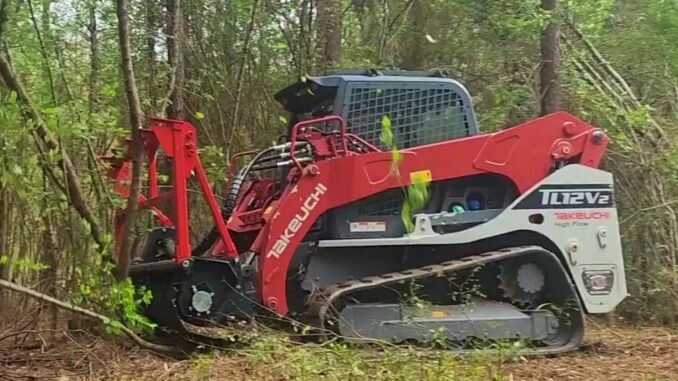
Cheap attachments often compete on upfront savings, but jobsites measure value differently. An attachment that bends, cracks, leaks, vibrates excessively, or wears through critical components can quickly erase any savings through repairs, lost labor, idle machines, missed deadlines, and replacement costs. That is especially true when the attachment is used in high-stress applications such as forestry mulching, brush cutting, stump grinding, demolition cleanup, trench work, or rocky ground conditions.
Durability starts with design, material quality, weld integrity, hydraulic compatibility, and the ability to handle the intended application. Attachments are not interchangeable simply because the mounting plate appears to fit. A tool that is too heavy, underbuilt, or mismatched to hydraulic flow can reduce performance and place extra stress on both the attachment and the carrier. Over time, that stress can show up as cracked frames, damaged couplers, blown hoses, premature bearing wear, uneven cutting, or poor control from the operator’s seat.
Durability Starts with Fit and Materials
The physical structure of an attachment matters because it absorbs the impact, twisting, vibration, and hydraulic force of daily work. Cutting, grinding, digging, and mulching tools operate against unpredictable material. Soil can hide rock. Brush can hide metal debris. Stumps can vary in density. A low-cost attachment built for occasional light-duty use may not survive commercial work cycles, even if it performs well during the first few hours.
Fit is just as important as strength. The carrier’s rated operating capacity, lift geometry, auxiliary hydraulic flow, hydraulic pressure, coupler style, and hose routing all affect whether an attachment can be used safely and efficiently. If hydraulic couplers are dirty, improperly connected, or left uncapped between jobs, contamination can enter the system and damage seals, filters, pumps, and valves. If hoses are routed poorly, they can rub, kink, snag, or fail under movement. If locking mechanisms are worn or not fully engaged, the risk becomes far larger than repair cost.
Good attachment selection also considers wear parts. Teeth, blades, cutting edges, bearings, pins, bushings, hoses, fittings, and guards should be inspectable, serviceable, and available when needed. A cheaper attachment with hard-to-source parts can turn a routine repair into days of downtime. A more durable attachment with accessible wear parts can keep a machine earning while competitors wait on replacements.
Safety Risk is a Business Cost
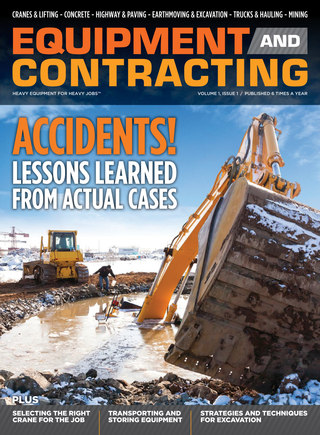
Attachment failure is not only a maintenance issue. It can become a safety issue in seconds. NIOSH has warned that excavator quick coupler failures can allow buckets or attachments to detach suddenly, creating struck-by hazards. NIOSH also notes that an empty excavator bucket can weigh about 900 pounds, and significantly more when carrying soil or rock. That kind of weight falling unexpectedly is not a minor incident.
OSHA has also documented serious hazards involving skid-steer loaders when safety devices are bypassed, disabled, or poorly maintained. In an OSHA review of incidents involving skid-steer loaders from 1997 through 2007, bypassed safety features were identified as the direct cause in 20 percent of recorded accidents, with nearly all of those incidents resulting in a fatality. The lesson for attachment buyers is direct: safety systems, locking procedures, manuals, training, and inspections are part of ownership cost.
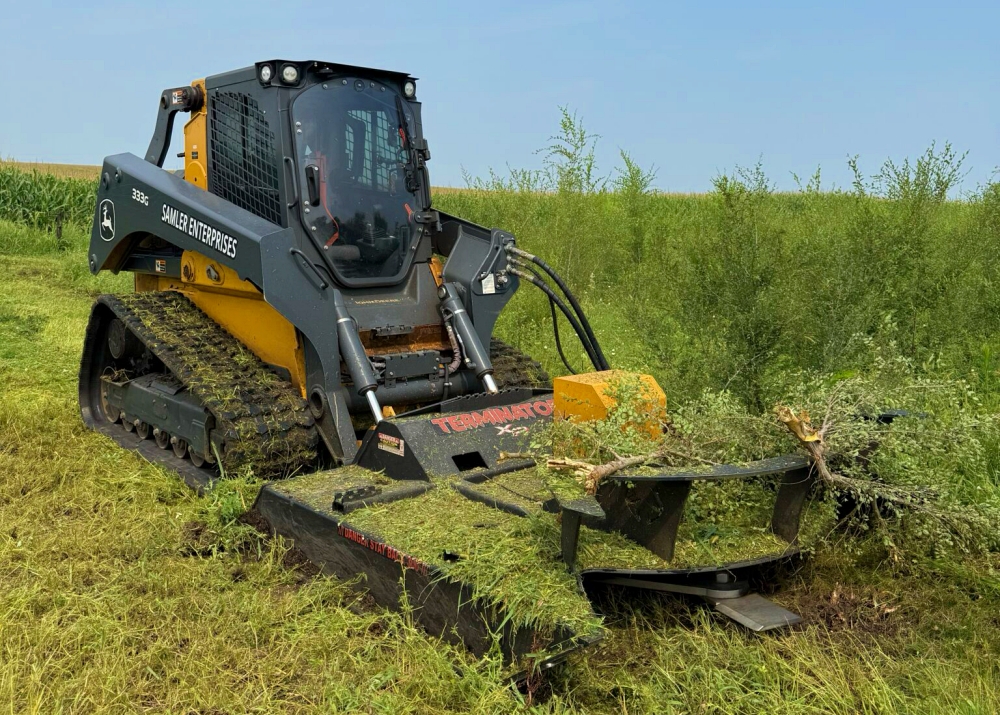
Cheap attachments can increase risk when they encourage shortcuts. If a connection does not seat cleanly, if guards are weak or missing, if hydraulic lines are exposed, or if the tool requires awkward service access, operators may spend more time working around problems. Safer attachment use depends on lowering attachments before inspection, keeping bystanders clear, confirming coupler engagement, following the operation and maintenance manual, and using only compatible tools approved for the carrier and task.
ROI Depends on Uptime and Service Life
Return on investment is easiest to understand when it is measured by output, not sticker price. An attachment that costs less but works slower, leaves poor finish quality, requires more passes, or breaks during peak season may deliver a weaker return than a higher-quality option. The true ROI calculation should include acquisition cost, expected service life, wear-part replacement, maintenance time, fuel impact, hydraulic efficiency, resale value, operator confidence, and downtime risk.
OSHA’s Safety Pays program highlights that workplace injuries can create both direct and indirect costs, including the additional sales a business must generate to cover those losses. While that tool is focused on injury cost awareness, the principle applies to equipment decisions as well. Hidden costs are still costs. When an attachment failure stops a crew, the business may still pay wages, equipment finance, insurance, transportation, supervision, and overhead while production stalls.
Preventive maintenance improves ROI because it helps owners catch small problems early. Daily checks should include visible cracks, loose hardware, hose abrasion, leaks, damaged fittings, worn teeth, dull blades, missing guards, and proper coupler engagement. Greasing intervals should follow the manual. Hydraulic couplers should be cleaned before connection and capped during storage. Attachments should be stored off bare ground when possible, protected from standing water, and cleaned before longer storage periods. These are simple habits, but they extend service life and reduce emergency repairs.
How to Buy for Long-Term Return
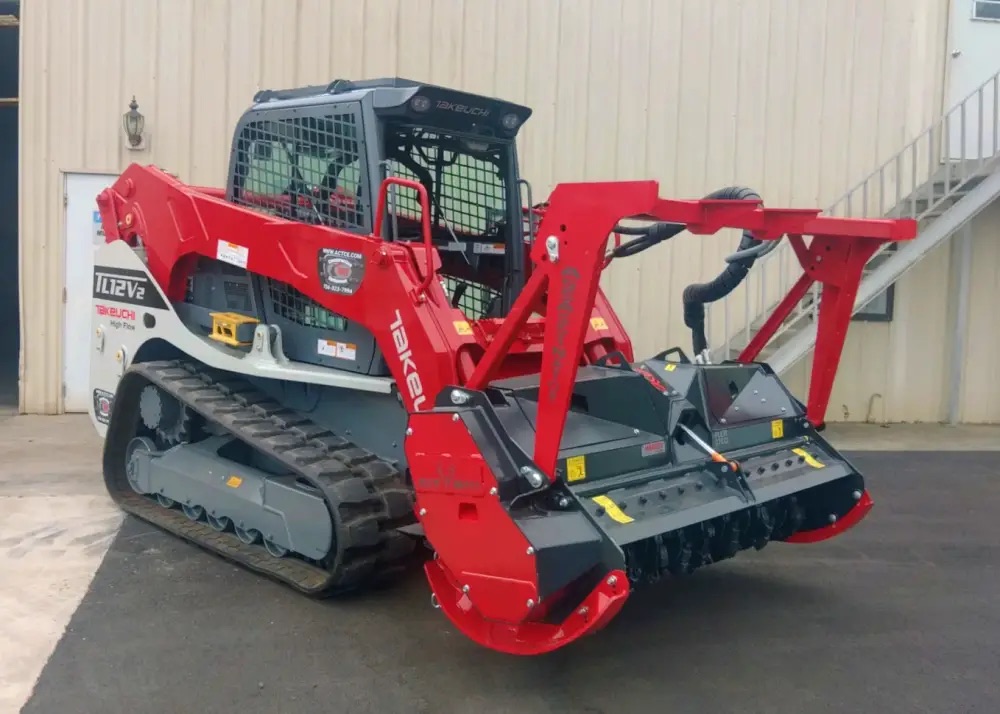
A smart buyer starts with the work, then matches the attachment to the machine. The application should define the required duty rating, width, cutting capacity, hydraulic demand, flow range, weight, and protection features. A contractor clearing dense vegetation every week needs a different durability threshold than a property owner doing seasonal cleanup. A machine working in rocky, uneven, or wooded areas needs an attachment built for impact and torsion, not just basic operation on flat ground.
Documentation matters too. Buyers should look for clear specifications, machine compatibility guidance, replacement-part availability, service instructions, and support from people who understand the equipment. The attachment should be easy to inspect and maintain. Wear parts should be replaceable before damage spreads into more expensive components. The seller should be able to explain hydraulic requirements, operating limits, maintenance intervals, and safety procedures without guesswork.
The Better Measure Is Cost per Productive Hour
The cheapest attachment is not always the lowest-cost attachment. A durable, compatible, serviceable tool protects the carrier, supports safer work, and keeps crews productive across more hours of use. For contractors, landowners, municipalities, and site-prep crews, the better investment is the attachment that keeps working when conditions get rough, parts wear down, and schedules tighten.
The best buying decision balances price with strength, safety, compatibility, service life, and support. When evaluating mini excavator attachments, or any other equipment attachment, the goal should be long-term return rather than short-term savings. Cheap attachments may lower the entry cost, but durable attachments are often the ones that protect uptime, reduce risk, and deliver the stronger ROI over the life of the machine.