






Spec’ing a knuckle-boom loader carrier for land-clearing and logging moves is less about buying “any lowboy that fits the loader” and more about elevating-deck geometry, suspension that survives rough tracts, and payload planning for the loader plus the attachments that always travel with it. A carrier that works on pavement can still twist, hang up, or starve parts support when the next tract is miles of washboard and the nearest dealer is a county away. This guide is a contractor-side checklist for matching knuckle-boom carriers to forestry and clearing work—not a general construction lowboy tour.
The focus here is purpose-built knuckle-boom loader carriers and the related forestry haul options that show up when clearing produces chips and debris. It is not a guide to choosing a standard equipment RGN for a dozer. Get why carriers differ from ordinary lowboys, what elevating decks and rocking-beam suspensions buy you, and how axle and length choices absorb loader-plus-attachment weight before you argue paint or brand preference.
Why Knuckle-Boom Carriers Differ From Standard Equipment Lowboys
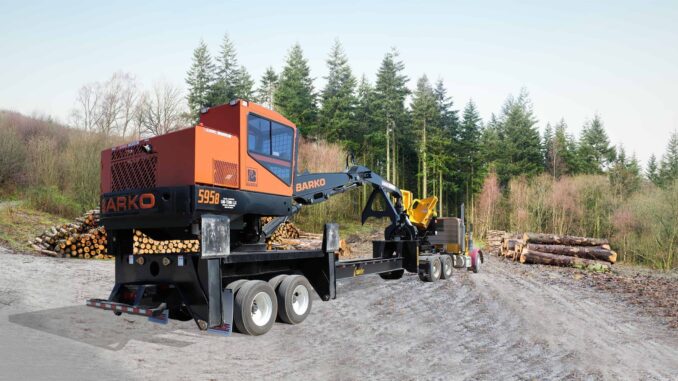
A standard construction lowboy is optimized to load machines over a gooseneck or ramp and haul them on relatively prepared roads. A knuckle-boom loader carrier is optimized to keep a mounted loader stable while the combination crawls landings, negotiates soft shoulders, and often works as a mobile processing station—not only as a highway trailer. The loader’s boom, grapple, and counterweight create a high, shifting center of gravity. Reinforced necks exist in part to resist the twist that delimbers and heavy boom work put into the frame—loads a plain equipment deck was never asked to absorb daily.
Carriers also add working features that look like overkill on a pure transport lowboy: snag-free bumper designs with integrated steps, heavy pull bars, hydraulic landing gear controlled from the cab on many packages, and deck layouts that leave room for the loader’s outriggers and swing envelope. Extendable heavy-duty pull bars and fabricated neck designs show up because remote tracts punish light hardware the first season. If your “carrier” is really a recycled equipment lowboy with a loader bolted on, expect the neck and landing gear to tell you about that decision under the first hung-up boom.
Choose a carrier architecture when the loader lives on the trailer for work, not only for the highway run between yards. Choose a conventional lowboy when the machine is a passenger that rolls on and off at each stop. Mixing those missions is how crews inherit bent necks and landing gear that will not lift when the pad is soft.
Elevating Deck and Rocking-Beam Suspension Benefits on Rough Tracts
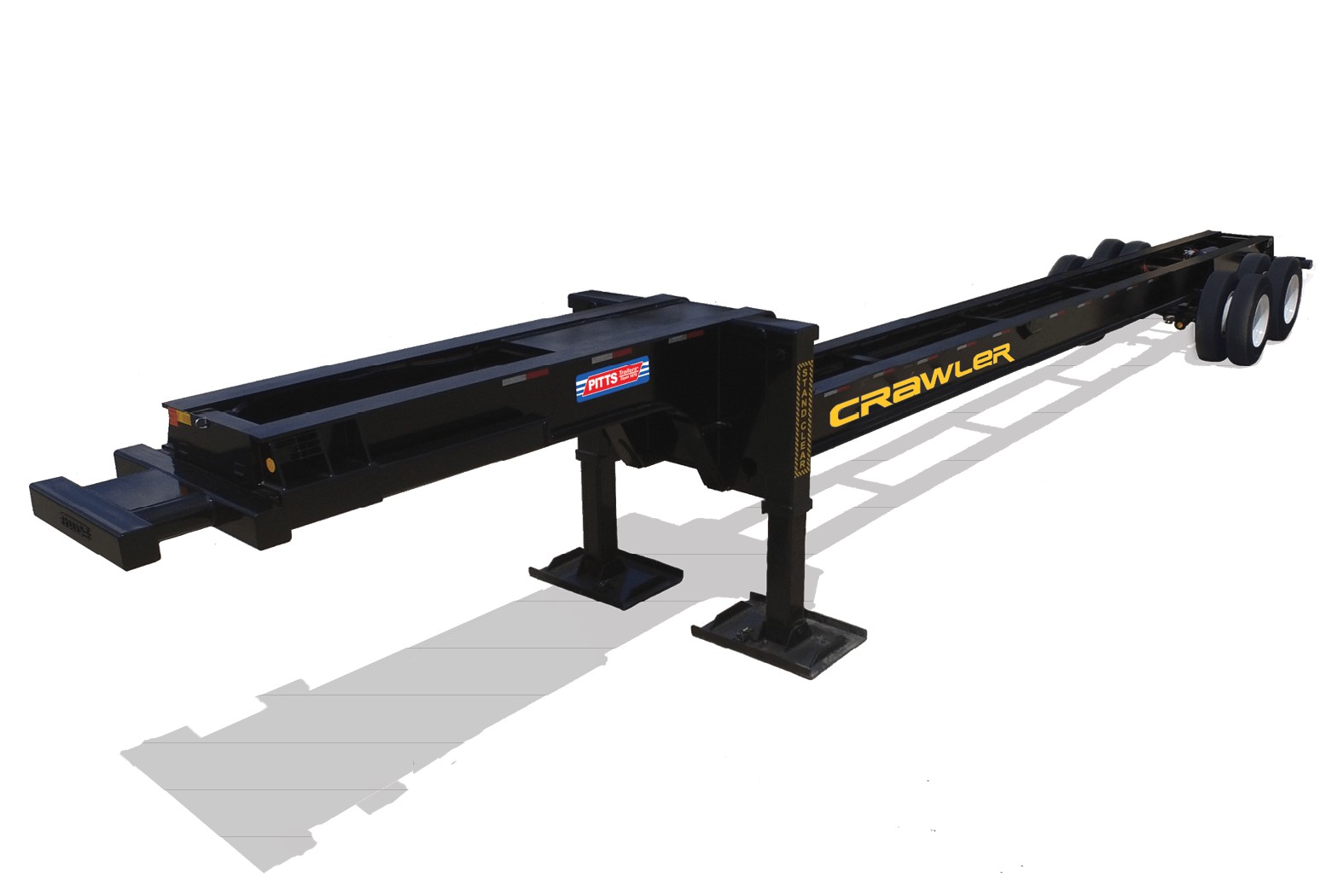
Elevating decks and crawler-style suspensions exist because forestry landings are not scale-house approaches. Rocking-beam (military-derived crawler-style) suspensions are marketed to keep more wheels sharing load when the ground heaves under one side—smoothing the ride for the loader and reducing the single-wheel smash that breaks springs and scatters chain. On a tract with roots, ruts, and temporary corduroy, that stability is the difference between creeping into position and high-centering a bogie while the boom is still tied.
Elevating or adjustable deck height helps match the carrier to soft ground clearance and to the loader’s working posture. Too low and you drag; too high and the center of gravity and loading angles get worse. Patented in-cab hydraulic landing gear on many knuckle-boom packages lets the operator set and retract supports without crawling under a muddy frame every time the combination stops—small cycle-time wins that add up across a week of short moves between landings.
None of this replaces a sober look at the approach into the tract. Suspension that articulates still needs a path that will not swallow the truck. Walk the route for stumps, soft shoulders, and overhead lines before you commit the loaded combination. The trailer can only forgive so much of a bad landing plan.
Payload, Axle, and Length Choices for Loader-Plus-Attachment Loads
Loader weight is only the starting number. Grapples, delimber heads, extra boom sections, toolboxes, and spare chain all ride along—and wet weather adds mud to everything. Spec axle groups and overall length for the loaded combination you actually dispatch, not for the bare loader photo on the brochure. Longer decks and carefully placed axles help keep kingpin and axle loads legal when the boom is tied back and the counterweight sits where physics puts it.
Model families in the knuckle-boom carrier space commonly publish distinct lengths and duty packages (for example, shorter versus longer DHL-style carriers) so buyers can match tractor, state bridge rules, and landing geometry. Air-ride with lift-axle options on related heavy-haul lines exists for highway flexibility; on forestry carriers, the priority is often articulation and durability over pure interstate cruise comfort. Confirm tire ratings and spare availability for the duals you choose—remote flats are not a parts-counter errand.
Length also decides how you stage on narrow landings. A carrier that is legal and stable on the highway can still be awkward to swing into a tight pad if overall length and swing clearance were ignored. Measure the worst landing you use monthly, not the best yard at the mill.
Chip Van and Debris Haul Options When Clearing Produces Volume
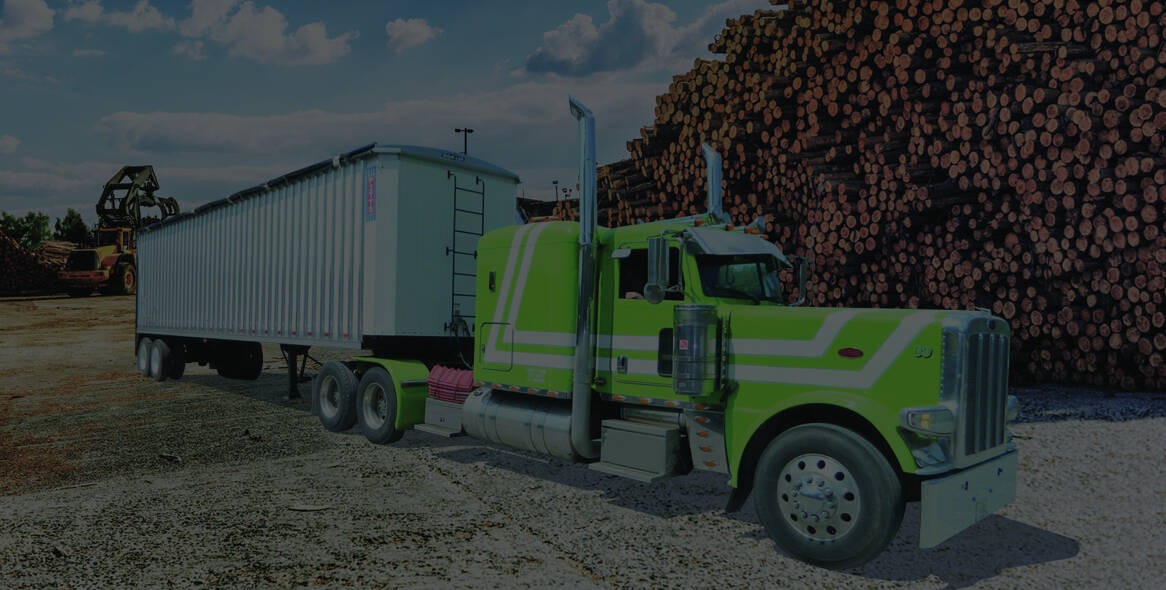
Land clearing and logging rarely end with the loader move alone. Chips, grindings, and debris need bulk trailers—open-top chip vans, closed-top vans, and moving-floor options—so the same contractor who specified the carrier often needs a matching bulk-haul plan. Open-top vans favor loader or blower filling on the landing; closed tops and moving floors change how you unload at the mill or disposal site and how weather affects the load.
Coordinate cycle times. A knuckle-boom that can process faster than the chip vans can cycle becomes a queue; vans that wait on a carrier stuck in the mud become rented steel. Spec van capacity and tractor power for the densest chip product you make, and keep a tarp or cover discipline that matches local highway rules for loose material. Debris from right-of-way clearing can be dirtier and denser than clean pulp chips—payload math changes accordingly.
Manufacturers that build complete forestry trailer lines—including Pitts Trailers—publish knuckle-boom carrier packages alongside chip vans, log trailers, and heavy-haul decks so fleets can keep loader moves and bulk haul in one parts and dealer conversation instead of stitching unrelated brands together after the first breakdown.
Dealer Network Checks for Parts on Remote Jobs
Remote tracts punish slow parts. Before you buy, map the dealer network against the counties you actually cut—not the interstate exits near the factory. Ask which landing-gear seals, suspension bushings, lighting looms, and hydraulic fittings stock locally, and what the lead time is for neck and frame repairs. A strong dealer count on a brochure only helps if one of those dealers can reach your landing with the part you need.
Train the crew on daily checks that prevent remote failures: landing-gear operation before the pad goes soft, suspension inspection after washboard runs, boom tie-down integrity before highway miles, and lighting/ABS health on every dispatch. Carry critical spares (lamps, gladhand seals, common fittings) on the tractor. The best carrier spec still fails if the first dead lamp becomes a three-day wait.
Before you lock a knuckle-boom loader carrier, confirm: loader-plus-attachment weight versus axle and length choices; elevating-deck and suspension features matched to tract conditions; bumper, neck, and landing-gear duty for working—not only hauling; chip or debris trailer capacity if clearing produces volume; and dealer/parts reach for the geography you cut. Spec for the landing you hate most, and the highway days get easier by default.
Final Thoughts
A knuckle-boom loader carrier earns its keep when the loader stays stable on rough tracts, the frame survives boom work, and the combination remains legal and serviceable between remote landings. Treat carriers as working platforms first and highway trailers second, match suspension and deck features to the ground you actually cross, and plan payload for everything that rides with the loader—not the bare machine. Keep chip and debris haul in the same plan when clearing makes volume, and verify dealer parts reach before the first breakdown. Get those choices right and the carrier moves loaders between tracts for years instead of spending its life waiting on a wrecker and a weld shop.