











































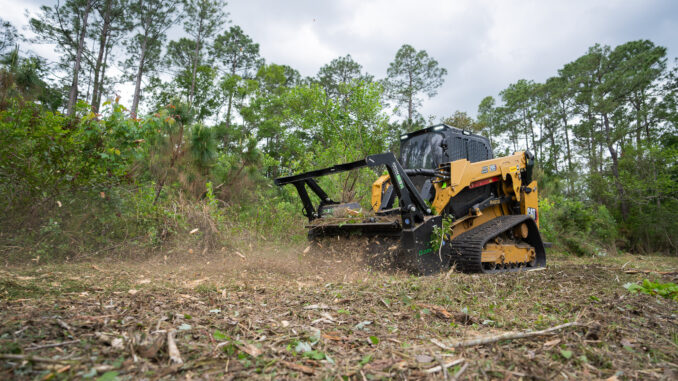
Compact track loaders and skid steers clear a lot of brush that used to wait for a dedicated forestry tractor. The attachment on the front decides whether that day ends in fine, even mulch—or a chewed mess, broken teeth, and a carrier that never stayed on power. Open-drum and depth-control heads both spin a drum. They do not process material the same way, and they do not forgive the same mistakes.
This guide is about matching drum style, tip speed, tooth package, and finish expectations to the brush, the ground, and the carrier you actually run—not the brochure photo.
Start With the Job, Not the Attachment Catalog
Before you argue open drum versus depth control, write down what the site demands:
- Material size and species—understory and saplings versus stems pushing toward the head’s rated diameter; softwood versus fibrous palm, bamboo, or hardwood.
- Ground engagement—will the drum stay off dirt and rock, or will you intentionally work mulch into the soil and bump rocky grade?
- Finish spec—coarse fuel break versus fine, landscape-grade mulch that an owner will walk through without complaining.
- Carrier reality—true high-flow GPM and pressure at the couplers, not the door-sticker “max flow” from a different package.
- Access and throw risk—neighborhoods, parked cars, and fence lines need different debris control than a pasture edge.
Those five answers usually pick the drum before brand loyalty does.
Depth-Control Drums: Bite Limit, Fine First Pass
Depth-control (DC) drums use rings (or similar geometry) that limit how deep each tooth can bite. That limit keeps the rotor from grabbing more wood than the hydraulic motor can chew, which is why DC heads shine on larger stems when the operator wants a controlled infeed and a finer chip on the first pass.
Typical DC strengths on compact carriers:
- Larger wood within the head’s rating, with less tendency to stall when the operator feeds aggressively.
- Finer, more uniform mulch when paired with sharp steel teeth—useful for pasture reclamation, residential retention, pond edges, and any job where aesthetics are part of the punch list.
- Limited ground contact days—clearing brush and small trees without deliberately grinding dirt and rock into the tooth package.
Tradeoffs: DC is usually the wrong default when you expect continuous rocky ground engagement or when the work is mostly small brush that benefits from a bigger bite and carbide toughness. Sharp steel teeth cut cleanly; they also pay for contact with buried rock.
Open Drums: Bigger Bite, Ground-Engagement Days
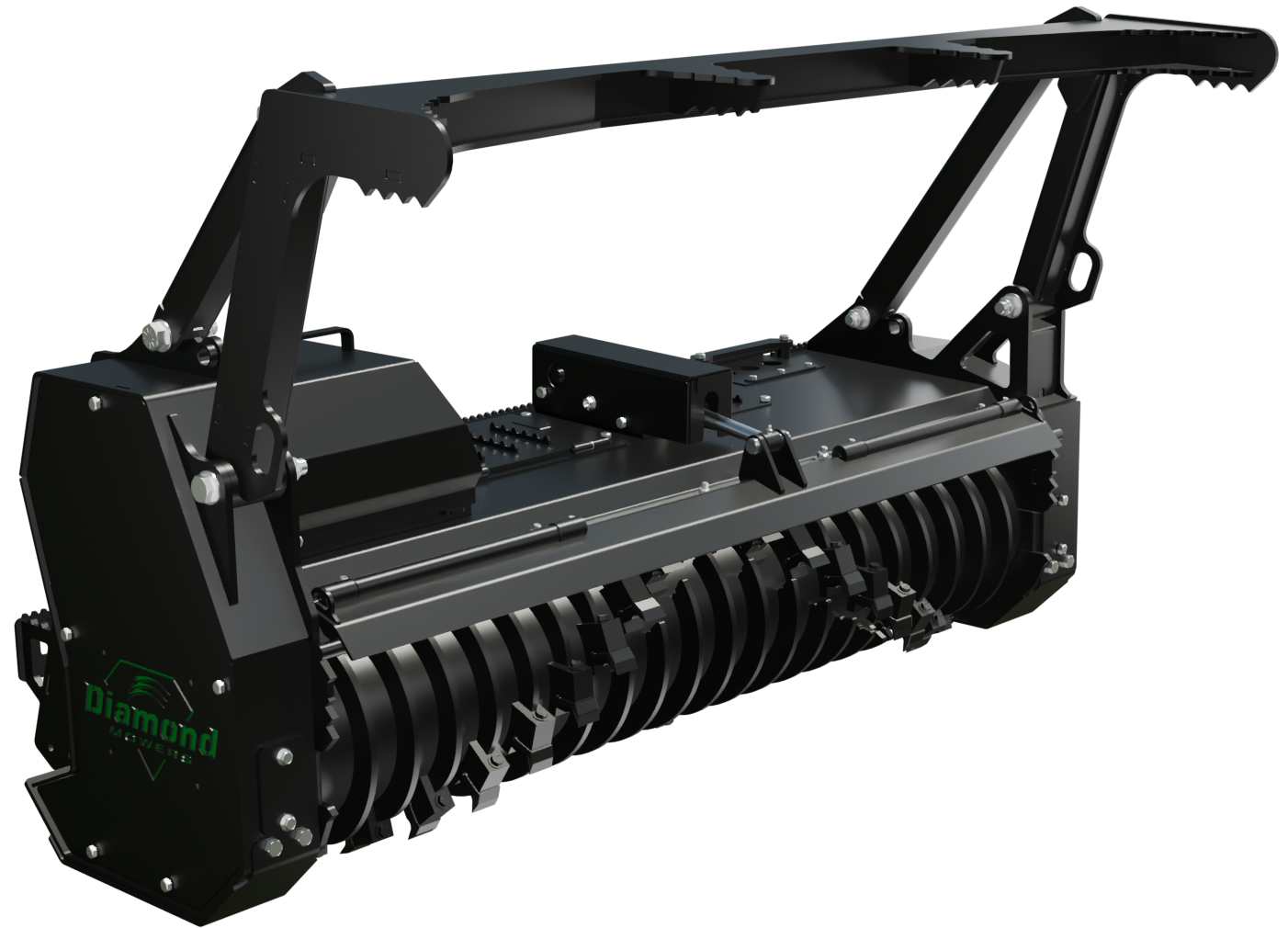
Open-drum (OD) designs expose more of the tooth and take a larger bite. That geometry is productive on smaller material and on sites where the head will work into the soil—mixing mulch down, scraping light grade, or surviving the abuse of rough, rocky terrain.
Typical OD strengths:
- Heavy ground engagement and rocky conditions when carbide teeth are the right match.
- High productivity on lighter brush because the drum can ingest more of each stem per pass.
- Abuse tolerance for rental fleets, pasture maintenance, and infrastructure clearing where the head will not be babied.
Tradeoffs: traditional open drums often leave a slightly larger, stringier end product than a well-tuned DC with sharp steel. Some modern OD chambers and rake layouts close that gap on the first pass, but the application still leads: if the owner wants landscape-fine mulch and minimal dirt in the tooth line, start in the DC column.
Tip Speed, Flow, and Staying on Power
Tip speed is where hydraulic reality shows up. A drum that is under-sped packs and stalls; a drum forced beyond what the motor and tooth package can process throws money into heat and broken holders.
Match the head to the carrier like a production tool:
- Confirm continuous flow and pressure at the attachment with the engine at working RPM—not peak numbers from a sales sheet for a motor you do not have.
- Stay inside the mulcher’s published GPM window. Too little flow starves tip speed; too much without proper motor/relief setup dumps energy as heat.
- Watch case drain requirements and coupler size. Undersized returns and hot oil kill motors long before teeth wear out.
- Use a pressure gauge (when equipped) as a training tool: climbing pressure with falling rotor speed means you are feeding too hard or the material exceeds what that pass should take.
Steady, controlled feed beats heroic plunges. Multiple lighter passes through dense stands usually out-produce one stall-and-recover cycle—and they leave a more even finish.
Teeth: Steel for Finish, Carbide for Abuse
Tooth choice is not decoration. It is the cutting edge of the finish spec and the ground-engagement plan.
- Sharp steel / chisel-style teeth favor clean cutting and finer mulch. They pair naturally with depth-control geometry on jobs with limited rock contact.
- Carbide teeth favor durability when the drum will see dirt, gravel, and unpredictable grade. They are the usual partner for open-drum ground engagement and for dry, spark-sensitive conditions where some crews prefer carbide over freshly sharpened steel.
Habits that control cost per acre:
- Replace or rotate teeth before holders take the hit.
- Keep a balanced set—mixing worn and new teeth shakes the drum and the operator.
- Do not “save” a steel set by dragging it through known rock ledges; that is how a cheap day becomes an expensive rebuild.
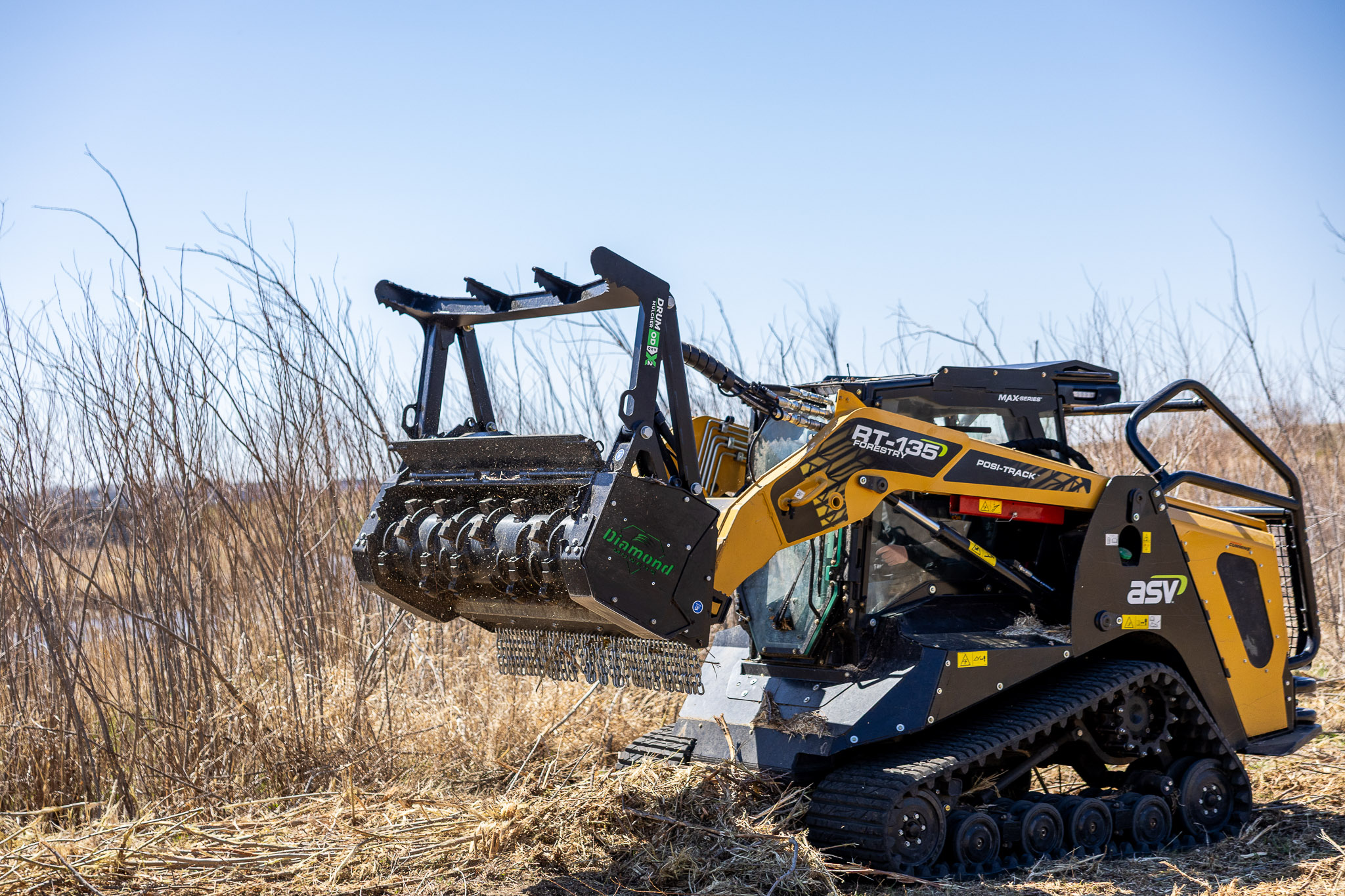
Modern skid-steer drum platforms such as those from Diamond Mowers make the open-drum versus depth-control choice explicit so contractors can pick from terrain and finish requirements, then match GPM—process discipline still decides whether teeth and motors survive the season.
Finish Specs: Define “Done” Before the First Pass
“Mulched” is not a finish specification. Agree on something observable:
- Chip size / texture—fine and even for landscape-facing work; coarser acceptable for fuel breaks and agricultural clearing.
- Stump height / stem treatment—flush mulching versus leaving low stems; who owns any follow-up grind.
- Mulch depth and distribution—windrows to be spread, or an even blanket; erosion risk on slopes.
- Ground disturbance—leave the soil profile alone versus intentional mixing and light contouring.
- Debris throw and cleanup—trap-door / deflector expectations near structures, cars, and trails.
Write those into the bid. A DC head run for fine finish on a rocky cut will burn teeth; an OD head run for “pretty” residential mulch may need extra passes the estimate never bought.
Carrier Setup and Operator Habits That Protect the Head
Geometry and hydraulics only help if the machine is set up to use them:
- Sightlines and push-bar technique—feed with the serrated push bar; do not use the drum as a battering ram.
- Trap door / deflector discipline near sensitive edges; open up only when throw distance is acceptable.
- Brake / spool-down habits when equipped—do not walk a still-spinning drum past people, trucks, or fence lines.
- Weight and balance—a heavy 72-inch head on a marginal carrier lifts the rear, hurts steering, and invites tip events on sidehills. Match cut width and head weight to the machine’s rated operating capacity with the attachment on the front.
- Auxiliary hydraulics—clean couplers, correct hose routing, and no pinched case drains.
When the brush sits on a steep slope, in a ditch bottom, or hard against a structure, a mini-excavator mulcher can be the better tool even if the skid-steer head is excellent in the open. Compact loaders win on speed across acres of accessible ground; excavators win on reach and placement.
A Practical Decision Snapshot
Site condition |
Lean toward |
|---|---|
Larger stems, fine first-pass mulch, limited rock contact |
Depth-control + sharp steel |
Small brush, rocky grade, intentional ground engagement |
Open drum + carbide |
Mixed week (some fine finish, some abuse) |
Plan tooth changes—or accept two specialized heads over one compromised setup |
Tight slopes / ditch lines / reach-critical work |
Consider excavator mulcher instead of forcing the skid-steer path |
Bottom Line
Open-drum and depth-control mulchers are different tools that share a cylindrical silhouette. Depth control limits bite for controlled infeed and finer finish when ground contact is light. Open drums take a larger bite and earn their keep when the head will work the ground and survive rock. Tip speed follows hydraulic honesty; teeth follow the finish and the dirt; the bid follows a written definition of “done.” Match those pieces on purpose and a compact mulching day stays productive—instead of turning into a parts invoice with a brush pile still standing.