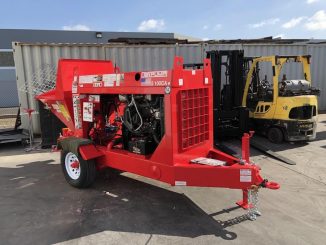















































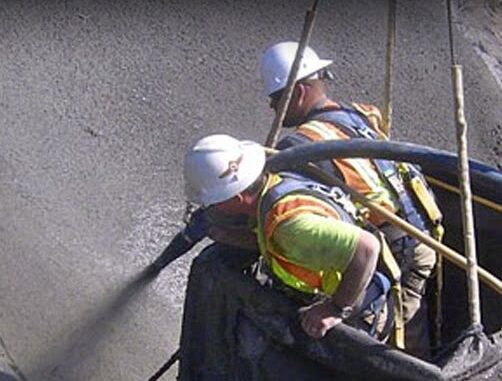
Vertical and overhead structural repair is where wet-mix shotcrete crews earn their keep—and where a sloppy setup burns bond strength, buries the job in rebound, and turns a shift into cleanup. Mixer-pump output, hose length, nozzle angle, air, and predampening habits have to match the substrate and the reach before the first bag hits the hopper. This guide is a crew-side setup checklist for repair, ICF, and underground work—not a general overview of every shotcrete process on the market.
Get the process decision, the pump size, and the nozzle discipline right first. Brand preference and paint color come later.
When Wet-Mix Shotcrete Beats Dry-Process for Structural Repair
Wet-mix shotcrete delivers a pre-mixed concrete or mortar through the hose and adds air at the nozzle for placement velocity. Dry-process (gunite) conveys dry material and introduces water at the nozzle. For many structural repairs—bridge seats, walls, tunnels, and other work where bond, encapsulation of reinforcement, and consistent water-cement ratio matter—wet-mix gives the crew a more uniform mixture and typically lower dust at the point of placement.
That does not make wet-mix automatic for every repair. Dry-process still wins on some long, intermittent, or highly variable reaches where stopping and starting with wet material in the line is painful, and on certain refractory or specialty applications where the contractor’s procedure is already built around a gun. Choose wet-mix when the repair specification, reinforcement congestion, and quality plan favor a homogeneous mixture and controlled water; keep dry-process in the toolbox for the jobs that truly need it—and train the crew on both instead of forcing one process into every niche.
Overhead and vertical faces punish indecision. Once you commit to wet-mix for a structural repair, size the mixer-pump and hose so the nozzle operator is not fighting surge, starvation, or a line that will not restart after every scaffold move.
Sizing Mixer-Pump Output and Hose Length for Vertical/Overhead Reaches
Output on the brochure is not the same as usable placement rate on a vertical face. Ultra-high-pressure swing-tube pumps used for refractory and shotcrete work commonly advertise piston face pressures on the order of 2,200 PSI and outputs that range from a few cubic yards per hour on mixer-pump combinations up to roughly a dozen cubic yards per hour on higher-output shotcrete pumps—always subject to mix, hose, and height. Match the machine to the day’s cubic yards and the vertical/overhead logistics, not to a peak number you will never sustain while the nozzle operator works a scaffold or man-basket.
Hose length and diameter steal pressure. Every added section, every tight bend, and every elevation gain shows up as slower material or a pump working harder than the mix deserves. Lay out the shortest practical hose run that still lets the nozzle operator cover the repair without constant pump moves. Keep spare hose, clamps, and a clear plan for cleanouts when you must stop mid-lift.
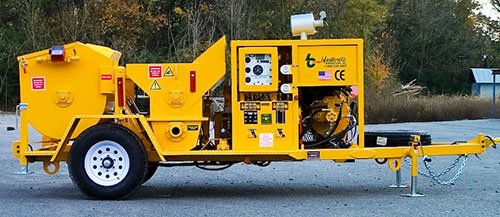
Mixer capacity matters on repair work as much as pump pressure. A mixer-pump with on-board mixing (for example, paddle or spiral mixers in the thousand-pound capacity class on some trailer units) keeps small structural repair batches consistent when ready-mix logistics are awkward. A dedicated high-pressure shotcrete pump fed from a separate mixer or ready-mix may suit larger continuous placements. Pick the configuration that keeps material fresh at the nozzle for the duration of each lift—not the one that looks busiest in the yard.
Nozzle Angle, Air, and Rebound Control That Protect Bond Strength
Bond and encapsulation fail at the nozzle more often than they fail in the lab. Hold the nozzle so material strikes the substrate at an angle and distance that build compaction instead of ricochet. On vertical and overhead work, that usually means working in controlled layers, keeping the nozzle roughly perpendicular to the surface as geometry allows, and moving in steady overlapping passes rather than dumping thickness in one spot and hoping vibration will fix it—shotcrete is not a poker pour.
Air at the nozzle provides velocity; too little and the mix slumps or hangs poorly, too much and you manufacture rebound and dust. Set air with the nozzle operator watching the finish and the rebound pile—not from a fixed habit that ignores today’s mix temperature and stiffness. Rebound is not free fill. Clear it from the work and from reinforcement before you bury it under the next pass; rebound left in place becomes a bond breaker and a future delamination.
Reinforce the habit with scaffolding or platform positioning that lets the nozzle operator see the substrate and keep a stable stance. A crew fighting a swinging basket or a blocked view will open the air, chase the stream, and grow the rebound pile. Manufacturers of wet-mix shotcrete mixer-pumps and pumps—including Blastcrete Equipment—publish pressure, output, and hopper designs so contractors can match equipment to repair and refractory placements instead of guessing from hose diameter alone.
Predampening and Silica-Dust Practices for Dry-Process Days
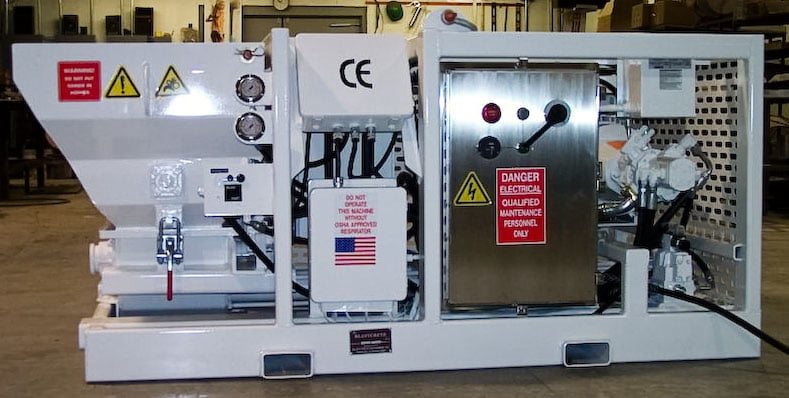
Even wet-mix-focused shops still run dry-process days. When they do, predampening and dust control decide whether the crew can see, breathe, and place accurately. Predampeners wet the dry material ahead of the gun so the nozzle operator is not chasing a dust cloud and an unpredictable water demand at the tip. Use them when the material and the procedure call for it—especially in enclosed or underground spaces.
Silica exposure is a compliance and crew-retention issue, not a paperwork afterthought. Follow the project’s OSHA silica plan: wet methods where required, respirators when the plan says so, and housekeeping that does not re-aerosolize dust at the end of the shift. Dry-process days that skip predampening and respiratory controls do not finish faster; they finish with complaints, failed inspections, and a nozzle operator who cannot see the bond line.
Keep dry and wet kits staged so a process change mid-week does not become a scavenger hunt. Nozzles, tips, predampener parts, and water meters belong on the same checklist as the pump’s swing tube.
Cleanup and Swing-Tube Maintenance That Keep Pumps Available Next Shift
High-pressure swing-tube pumps punish neglected cleanout. Material left in the hopper, swing-tube section, or line sets up into tomorrow’s blockage. Swing-out or lift-up hoppers exist so crews can reach the swing-tube section quickly—use that access at every stop that risks set, not only at the end of the week.
Flush lines until discharge is clean, wash the hopper and agitator, and inspect wear parts on the schedule the manufacturer publishes. Check seals, cutting rings, and hydraulic pressures that affect piston face performance. A pump that “almost” cleaned out is already late for the next repair window.
Stage the next shift before you leave: water, admixtures, tips, clamps, respirator supplies, and a written note on what mix and hose layout today used. Vertical and overhead repair rewards boring consistency. The crew that cleans the swing tube and racks the hose goes home; the crew that skips it starts tomorrow under a dead pump.
Document the day’s hose layout, tip size, air setting, and mix in the same place you keep rebound observations. The next shift should not rediscover what already worked on the north elevation.
Final Thoughts
Wet-mix shotcrete on vertical and overhead structural repair is a system: process choice, pump and hose sizing, nozzle and air discipline, dust control on dry days, and swing-tube cleanout. Size equipment to the reach and the cubic yards you will actually place, protect bond by controlling angle and rebound, and treat cleanup as part of the placement—not an optional chore. Do that and the repair stands a chance of matching the specification instead of matching the rebound pile.