










Highway and site crews relocate Jersey barriers, F-shape walls, and other precast sections constantly—and too many still wrap the top with a sling choke-off that was never rated for that geometry. A barrier that walks in the hitch, a strap that abrades at the edge, or a pick that needs three people to “hold it steady” is a below-the-hook control problem: crushed fingers, chipped concrete, and stop-work calls when traffic is already live next to the lane.
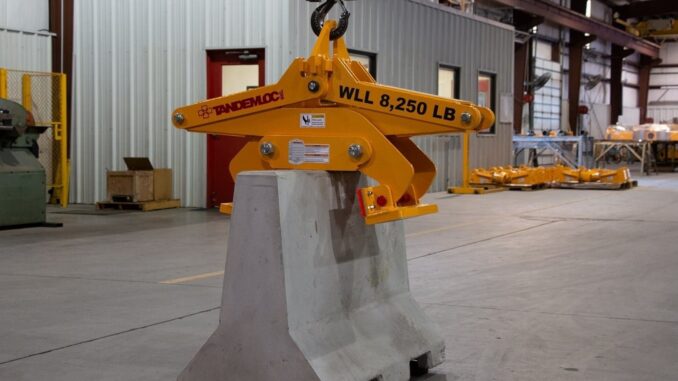
Purpose-built concrete barrier grabs seat on the wall the way the profile was meant to be gripped—jaw range matched to top thickness, pads that protect the face, and a mechanical action that tightens under load. This guide covers why those grabs beat improvised chokers, how to match capacity and opening range, what tag-line habits matter near traffic, and the inspection and proof-test habits that keep the tool honest between projects.
Why Purpose-Built Barrier Grabs Beat Improvised Chokers
Improvised choke-offs fail for predictable reasons. Precast barriers have narrow top profiles, sharp corners, and mass that shifts the moment the section clears the trailer. A vertical hitch that worked on a palletized crate does not automatically work when the center of gravity sits low and the only convenient wrap points are two thin edges. Straps cut, slip, or force the crew to over-tighten until the concrete spalls—and tag lines become a wrestling match that still leaves the load free to rotate toward the open lane.
A purpose-built barrier grab reverses that logic. The jaws open over the top of the wall, seat on the designed contact faces, and clamp as the hoist takes weight. Replaceable grip pads hold without chewing the face the way bare steel or a hard sling edge can. Once the grab is sized correctly, the pick becomes a crane-and-spotter problem—not a four-person improvisation at the stake pocket.
Improvised slings also hide documentation gaps. If you cannot point to a rated capacity for this barrier width today, you do not have a lift plan—you have a habit. Rated barrier grabs exist so capacity, grip range, latch behavior, and inspection points are published for the attachment you actually put on the hook.
Matching Grab Capacity and Opening Range to Barrier Size
Capacity is not the same as “it lifted yesterday’s wall.” Match the grab’s rated working load limit to the heaviest barrier you will pick in that configuration, including water, debris, or hardware still in the section. Then match opening range to the actual top width and profile. Standard Jersey, California, Texas, and Type F shapes are not interchangeable just because they are all gray concrete—confirm the published profile list for the model you are mobilizing.
Measure before you mobilize. A common top-surface window in the roughly 6-to-12-inch band covers many highway barriers, but specialty walls or tapered sections can sit outside that window. If the jaws cannot seat fully across the designed contact faces, do not “make it work” with packing or a partial bite. Wrong range is how loads walk out of the grab mid-swing.
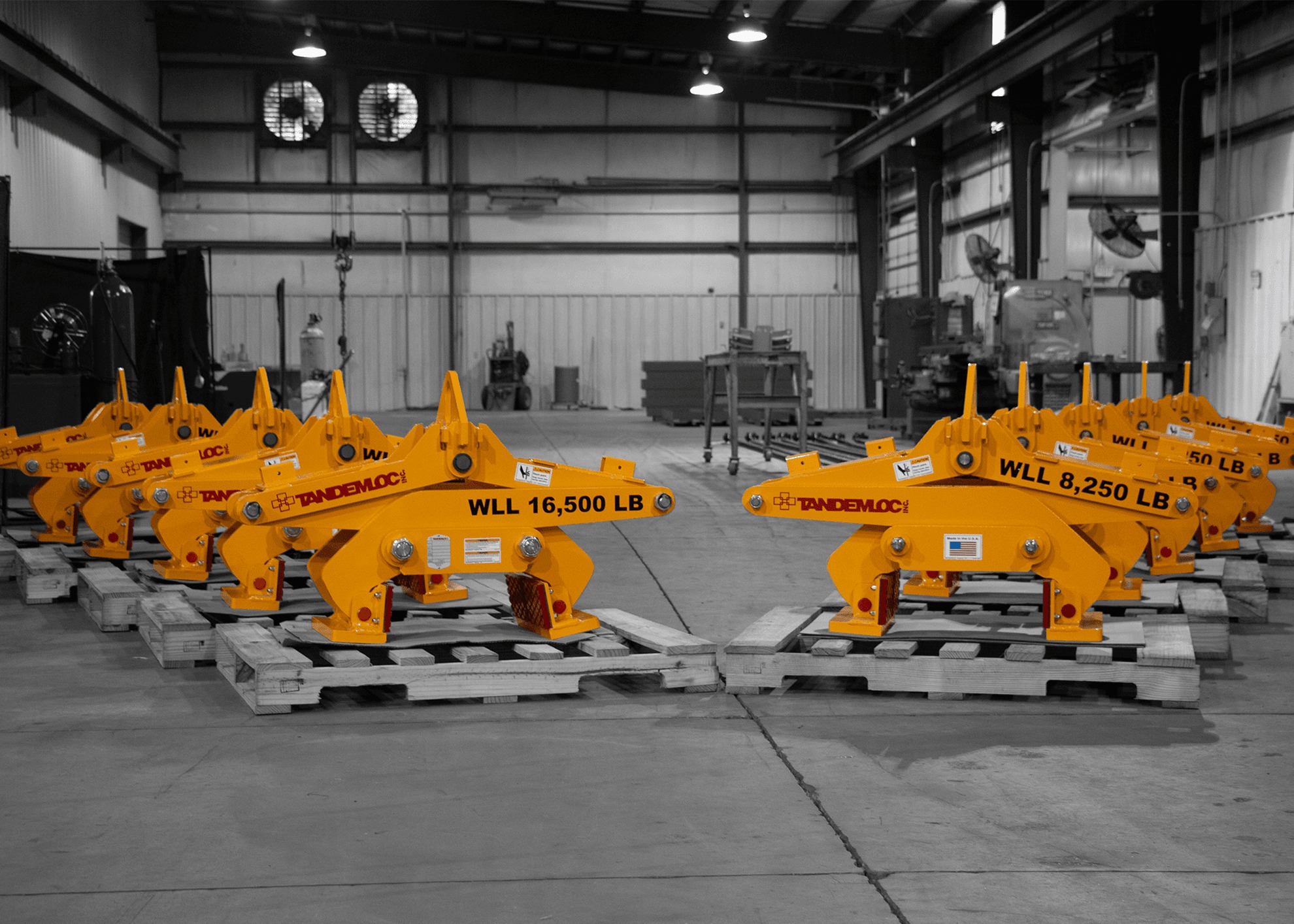
Published capacities for purpose-built grabs often sit in discrete classes. For example, manufacturers such as Tandemloc list concrete barrier grabs in working load classes such as 8,250 lb and 16,500 lb with a 6–12 inch top-surface range for common Jersey, California, Texas, and Type F profiles—use the maker’s current model data for your pick, not a remembered number from the last job. Choose the class that covers your heaviest planned section with the margin your lift plan already requires.
Carrier and headroom matter as much as the clamp. Crane picks need clear boom path, adequate headroom for the grab plus shackle stack, and a briefed set location before the first barrier leaves the deck. The grab only solves the grip—you still own the swing, the spotters, and the set.
Rigging Geometry, Tag Lines, and Spotter Rules Near Traffic
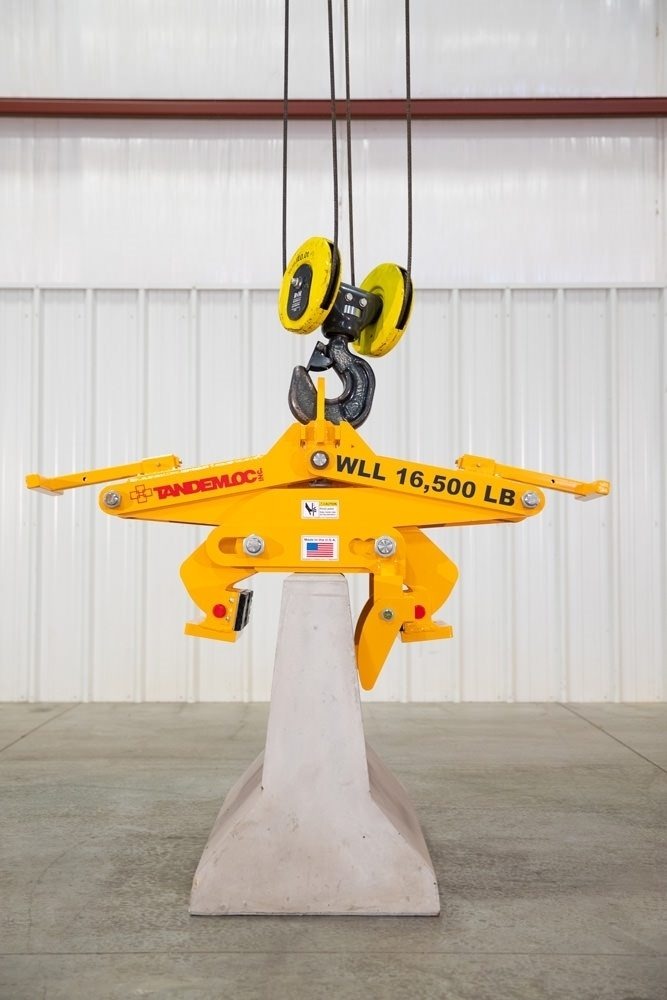
Barrier moves next to live traffic punish sloppy geometry. Keep the hook over the grab’s designed lift point so the jaws seat evenly. Confirm the latch or auto-sequence feature—if the grab uses a touchless or auto-latch style mechanism—cycles correctly unloaded before you trust it over a travel lane. Optional positioning guides and ground handles on some models let crews fine-tune seat and set without putting hands under the load; use them the way the manufacturer describes.
Tag lines are for orientation and soft landing—not for holding capacity the grab should already provide. Assign trained tag-line hands with a clear escape path, never standing under the load or between the barrier and live traffic. Brief the pick path from trailer or stack to set location, including clearances past light poles, sign posts, and temporary barrier already in place. If wind, glare, or dust kills visibility, slow the swing or pause.
Spotter rules near traffic belong in the daily lift brief. Spotters need radios or agreed hand signals, high-visibility gear, and authority to stop the pick when a vehicle or worker enters the swing radius. Keep non-essential crew outside the exclusion zone until the barrier is set and the grab is clear. A purpose-built grab reduces improvisation at the hitch; it does not replace traffic control or a lift plan.
Inspection and Proof-Test Habits Between Projects
Barrier grabs fail between projects more often than mid-pick—if they are stored dirty, pin-dry, and ignored. After demobilization, clean concrete paste off pads and frames, inspect grip pads for chunking or glazing, and check pins, keepers, latch parts, and wear surfaces before the attachment goes back on the rack. Keep replacement pads in the program if the manufacturer stocks them; a worn face is a stop item.
Treat documentation like part of the tool. Capacity markings, identification plates, and inspection status should remain readable. Below-the-hook devices used in construction live under the ASME B30.20 / BTH-1 language your lift program already references—confirm the grab’s design category and service class match the duty you are asking of it, and follow the manufacturer’s inspection intervals.
Proof testing belongs in the ownership story, not only at the factory. Many makers individually proof test barrier grabs before shipment—commonly at a percentage of rated capacity such as 125%—and certificate records may ride with the unit. Between projects, do not invent your own overload test in the field; use qualified testing and the manufacturer’s criteria when a recertification is due. Close the loop with a function check when the grab comes back out: open/close action, latch behavior if equipped, and confirmation that the opening range still matches the walls on this contract.
Final Thoughts
Improvised sling choke-offs on Jersey and precast barriers are a slow way to damage product and put hands in the wrong place. Match a rated barrier grab to the profile, top width, and weight you are actually picking; brief rigging geometry, tag lines, and spotters before the first hoist near traffic; and inspect pads, pins, and latch hardware between projects so the next crew inherits a tool—not a surprise. Do that as routine below-the-hook practice, and highway and site barrier moves stay controlled instead of improvised.