



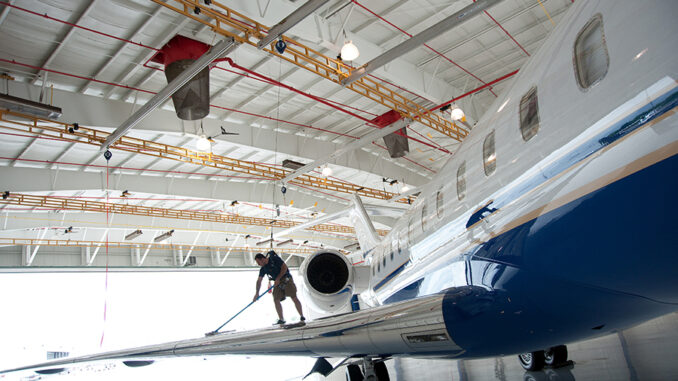
Shop floors, crane runways, and equipment maintenance bays share a common problem: workers need to move at height while staying tied off—and the anchorage above them has to keep up. A single-point self-retracting lifeline (SRL) on a beam clamp works for a short task in one spot. Stretch that work across a bridge-crane runway, a truck bay, or a long service platform, and you face a different choice: a flexible horizontal lifeline (wire-rope style) or a rigid-rail / enclosed-track system.
Both can meet OSHA and ANSI expectations when designed and used correctly. They do not behave the same when someone falls. Wire rope stretches and sags. Rigid rail largely does not. That difference shows up in fall clearance, swing fall, multi-worker coverage, and how much structure you need above the work. This guide is about matching the architecture to the shop—not picking a brand from a brochure.
What Each System Actually Is
A wire-rope horizontal lifeline (HLL) is a tensioned cable between end anchors (sometimes with intermediate supports). Workers connect with a lanyard or SRL and travel along the rope. Under arrest, the line deflects. That sag is engineered into the clearance calculation, and it grows with span, tension loss, and the number of people on the line.
A rigid-rail / enclosed-track system uses a stiff steel (or aluminum) track—often an enclosed monorail or bridge—with a trolley that follows the worker. When used with an energy-absorbing SRL, the attachment point stays nearly overhead and the track does not “give” like cable. Arrest distance is mostly harness stretch, SRL payout, and any energy absorber—not cable sag across a long span.
Mobile options (rolling A-frames, portable bases, swing arms) sit between those two worlds: they bring a rigid overhead anchor to a temporary location without permanently wiring the building. They still win or lose on clearance and coverage the same way fixed rigid rail does.
Fall Clearance: Where Rigid Rail Usually Wins
Clearance is the free space under the worker’s feet after a fall before they hit a deck, machine, or the floor. Add up free-fall distance, deceleration/absorbing distance, harness stretch, D-ring shift, and a safety margin—then compare that total to the height you actually have.
Wire-rope HLLs add another term: sag/deflection of the lifeline. On long spans or multi-user lines, that sag can eat feet of clearance you thought you had. Shops with low eave heights, mezzanines over equipment, or workers standing on truck tops and crane bridges often cannot afford that extra drop.
Rigid rail shrinks that problem because the anchorage does not stretch like cable. Pair it with a short-arrest SRL and keep the trolley near vertical over the worker, and required clearance drops compared with a sagging HLL over the same bay. That is why rigid rail shows up in hangars, rail shops, and maintenance pits where the “fall” might only be a few feet to steel or concrete.
Rule of thumb for planners: if your worst-case clearance after a full clearance calculation is tight, do not paper over it with a longer wire-rope span. Change the anchorage geometry, lower the free-fall, or move to a rigid overhead path.
Anchor Continuity Along Runways and Platforms
Fall protection fails in practice when workers disconnect to move past an obstacle—or never connect because the system fights every step. Continuous anchorage means the connection point travels with the work without forced re-hooks at every bay.
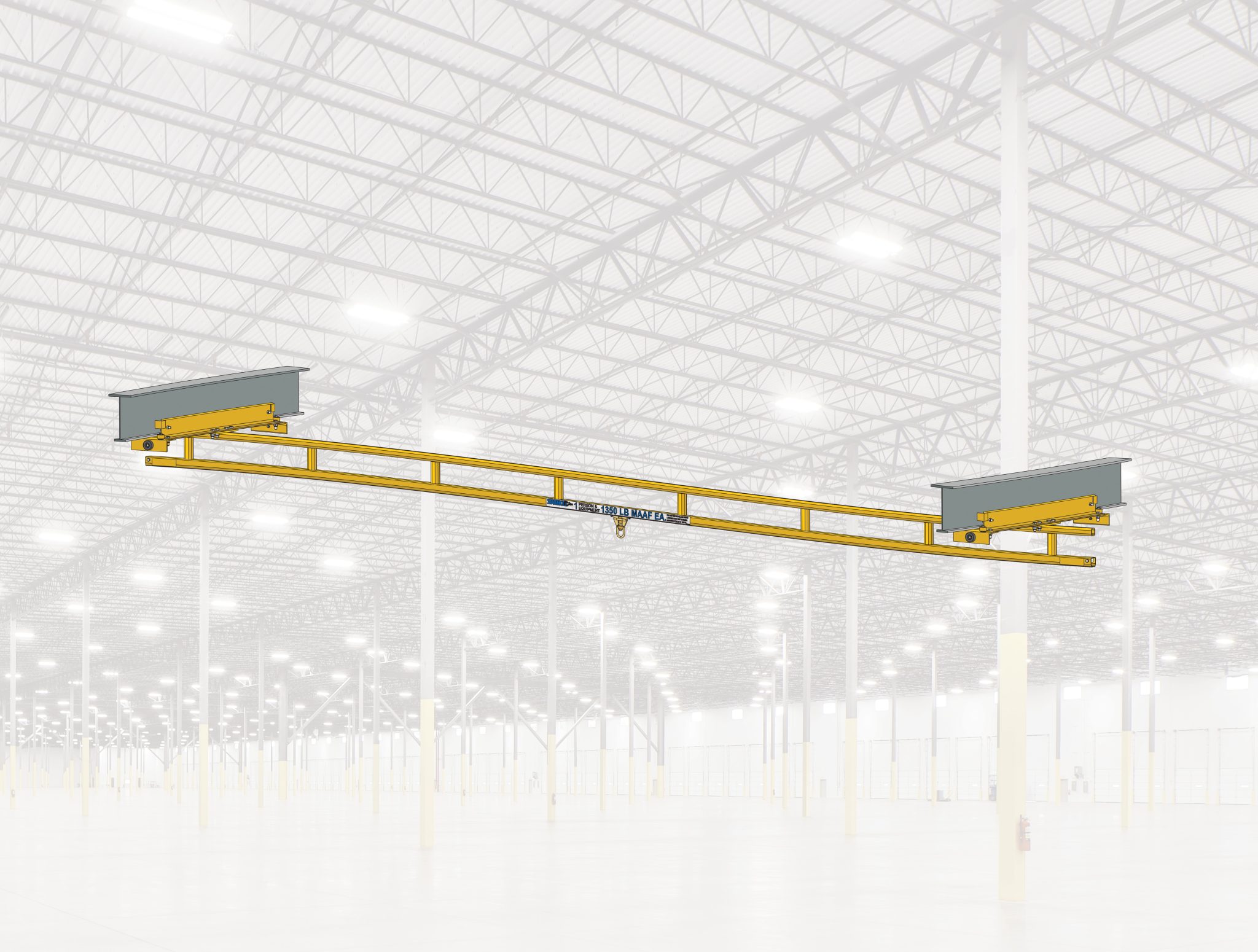
- Bridge-crane runways and service platforms—walkways along runway beams need an overhead path that follows the inspector or oiler the length of the building, not a chain of fixed points that force leapfrogging.
- Wide maintenance areas—a traveling bridge on rigid track (or an underrunning bridge on existing crane runways) lets the trolley stay overhead while the worker moves laterally across a vehicle, aircraft, or machine—not just along one axis.
- Multiple workers—wire-rope systems must be engineered for simultaneous users; load share and sag stack quickly. Rigid-rail bridges and monorails are commonly specified per-person capacity on dedicated trolleys so one fall does not yank another worker through a long cable deflection.
Enclosed track also keeps dirt and debris out of the rolling path better than an open wire, which matters in fabrication shops and outdoor wash bays. Manufacturers of enclosed-track and bridge-style fall-arrest systems—including industrial crane builders such as Spanco—publish worker-capacity and MAAF (maximum average arresting force) limits for a reason: the system is only “continuous” if every trolley, end stop, and splice is rated for the people actually clipped in.
When Wire-Rope or a Mobile SRL Is Enough
Rigid rail is not automatic. Wire rope and simple SRLs still fit many jobs:
- Short, infrequent tasks at a known spot—beam-clamp SRL, temporary horizontal line for a one-day roof edge, or a certified mobile anchor for a single machine.
- Very long outdoor spans where building a rigid bridge is cost-prohibitive and clearance under the line is generous (open yards, high roofs with empty space below).
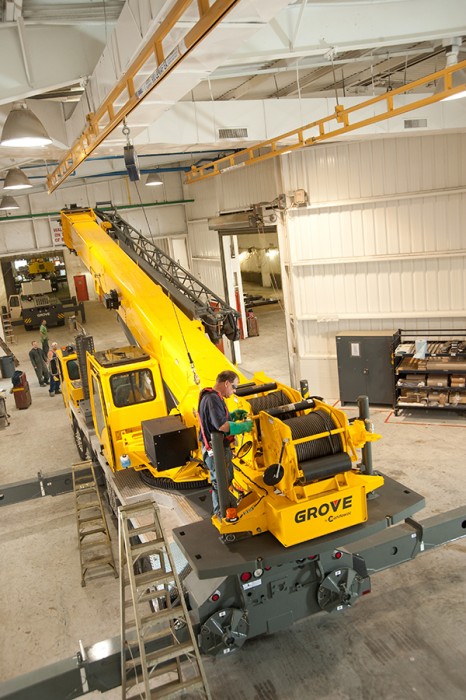
- Changing work locations across a large site—portable rigid frames or swing arms may beat a permanent monorail, and a well-planned HLL may beat both if clearance allows.
- Fall restraint (not arrest)—when the system is set so the worker physically cannot reach the edge, cable or fixed-length lanyards can be simpler than a full arrest rail.
If workers already bypass the system because it snags, binds, or requires constant re-anchoring, the “cheaper” wire-rope layout is the expensive one. Continuity and usability are part of the hazard control—not accessories.
Swing Fall, Rescue, and Inspection
Keep the anchorage as close to directly overhead as practical. Off-center wire-rope or rail connections create swing fall into columns, crane bridges, or vehicle sides. Traveling bridges and properly laid-out monorails exist specifically to keep the trolley above the worker as they move.
Every active system needs a written rescue plan before the first shift uses it. Arrest without prompt rescue is still a medical emergency (suspension trauma). Train the crew on self-rescue and assisted rescue gear that matches the anchorage you installed—not a generic ladder plan that cannot reach a worker hanging under a runway.
Inspect before use and on the manufacturer’s interval: track splices and end stops, trolley wear, labels and capacity markings, SRL housings and lifelines, harnesses, and structural connections into the building or runway. After any fall event, remove the system from service until a competent (and where required, qualified) person clears it. Wire-rope lines often need re-tensioning and component replacement after arrest; rigid rail typically needs a thorough visual and functional check, plus replacement of energy-absorbing user gear.
Final Thoughts
Choose rigid rail when fall clearance is tight, workers must travel long distances at height, multiple people share the same bay, or swing fall would be severe under a sagging cable. Choose wire-rope HLLs or point SRLs when clearance is generous, work is short and localized, or the job moves faster than a permanent track can follow. Spec the geometry first—clearance, path of travel, user count, and rescue—then pick the hardware that matches. The right system is the one the crew will actually stay connected to for the whole task.


