















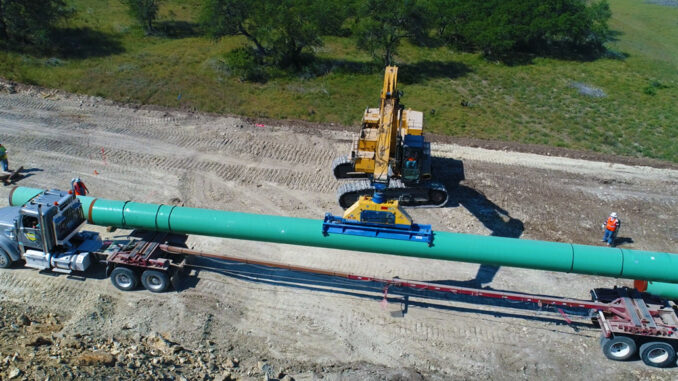
Every time a crew threads a sling under a coated pipe joint, pries chokers under a plate, or waits on a rigger to land hardware through a precast insert, the clock is running. Vacuum lifting flips that sequence: seal on a sound top surface, verify vacuum, lift, place, release. No hardware through the load. Used on the right materials, that change cuts handling time and keeps people farther from suspended steel and concrete. Used on the wrong surfaces, it is a stalled pad and a scramble back to conventional gear.
This guide is about knowing when a non-penetrating vacuum lift speeds pipe, plate, and precast moves—and when slings, magnets, or inserts still win.
What Vacuum Lifting Actually Changes
A vacuum lifter creates a sealed low-pressure zone between a pad and the load. Atmospheric pressure holds the piece to the pad; the host machine (excavator, loader, crane, or skid steer) supplies the lift path. The practical differences versus conventional rigging:
- No sling under or through the piece—you do not need clear underside access, cribbing gaps for chokers, or open lifting inserts for every pick.
- Faster engage and release—seal, pump down, lift; reverse at set. That removes the walk-around time that dominates short yard and truck cycles.
- Coatings and finished faces stay intact—pads grip the exterior instead of biting edges with chains or scoring soft wraps.
- Fewer hands near the load—taglines and spotters still matter, but you are not sending people under pipe to pull webbing.
None of that replaces a lift plan, capacity checks, or manufacturer reserve-time rules. Vacuum is still a below-the-hook (or attachment) system with a seal that must hold for the full pick.
Seal Surface: The Make-or-Break Spec
Vacuum capacity lives or dies on the seal surface. Before the first production lift, evaluate:
- Continuity—coated steel pipe, plate, and dense precast with a continuous pad footprint beat porous block, heavily pitted plate, or broken edges.
- Contamination—mud, ice, loose scale, weld spatter, and thick dust break seals. Wipe or brush the pad zone; do not invent vacuum with a dirty contact ring.
- Curvature and pad match—pipe pads are contoured; flat pads belong on plate and panels. Mismatch leaks along the contact line.
- Damage and porosity—cracked coatings, open honeycombing, drilled vents, and unfinished saw cuts that cross the seal path are red flags.
- Temperature and stiffness—extreme cold hardens some seals; very hot surfaces can soften compounds. Follow the pad rating for the day you are working.
If you cannot get a stable vacuum reading with reserve time to spare, stop. Swap pads, clean the surface, or switch methods. A soft seal is not a partial success—it is a drop waiting for a bump or a wind gust.
Cycle Time: Where Vacuum Beats Conventional Rigging
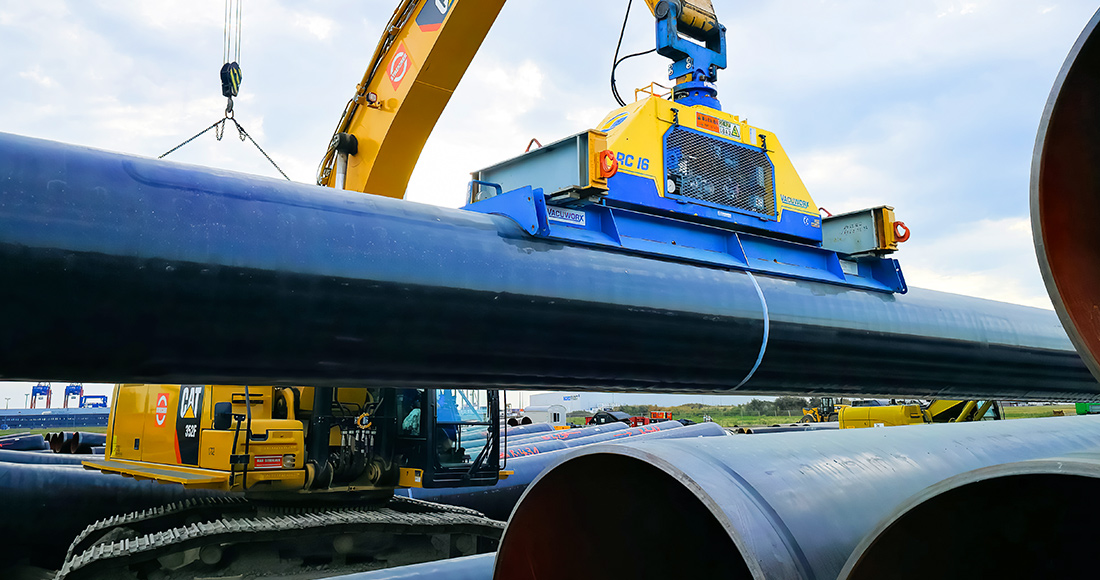
Cycle time is approach, engage, lift, travel or swing, set, and release. Vacuum economics show up when engage and release dominate the clock:
- Truck unloading and yard stacking—joint after joint or plate after plate with no underside threading between picks.
- Coated line pipe and FBE/PE wraps—slings risk coating damage and force extra protection steps; a matched pad picks from the top.
- Dense plate and panels with clean faces—magnets need ferrous continuity; vacuum works on non-magnetic and coated faces when the seal is sound.
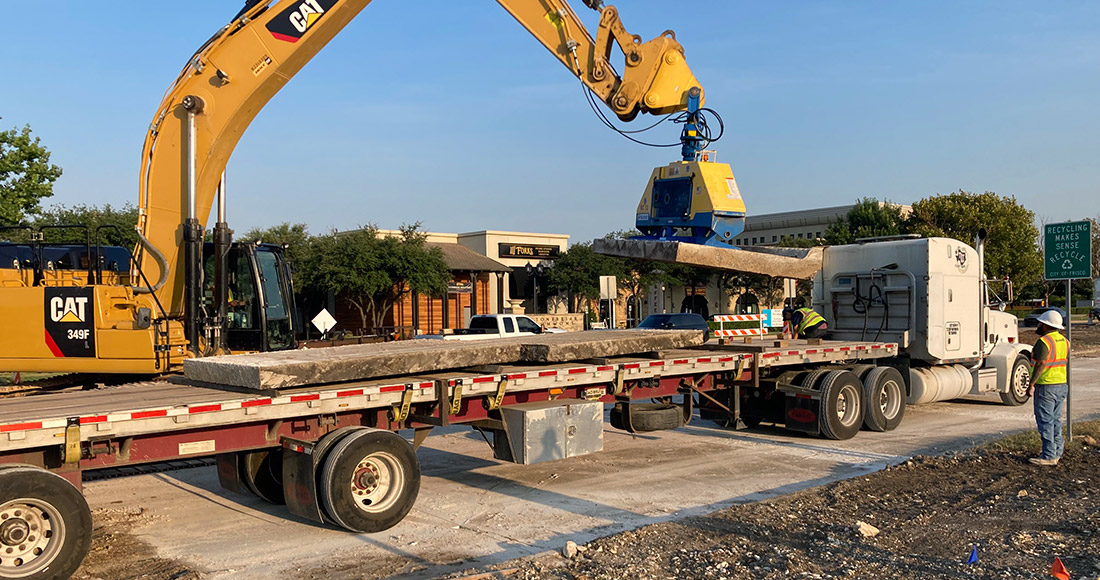
- Precast slabs and panels staged flat—top-face picks avoid hunting for inserts or building cribbing just to pass a sling.
- Repetitive same-geometry loads—one pad setup, many identical cycles; learning curve pays off in a shift, not a year.
Time a conventional sling cycle against a vacuum cycle on the same truck or stack. If the difference is measured in minutes per piece and you move dozens of pieces a day, the attachment pays for itself in labor and machine wait—not in brochure tonnage.
When Vacuum Beats Conventional Rigging—And When It Does Not
Prefer vacuum when the load is smooth enough to seal, heavy enough that sling setup burns clock, and shaped so a matched pad can sit fully on the contact face. Pipeline laydown, plate yards, saw-cut slab removal, and precast staging are classic fits. Systems from suppliers such as Vacuworx are built around those host-machine and pad combinations—use manufacturer capacity charts and reserve-time guidance as planning inputs, then verify on your surface and host.
Stay with slings, shackles, magnets, or engineered inserts when:
- The surface will not seal—porous masonry, heavy corrosion, open texture, or irregular rubble that leaks faster than the pump recovers.
- Geometry is wrong for the pad—narrow beams, open-web pieces, small footprints, or loads that need multi-point balance a single pad cannot provide.
- You need a positive mechanical connection—through-bolted lifts, certified insert picks, or specs that forbid vacuum for that commodity.
- Wind, dynamic swing, or travel distance exceed what your reserve time and tagline plan support.
- Ferrous plate is better on magnets—thin, oily, or perforated plate sometimes seals poorly; a magnet system may be the faster, more reliable tool.
Do not force vacuum onto a bad seal because the machine is already on the truck. Method selection is a surface and cycle-time decision first.
Host Machine, Vacuum Level, and Reserve Time
Match the lifter to the carrier and the chart:
- Host capacity and geometry—rated lift at the radius you will work, plus attachment weight, plus dynamic factors. An excavator that can dig a trench is not automatically legal for a long pipe at full stick.
- Power source—self-contained diesel vacuum packages versus host hydraulics. Confirm flow, pressure, and case-drain needs before you assume “quick coupler and go.”
- Vacuum level and alarms—know the green-band reading for your pad and load. Never lift on a soft needle or muted alarm.
- Reserve / hold time—understand how long the system holds a sealed load if the pump stops. That number drives how far you travel and whether a mid-swing abort is survivable.
- Rotation and placement—many pipe and panel jobs need controlled spin to land square. Plan the rotator and tagline path before the first pick.
Train operators on seal checks the same way you train on outrigger setup: every shift, every pad change, every weather change.
Pad, Seal, and Daily Care
Pads and seals are wear parts. Treat them like cutting edges:
- Inspect the sealing lip for cuts, flat spots, embedded grit, and hardening.
- Keep spare seals on the truck for the pads you run most.
- Store pads clean and out of UV abuse when possible.
- Log vacuum performance—creeping loss on identical loads usually means seal wear or a contaminated face, not “the pipe got heavier.”
A cheap day of running a chewed seal is an expensive way to discover reserve time was fiction.
Field Checklist Before You Commit the Method
- Confirm load type, weight, CG, and required orientation at set.
- Verify pad type (pipe contour vs flat) and contact area against the chart.
- Clean and inspect the seal zone on the first pieces of each lot.
- Prove vacuum level and reserve behavior on a test pick at low height.
- Brief taglines, exclusion zones, and abort criteria for wind and soft seals.
- Keep a conventional rigging plan ready for pieces that fail the seal test.
Final Thoughts
Vacuum lifting speeds pipe, plate, and precast moves when the top surface can hold a seal and engage/release time is the bottleneck. It does not replace judgment about porosity, pad match, host capacity, or reserve time. Measure the surface, time the cycle, and pick the method that keeps both the load and the people intact—without forcing slings through a piece that never needed them, and without forcing vacuum onto a face that will not hold.