













































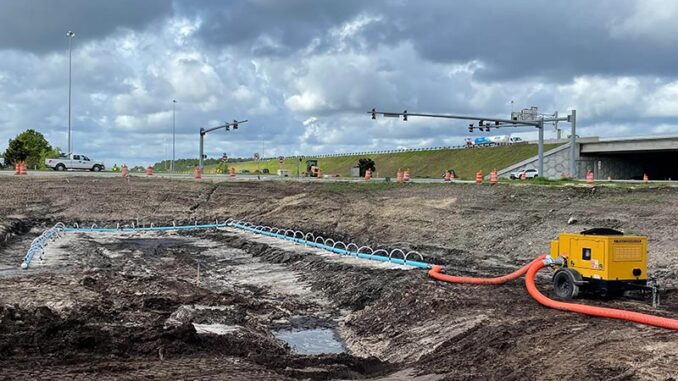
Excavations do not stay dry by hope. Overnight rain, a rising water table, a clogged suction hose, or a pump that was never sized for the real head can put two feet of water back in the hole before the morning toolbox talk. Losing the hole costs more than a late start—it remobilizes pumps, delays formwork or pipe, and can undermine slopes that were stable when you left.
This guide is about setting a bypass or dewatering pump so the excavation stays workable overnight: reading head and solids, laying out suction so the pump can actually prime and stay primed, sizing standby capacity, and checking the discharge path so you do not create a new problem downstream. It is field setup discipline for a single pump or a small redundant pair—not a high-volume flood-response spread plan.
Start With the Water Problem, Not the Trailer Color
Before you hitch anything, write down what the pump must do in plain numbers:
- Where the water comes from—groundwater seepage into an open cut, storm inflow, a pipe that must stay in service (bypass), or a mix.
- Static head—vertical distance from the lowest water surface you will pull from to the highest point on the discharge path (or free discharge elevation).
- Friction and fittings—hose length, diameter, elbows, check valves, and elevation changes that add dynamic losses on top of static head.
- Solids and trash—percentage and size of sand, silt, gravel, leaves, or construction debris the flow will carry.
- Duty window—continuous overnight hold, daytime drawdown only, or true 24/7 bypass of a live line.
Total dynamic head (TDH) is roughly static lift plus friction losses at the flow you actually need. Undersizing for “it looked like a little water” is how crews wake up to a swimming pool. Oversizing without a plan for minimum flow and cavitation is how you chew impellers and still flood when the wrong pump is the only one on site.
Match pump type to the duty. Trash-capable centrifugal and diaphragm units earn their keep when the sump is dirty. Cleaner groundwater with a controlled wellpoint network is a different layout than an open-sump trash pump fighting leaf mats and gravel. Bypass of a sanitary or storm line adds isolation, redundancy, and odor or spill controls the excavation sump may not need—but the head-and-hose math still comes first.
Suction Layout: Where Most “Bad Pumps” Actually Fail
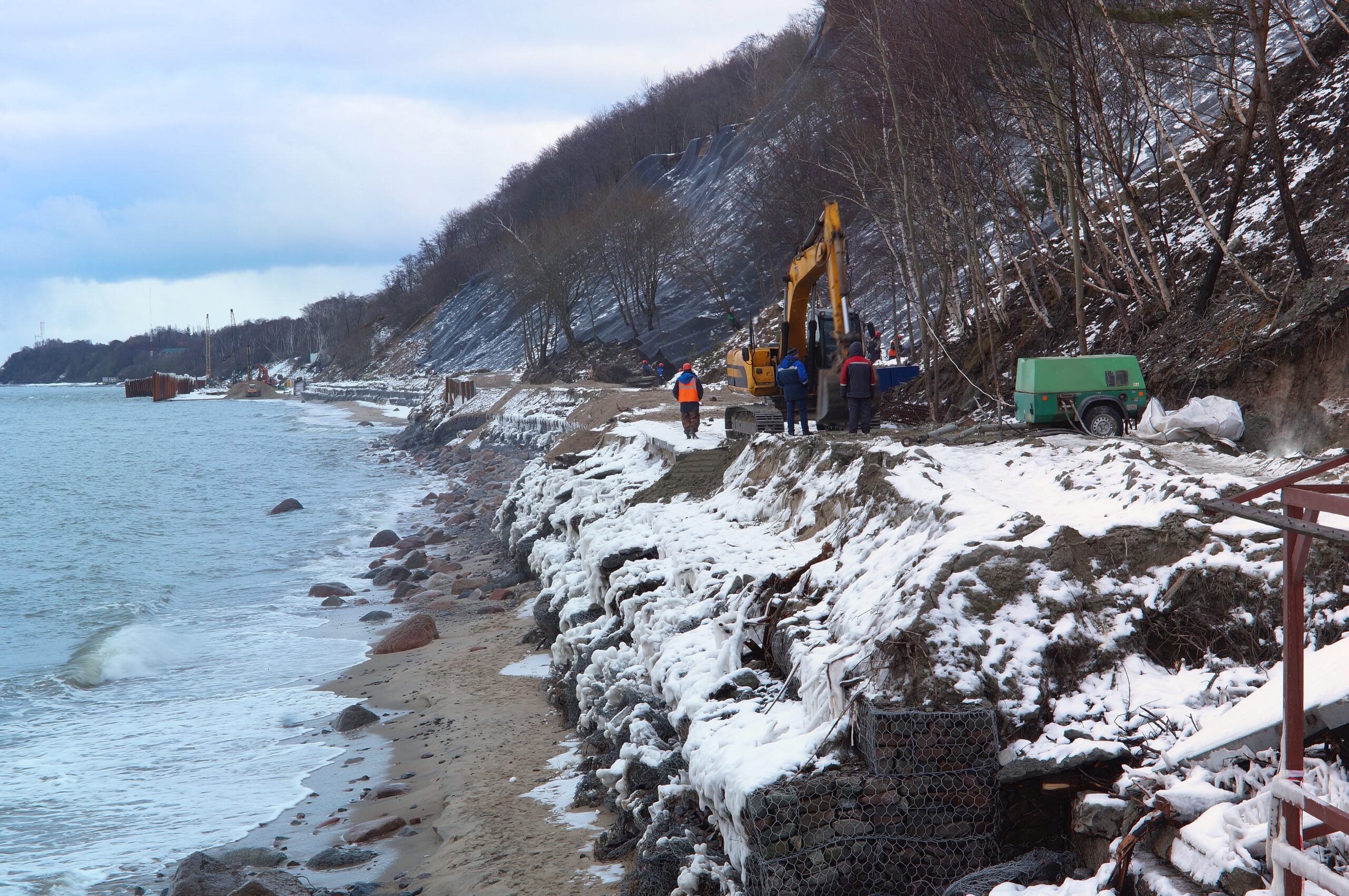
Pumps do not suck magic from mud. They need a flooded or carefully primed suction path with air-tight joints, enough submergence to avoid vortexing, and a strainer that passes the solids you expect without packing solid in the first hour.
Field habits that keep suction honest:
- Keep suction hose as short and fat as the setup allows—friction and air leaks on the suction side kill performance faster than most discharge mistakes.
- Joint discipline—camlocks seated, gaskets present, no “temporary” tape fixes on overnight duty. One whistle of air overnight is enough to lose prime.
- Strainer and submergence—set the intake below the lowest planned water surface with clearance off the bottom so you do not vacuum clay into the eye. A strainer that is too fine for sandy silt will blind; one that is too open will pass a rock that wedges the impeller.
- Avoid suction lift heroics—practical atmospheric suction lift is limited. If the pump sits high on the bank and the sump is deep, relocate the pump, use a submersible, or change the sump geometry instead of hoping the curves still apply in thin air.
Walk the suction line at the end of the day the same way you walk trench boxes. A hose kinked under a tire track or a strainer buried in collapse spoil is an overnight failure waiting for darkness.
Discharge Path and Where the Water Goes
Discharge is not “away from the hole.” It is a permitted or approved path that will not erode the bank, flood the neighbor, reload the excavation through a short-circuit, or blast an unprotected outlet into a ditch.
Check elevation at the high point of the hose run, support long runs so couplings do not pull apart, and dissipate energy at the outlet with a splash plate, riprap, or a stilling area when velocities are high. If you are bypassing a live line, confirm isolation points, check valves, and what happens if the primary pump stops at 2 a.m.—the discharge plan and the standby plan are the same conversation.
For open excavations, keep discharge far enough from the cut that return seepage and surface runoff do not undo the drawdown you just paid for. Mark hose runs so the morning excavator does not drive through the only discharge you have.
Redundancy: The Overnight Rule
If losing the hole overnight is unacceptable, one pump with no backup is a bet—not a plan. Redundancy does not always mean a second identical trailer spinning in parallel. It can mean a sized standby staged and plumbed for a fast swap, a smaller unit that holds the seepage load while the primary is repaired, or a second power/fuel plan when the failure mode is fuel or electrical—not hydraulics.
Size the standby to the overnight seepage or bypass load you cannot afford to lose, not to the peak daytime dump-truck washdown flow. Confirm the standby can share the same suction and discharge layout without a two-hour re-hose in the rain. Fuel for continuous duty through the night—plus margin—belongs on the checklist next to hose gaskets.
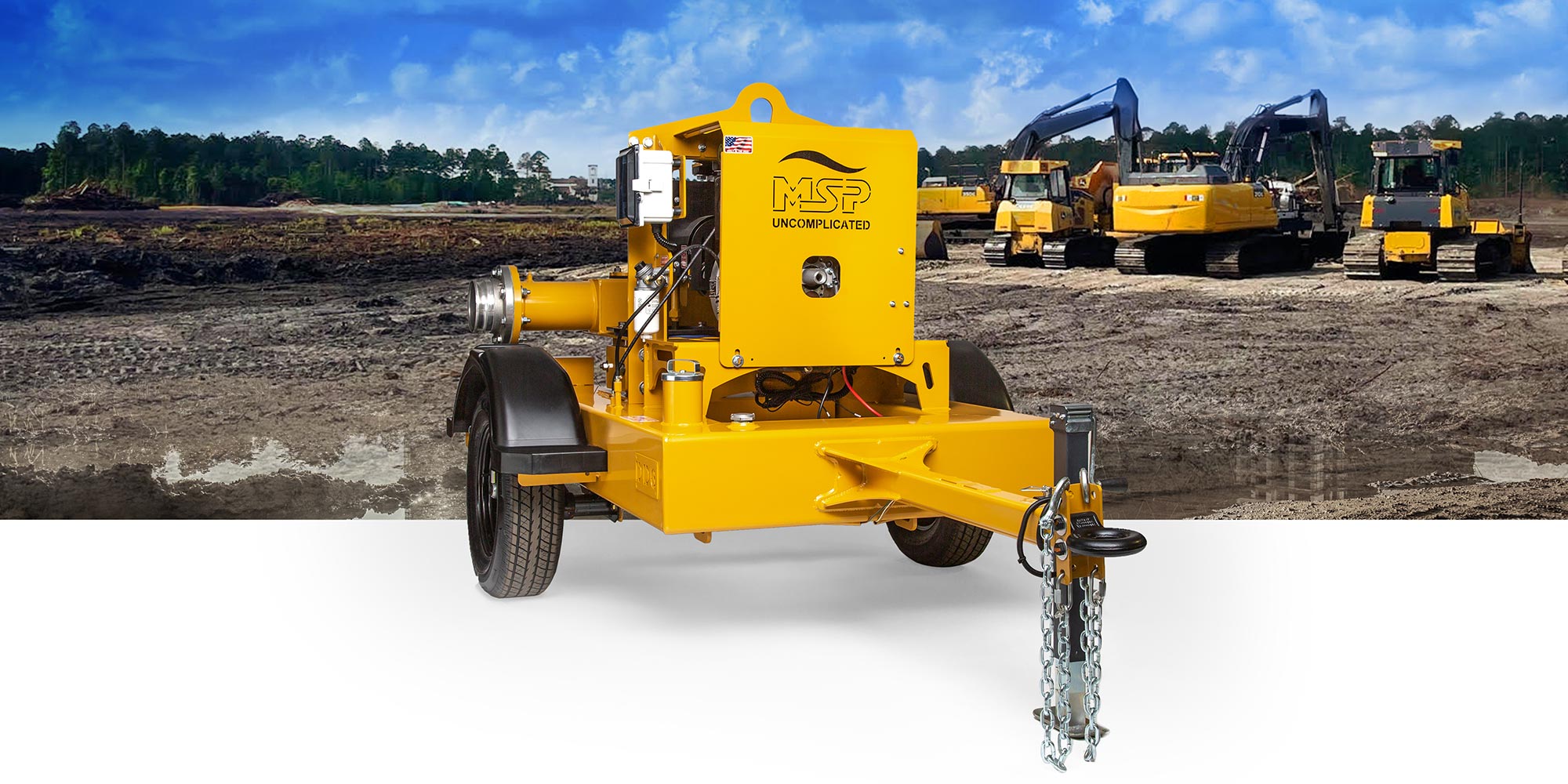
Manufacturers and rental houses that live in dewatering—such as Myers-Seth Pumps—publish performance curves, solids-handling notes, and application guidance that should drive the overnight pick. Use the curve for your real TDH and solids story; do not rent by inlet size alone.
Commissioning Checks Before You Leave the Gate
Run the setup under load before the crew demobilizes for the night:
- Prime (if required), start, and confirm stable flow at the expected water level—not only at a temporarily deep sump.
- Listen for cavitation, watch for air bubbles at joints, and feel for collapse on soft suction hose.
- Verify discharge is clear, supported, and landing where you intended.
- Confirm fuel, oil, and cooling airflow for continuous run; set any auto-start/stop floats or level switches and test them.
- Stage spare gaskets, a strainer, and the standby plan where the night watch or early crew can find them without a scavenger hunt.
- Brief who gets the call if the pump alarms—and what “good enough until morning” is not allowed to mean.
Photo the hose layout and fuel level. Tomorrow’s argument about “who moved the discharge” goes faster with a timestamp.
Document the setup for the next shift: pump model and rated capacity, measured static head, hose diameters and approximate lengths, fuel on board, and the overnight call tree. A one-page sheet taped in the pump enclosure beats tribal knowledge when the person who set the hose is not the person who answers the alarm.
Final Thoughts
Keeping an excavation dry overnight is mostly boring competence: honest head and solids numbers, airtight suction, a discharge path that stays put, and redundant capacity sized to the failure you cannot accept. Bypass adds isolation and spill discipline; dirty open sumps add strainer and trash-handling discipline; both fail the same way when air leaks, fuel runs out, or the pump was chosen for the brochure flow at zero head. Set the pump for the water you will actually fight at 3 a.m.—then check it once more before you lock the gate.


