




External form and bin vibrators fail jobs quietly: honeycombing against tight rebar, cold joints that look fine until the form strips, hoppers that bridge while the mixer waits, dump bodies that leave half a load stuck to the front wall. Immersion pokers solve a different problem—they work inside the fresh concrete. External vibrators work through the form skin or the bin wall, which means mounting, force sizing, and power choice decide whether energy reaches the concrete or aggregate—or just rattles a bracket until something cracks. This guide is a contractor- and plant-side checklist for mounting external vibrators so precast and hopper flow stay consistent—not a catalog of every motor frame.
The focus here is pneumatic and hydraulic external vibrators on forms, bins, hoppers, and dump bodies. It is not a deep dive into internal poker technique. Get mounting and sizing right before you argue brand preference.
External Vibrators vs Immersion Tools: Different Jobs, Different Mounting
Immersion vibrators (pokers) consolidate concrete from inside the mass. Spacing, head diameter, and insertion pattern rule that world. External vibrators consolidate by shaking the form or the container so energy couples through the skin into the concrete or bulk material. That coupling only works if the vibrator is rigidly mounted where the form or wall can transmit force—and if the force and frequency match the job. A loose clamp that chatters is not “almost mounted”; it is a fatigue machine that under-vibrates the pour.
Use immersion tools when you can reach the mass and the section allows insertion without fighting rebar. Use external tools when the section is too congested, the form is a precast mold that must vibrate as a system, or the problem is material flow in a bin or truck body rather than concrete consolidation at all. Many precast plants run both: externals on the form for systematic consolidation, immersion for local touch-up. Treating an external vibrator like a poker you bolt on “somewhere near the pour” is how you get noise without density.
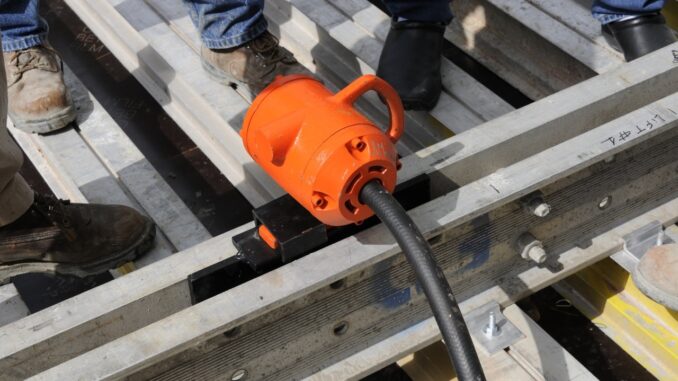
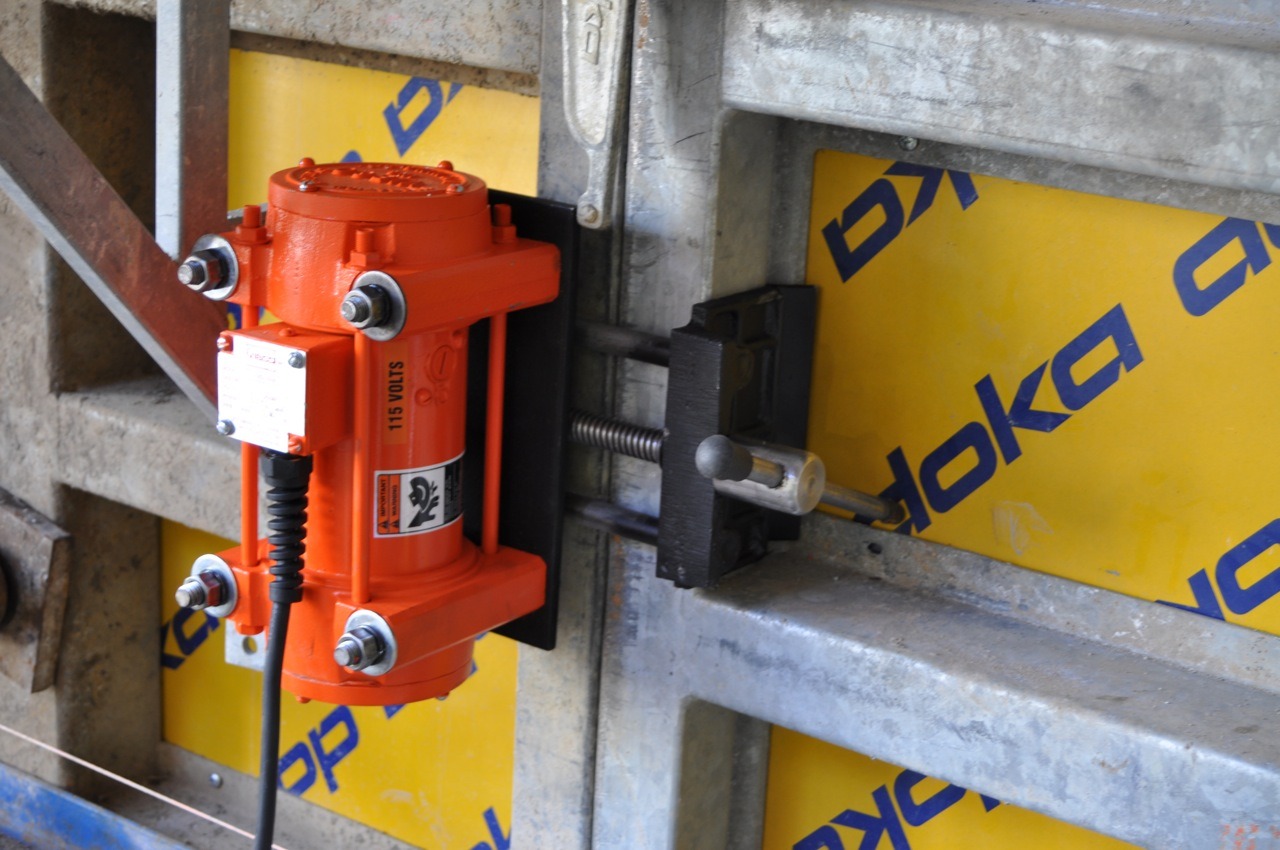
Mounting hardware is part of the vibrator system. Brackets, clamp-on mounts, and weld-on pads exist because different forms and bins need different attachment methods. The right bracket keeps the eccentric load in shear and compression paths the form designer expected—not in a thin skin panel that oil-cans until the weld tears.
Choosing Pneumatic vs Hydraulic Power for Forms, Hoppers, and Trucks
Pneumatic external vibrators remain common on forms and many plant bins because compressed air is already on site, motors are relatively simple, and frequency can be high enough for form consolidation when the air supply is clean and adequate. Air demand is not free: undersized compressors, long undersized hoses, and water in the line all cut frequency and force. A pneumatic vibrator starved for air sounds busy and consolidates poorly.
Hydraulic vibrators earn their keep where hydraulic power is already available—or where air supply is marginal and a hydraulic circuit can deliver steady force. Truck and mobile applications often favor hydraulic or DC electric dump-body vibrators that tie into the vehicle’s systems rather than dragging an air hose across the yard. Plant hoppers may run either pneumatic or electric externals depending on what utilities the structure already has.
Match power to duty cycle. Continuous precast pours need motors and mounts rated for the heat and runtime you actually run—not the intermittent demo that looked fine for thirty seconds. Mobile dump-body work needs mounts that survive highway vibration when the vibrator is off, plus a switch discipline so the unit is not left hammering an empty body.
Bracket Placement and Force Sizing to Avoid Form Damage
Force sizing starts with the mass you must move and the stiffness of the form or wall. Too little force and the concrete does not consolidate or the hopper does not break arching. Too much force—or force applied at a weak panel—cracks welds, loosens form hardware, and can damage the cast surface. Manufacturers publish force and frequency ranges by model; use those with the form builder’s guidance, not with a guess based on “the bigger motor looked safer.”
Bracket placement should put energy into stiff members: wales, strongbacks, steel form frames, and designed mount pads—not into the middle of a thin plywood bay. On modular aluminum or steel form systems, use the clamp or rail mounts intended for that system so the vibrator loads the rails the way the form was engineered. Random C-clamping to whatever is handy is how forms go out of square and how brackets walk during a pour.
Space multiple vibrators so influence zones overlap enough for the section thickness and mix—without stacking so much energy in one bay that hardware fatigues. Stagger start-up rather than slamming every motor at once if the form or compressor cannot take the inrush. Watch for loose bolts after the first pours; external vibration finds every under-torqued fastener.
Improving Sticky Aggregate Flow in Bins and Dump Bodies
Bins and hoppers bridge when cohesive or moist material arches above the outlet. External vibrators on the bin wall are meant to break that arch and keep flow moving—not to shake the entire structure into fatigue failure. Mount below the expected arch zone and on a wall area stiff enough to transmit energy into the material. Mounting at the very top of a tall bin may make noise without touching the bridge. Mounting on an unsupported thin wall may crack the wall before it frees the material.
Dump bodies and truck hoppers face sticky fines, cold asphalt, and wet aggregates that cling to the front wall and corners. A properly mounted dump-body vibrator helps the load release at the pour or stockpile without the operator racking the hoist to slam the body. Use the vibrator with the hoist angle and gate technique the body manufacturer intended; vibration is an aid to flow, not a substitute for a gate that will not open or a body that is overloaded with material that will not slide.
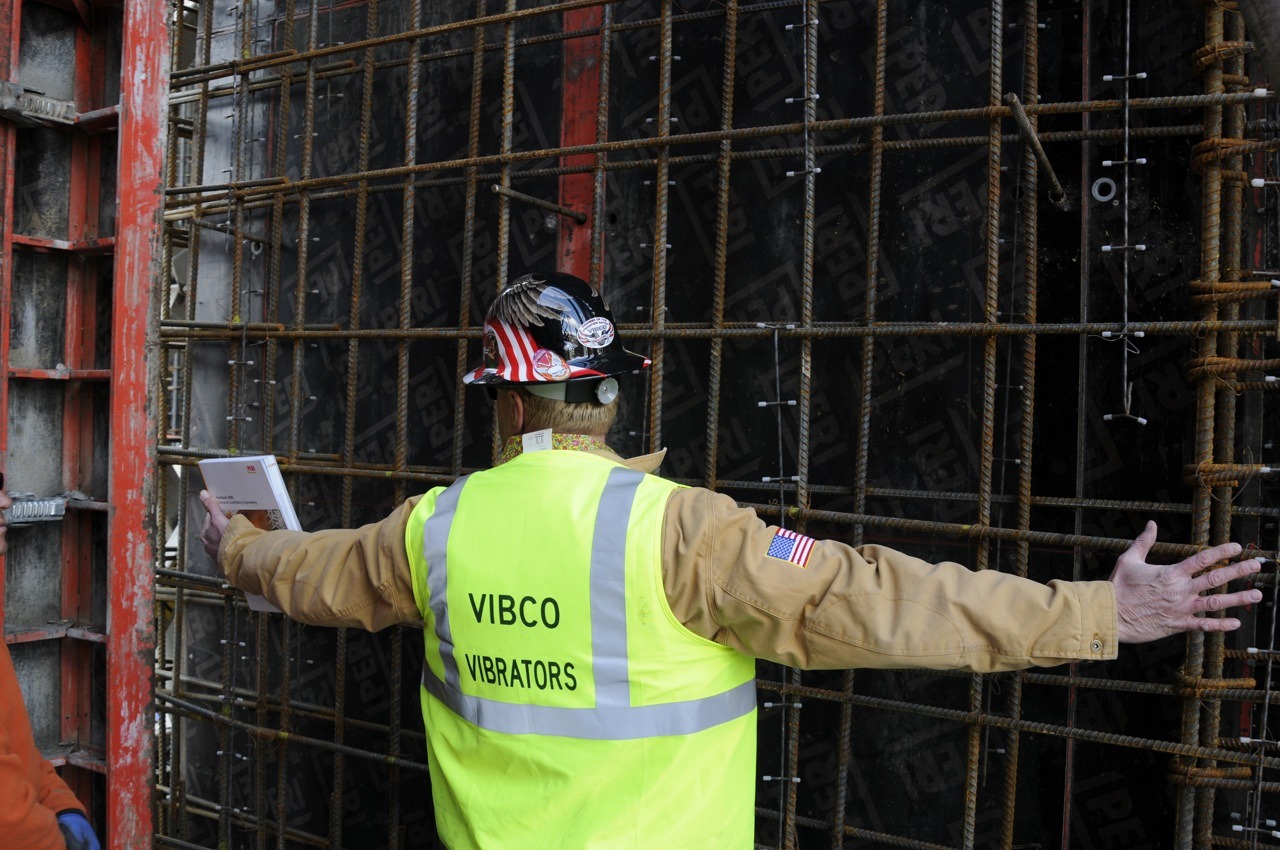
Manufacturers of external form, bin, and truck vibrators—including VIBCO Vibrators—publish pneumatic, hydraulic, and electric options with mounting brackets sized for forms, hoppers, and dump bodies so plants and contractors can match force to the container instead of improvising with a motor that happened to be on the shelf. Spec spare brackets and fasteners with the motors; a vibrator without a mount is a paperweight during a pour.
Noise, Maintenance, and Spare-Motor Practices for Continuous Pours
External vibration is loud. Hearing protection and shift planning are part of the method—especially in urban pours and enclosed precast bays. Noise also changes when a motor’s bearings go or a mount loosens; operators who know the normal sound catch failures before the pour does. Do not rely on “it still shakes” as a maintenance standard.
Maintenance is mostly fasteners, air or hydraulic supply quality, and motor health. Keep filters and lubricators honest on pneumatic circuits. Keep hydraulic fittings tight and hoses protected from form hardware. Inspect eccentric bearings and housings on the interval the duty cycle demands; a hot, noisy motor is a pour risk, not a badge of hard work. Clean excess slurry off housings so heat can leave and so cracks stay visible.
Spare motors and brackets on continuous pours are insurance. A single external going down mid-pour on a congested wall is how honeycombing appears where you cannot re-vibrate easily. Stage a spare of the same force class with the correct bracket already built—not a random larger motor that will over-stress the form if someone bolts it on in a panic.
Final Thoughts
External form and bin vibrators work when mounting, force, and power supply couple energy into the concrete or the material—not when a loose clamp makes a convincing rattle. Treat brackets and stiff form members as part of the vibrator, size force to the job instead of to fear, and keep air or hydraulic supply honest through long pours. Spare motors, hearing protection, and fastener checks keep continuous precast and sticky hopper days from turning into honeycomb and bridging. Mount with intent—and consolidation and flow stay consistent instead of becoming mysteries after the form strips.