



















Nails, screws, welding rod stubs, and scrap punch through tires faster than most crews can broom a yard. A magnetic sweeper is not a substitute for housekeeping—it is how you keep ferrous debris from riding out of the laydown area and into the haul road, parking lot, or public pavement your fleet uses every day. Choosing the right mount and sweep width for your yard size and surface matters more than buying the biggest magnet on the trailer.
This guide walks through why puncture downtime costs more than sweep time, how to match sweeper type to surface and acreage, what handheld, push, tow-behind, and forklift mounts actually do well, and the dump-height and cleanout habits that keep the magnet working after the first pass.
Why Ferrous Debris Costs More Than Sweep Time
A flat tire on a forklift, telehandler, skid steer, or service truck rarely costs only a patch. You lose the machine for the repair window, you may need a spare or a road call, and you often pull a second person off productive work to babysit the change. On a busy yard, one nail event can cascade into missed deliveries, delayed loading, and overtime that dwarfs the minutes it would have taken to sweep that lane before the shift.
Ferrous debris does not stay where it fell. Tire tread and equipment tracks pick up nails and scrap in the fab area or demolition pile, then drop them on asphalt where the next unit rolls. Walking paths and truck gates concentrate the hazard. Crews who only “sweep when someone flats” are always one puncture behind the problem.
Budget the sweep as preventive maintenance, not as a cleanup after a claim. When you count tire cost, downtime, and safety near pedestrian routes, a scheduled magnetic pass is usually the cheaper habit—even on small sites that feel too tidy for a dedicated tool.
Matching Sweeper Type to Yard Size and Surface
Start with where debris lives and how big the sweep path needs to be. A compact shop apron, a half-acre staging pad, and a multi-acre demolition or scrap yard do not want the same machine. Match sweep width and travel speed to the area you will actually cover each day or each week—not to a worst-case acreage you never walk.
Surface drives clearance and tire choice on the sweeper itself. Smooth concrete and asphalt let you run closer to the ground and pick up fine fasteners. Gravel, packed dirt, and uneven pads need enough ground clearance so the housing does not dig in, plus flat-proof or foam-filled wheels on tow-behind units so the sweeper is not the next flat tire on the job. Grass and soft shoulders may need a slower pass or an optional rake that lifts embedded nails toward the magnet face.
Also map traffic patterns. Gates, scale lanes, dumpster pads, and the strip between fab and parking collect more metal than the quiet back corner. Plan routes that hit those choke points first, then expand coverage outward. A narrow handheld pass at the doorway often prevents more flats than a wide tow pass that skips the threshold.
Mount Options: Handheld, Push, Tow-Behind, and Forklift
Handheld magnetic sweepers and pick-up tools shine in tight spots: doorways, under racking, along curb lines, and around parked equipment where a vehicle cannot turn. They are the right first line for small yards and for spot cleanup after a fab or demo burst. They are the wrong primary tool for acres of open pavement—walking that much metal into a dump bin burns labor and consistency.
Push units sit between handheld and tow-behind. They cover more ground than a stick magnet without hitching a truck, and they work well on shop floors and paved pads where an operator can walk a grid. Use them when the area is larger than a broom zone but too congested for a trailer.
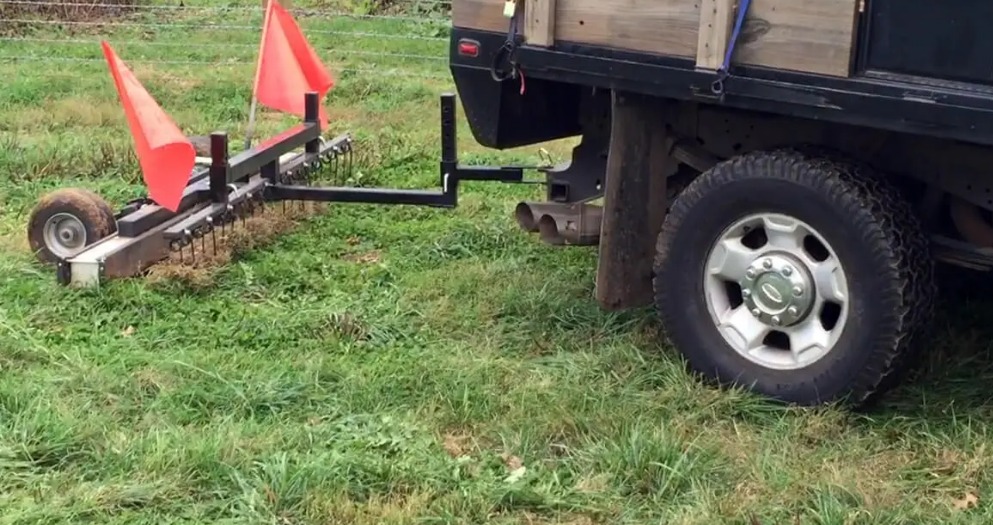
Tow-behind sweepers hitch to pickups, UTVs, tractors, or mowers and clear wide lanes on yards, haul roads, and grassy perimeters. Adjustable hitch height and sweep height keep the magnet level and at a useful clearance for the surface. High-visibility flags help other operators see the trailer on dusty sites. Choose width for your typical lane—not for a one-time mega job—so tongue weight and tow vehicle stay matched.
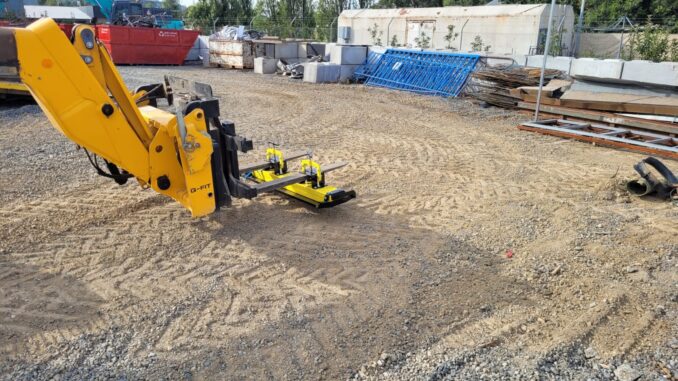
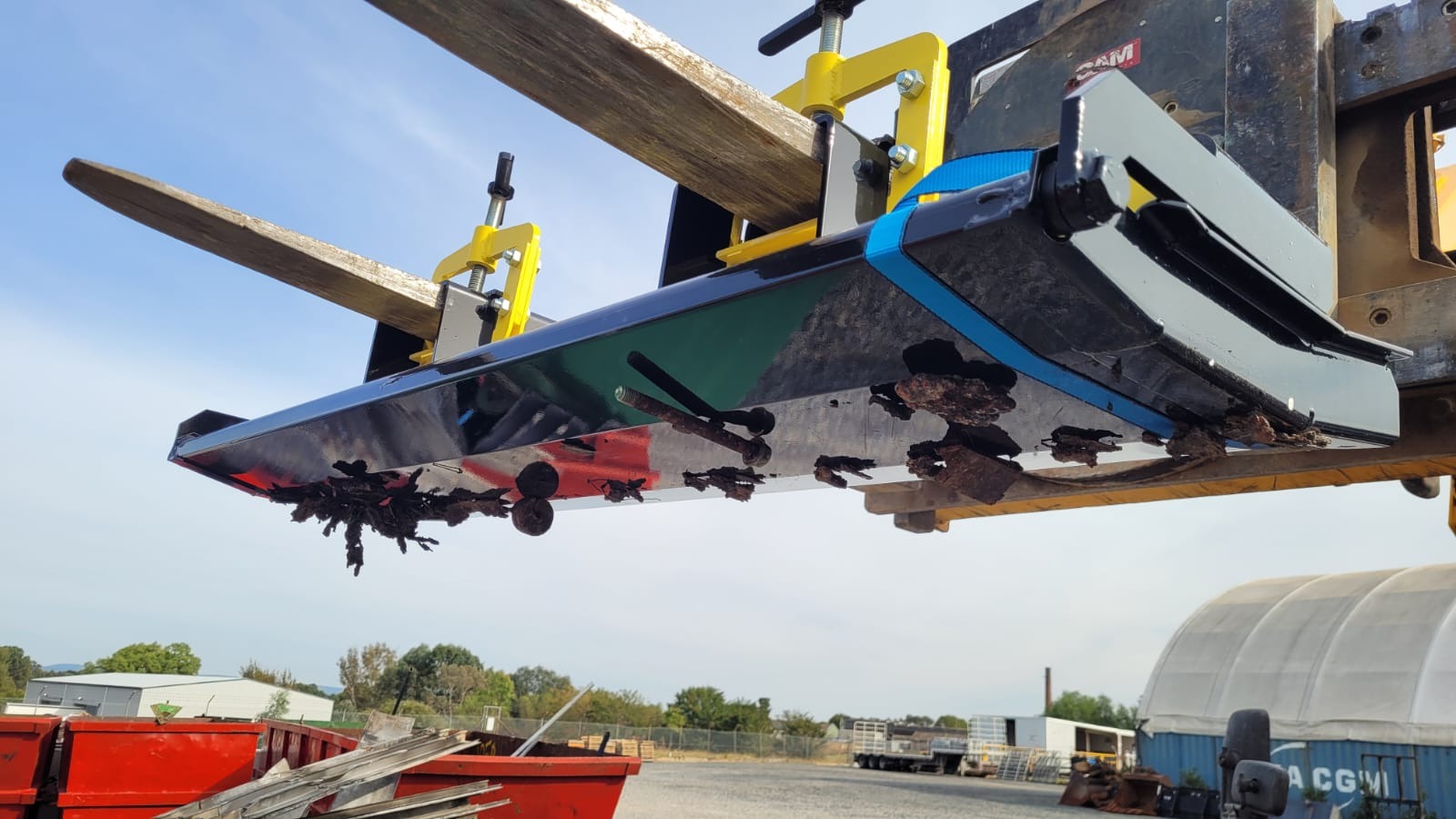
Forklift- and loader-mounted sweepers put the magnet on forks or a front mount so the machine already working the yard can sweep while it travels. They suit large paved and gravel yards, terminals, and staging areas where a forklift or track loader already circulates. Front-mount designs for skid steers and track loaders matter when long fork overhang would slam a conventional fork magnet into the ground on ramps or grade breaks. Round out the mix with a handheld for the corners the forks never reach.
Suppliers such as MSA Magnetics offer handheld through tow-behind and forklift-mounted magnetic sweepers for construction and industrial yards—useful when you are comparing mount styles against the same debris problem rather than shopping one shape in isolation.
Dump Height, Magnet Strength, and Daily Cleanout Habits
A magnet that stays loaded stops picking up. Build dump and cleanout into the route, not into “when it looks full.” Raise the unit to a safe dump height over a designated scrap bin or pan, release the debris per the manufacturer’s method—spring-assist release, clean-off sleeve, or manual scrape—and confirm the face is clear before the next pass. Sharp scrap belongs in a container, not kicked back onto the lane you just swept.
Magnet strength and published pickup or ground-clearance reach tell you how high you can run without missing fasteners. Stronger cores and greater reach help on uneven gravel when you need clearance to protect the housing; closer clearance on smooth pavement recovers finer nails and wire. Never invent a clearance number for your site—use the maker’s guidance for that model and verify with a known nail or scrap piece on a short test strip.
Inspect daily before the first sweep: hitch pins, fork clamps, tires or foam fills, flags, and the debris pan or housing for dents that change ground clearance. After demolition, roofing, or heavy fab days, add a mid-shift dump. Log recurring hotspots—dumpster pads, nail-gun staging, scrap cutting areas—so the next day’s route starts where yesterday’s flats began.
Train more than one person. If only the yard lead knows how to dump the magnet, the habit dies on their day off. Keep gloves and a dedicated scrap drum at the dump point so cleanout is not an improvisation into the nearest cardboard box.
Final Thoughts
Jobsite magnetic sweepers earn their keep by cutting puncture downtime, not by looking busy. Match handheld, push, tow-behind, or forklift mounts to yard size and surface; hit the gates and fab exits first; and dump the magnet on a schedule so strength stays available for the next pass. Do that, and nails and scrap stop writing tire invoices for your fleet.