








Fall protection fails in the catalog long before it fails on the steel. A six-foot shock-absorbing lanyard that looks fine in a warehouse photo can use more vertical clearance than your deck-to-lower-level distance allows. An SRL that shines on a clear leading edge can still produce a swing fall into a column if the anchor is in the wrong place. Gear that “meets the standard” still has to fit the real free-fall distance, deceleration, harness stretch, and swing path on this task.
This guide is about matching harness, lanyard, and self-retracting lifeline (SRL) choices to real clearance on construction sites: how to think about free-fall and total fall clearance, when an SRL beats a shock lanyard, harness fit and connector choice, swing-fall control, and inspection habits. It is task-based selection—not a shop rigid-rail system comparison and not a regulation dump.
Clearance Is a Math Problem You Own
Before you pick a connector, measure the worst-case distance from the walking-working surface to the lower level or next obstruction. Then estimate total fall clearance for the system you intend to use. A practical planning stack includes:
- Free-fall distance—how far the worker falls before the system begins to arrest (function of anchor location, lanyard length, and whether the D-ring starts above or below the anchor).
- Deceleration / deployment distance—how far the shock pack or SRL brake pays out while slowing the fall (use the manufacturer’s stated maximum for that product, not a guess).
- Harness stretch and D-ring slide—body and webbing movement under load.
- Worker height to D-ring—and any tools or toe boards that change where the body stops.
- Safety margin—extra clearance so “about enough” does not become contact.
If the sum exceeds the available distance to the lower level, that lanyard or that anchor height is the wrong choice for this task—even if the product is perfectly compliant in a taller clearance scenario. Change the connector, raise the anchor, add a different work platform, or change the sequence. Do not invent clearance by optimism.
Shock-Absorbing Lanyards vs SRLs on Real Decks
Energy-absorbing lanyards are common, familiar, and easy to misuse on low-clearance work. A typical six-foot shock lanyard used with a free-fall approaching its maximum can demand a large total clearance once deployment, harness effects, and margin are included. They remain useful where clearance is generous, anchors are overhead or appropriately placed, and workers understand tie-off discipline—including 100% tie-off when moving with twin legs.
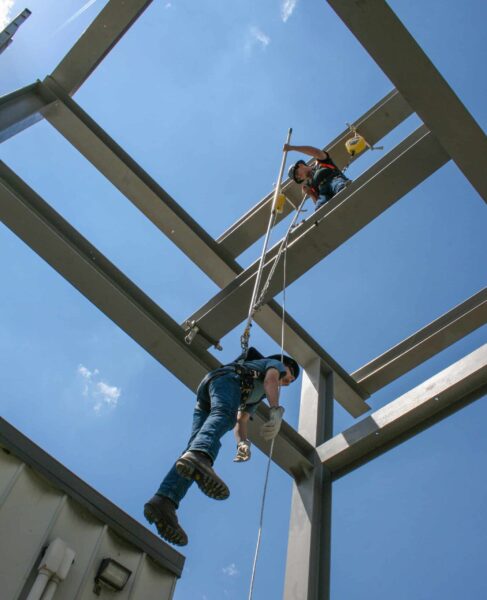
Self-retracting lifelines generally limit free-fall when anchored overhead and used as designed, which is why they often win on leading edges, steel erection, and other tasks where decks sit closer to the next level than a fully deployed shock lanyard allows. Class and leading-edge ratings matter: not every SRL is rated for foot-level anchoring or sharp-edge exposure. Read the label for the actual use—overhead vs leading edge, maximum free-fall, and required clearance—then match it to the deck you have.
Twin-leg SRLs or dual-leg lanyards support continuous connection when moving past anchors. The clearance math still applies to each leg’s worst-case deployment. A dual-leg setup does not create clearance; it creates continuity.
Harness Fit and Connector Match
The harness is the interface that has to be worn correctly every hour of the shift. Fit checks that actually matter:
- D-ring location—dorsal D-ring between the shoulder blades for fall arrest; side or sternal attachments only for the uses the harness and program allow.
- Leg and chest straps—snug so the harness cannot ride up or dump the worker out during arrest; adjustable for clothing layers across seasons.
- Trauma straps / relief features—present and workers trained to use them after an arrest while waiting for rescue.
- Compatibility—snap hooks and carabiners sized and shaped for the anchors on site; no forced connections or makeshift adapters.
Match harness class and accessories to the task: climbing, positioning, or rescue-ready configurations are not interchangeable stickers. If the crew is in bulky winter wear one week and T-shirts the next, refit—do not assume last month’s adjustment still holds.
Swing Fall, Anchors, and the Path After Arrest
Clearance is vertical; swing fall is the pendulum into structure after the system catches. Anchoring far to the side of the work zone can leave enough vertical clearance on paper and still slam a worker into a column, wall, or lower deck edge. Prefer anchors that keep the lifeline as vertical as practical over the work, use travel restriction when the goal is to keep workers from reaching the edge, and set exclusion zones below.
Rescue planning is part of clearance planning. An arrested worker suspended in a harness needs prompt rescue; hanging time is a medical problem, not only a scheduling inconvenience. Before the first tie-off of the day, the crew should know who rescues, with what equipment, and how long that realistically takes on this structure.
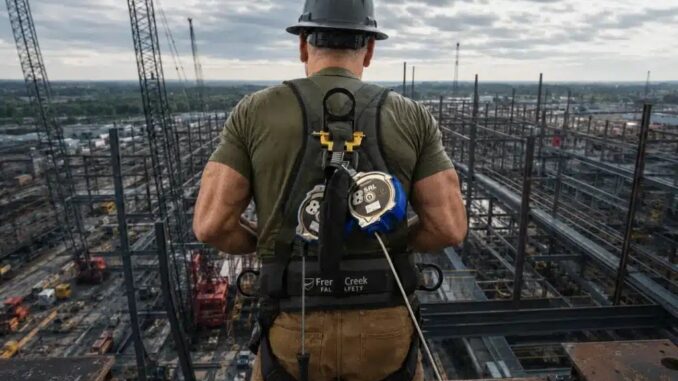
Suppliers that focus on construction fall protection—such as FrenchCreek Fall Safety—publish clearance data, leading-edge ratings, and harness/SRL pairing guidance that should sit next to your site-specific fall plan. Select from the numbers for your deck heights—not from the photo that looks most aggressive in the catalog.
Inspection and When to Remove Gear From Service
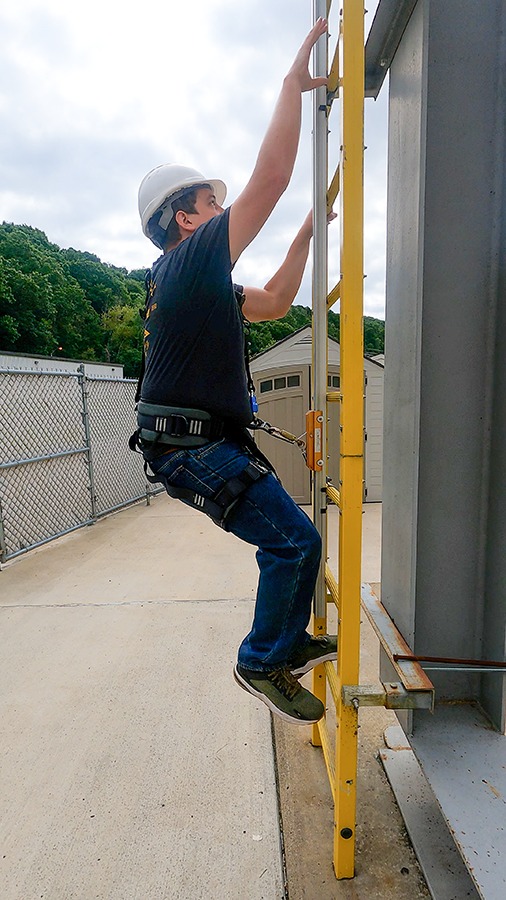
Competent-person and user inspections catch webbing cuts, UV burn, deployed shock packs, corroded hardware, SRL brake issues, and missing labels before the gear is asked to save a life. Any energy absorber or SRL that has arrested a fall is out of service until the manufacturer’s criteria say otherwise—usually meaning replacement, not a wipe-down. Label dates, keep a simple log, and treat “it still looks okay” as a non-method.
Train for the system on site. A crew that understands twin-leg transition on steel will still misuse an SRL if nobody explained foot-level anchoring limits. A crew that can recite OSHA subpart numbers will still choose the wrong six-foot lanyard if nobody measured deck-to-deck distance.
Field Selection Checklist
- Measure available clearance to the lower level or obstruction at the actual work location.
- Choose connector type (shock lanyard vs SRL, including leading-edge class) whose manufacturer clearance fits with margin.
- Place anchors to control free-fall and swing; prefer overhead when the system requires it.
- Fit the harness to the worker and the task; verify connectors match anchors.
- Plan 100% tie-off moves and rescue before work starts.
- Inspect gear; remove deployed or damaged equipment from service.
- Re-check when the deck elevation, leading edge, or anchor layout changes—clearance is task-specific.
When multiple trades share a deck, standardize the fall plan in the daily coordination meeting: who owns anchors, which connector types are approved for which elevations, and where lower-level exclusion zones sit. Mixed personal systems without a shared map are how one crew’s “compliant” tie-off becomes another crew’s struck-by hazard after an arrest.
Document the approved connector list on the lift or fall plan revision that matches today’s deck elevations. When the structure gains a floor overnight, yesterday’s clearance calc is historical—not permission.
Final Thoughts
Matching harnesses, lanyards, and SRLs to construction work is a clearance and swing-fall problem first. Measure the real drop, use manufacturer deployment numbers, pick connectors that fit that math, fit the harness to the human, and inspect like the gear will be asked to work tomorrow. Catalog compliance without site clearance is theater. Choose the system that stops the fall in the space you actually have—and get the worker down promptly after it does.


