


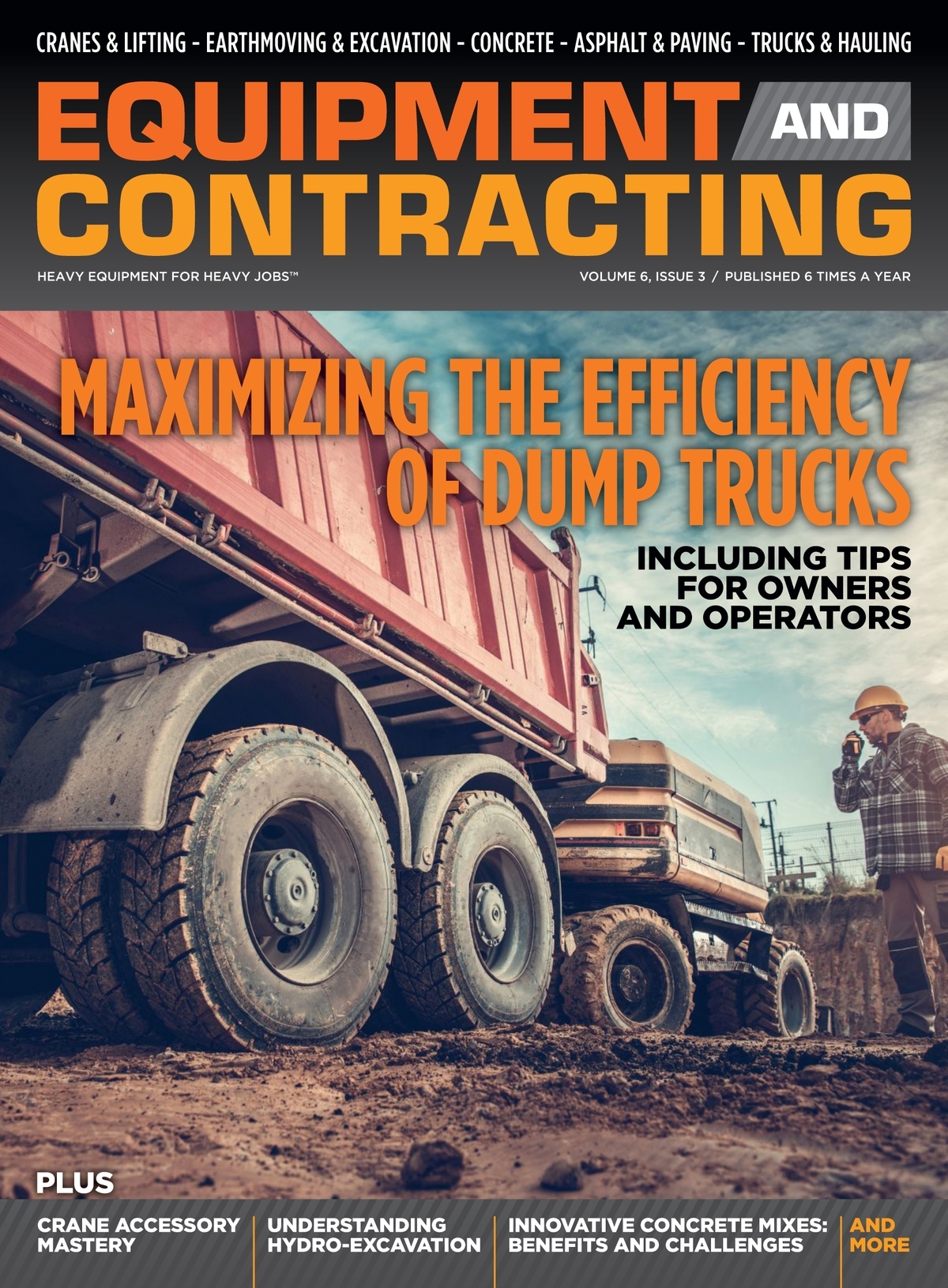




Not every haul wants the same dump geometry. Aggregates, riprap, and sticky spoils each punish the wrong trailer choice in different ways—tip-overs on soft pads, piles where the dozer cannot work them, and cycle time lost to jockeying for dump room. Matching trailer type to material and site access is a production decision, not a brand preference.
This guide compares when a side dump trailer outperforms a conventional end dump for common construction hauls, how dump patterns change loader and dozer work, and when an end dump or belly dump still wins the day.
Geometry, Center of Gravity, and Soft Pads
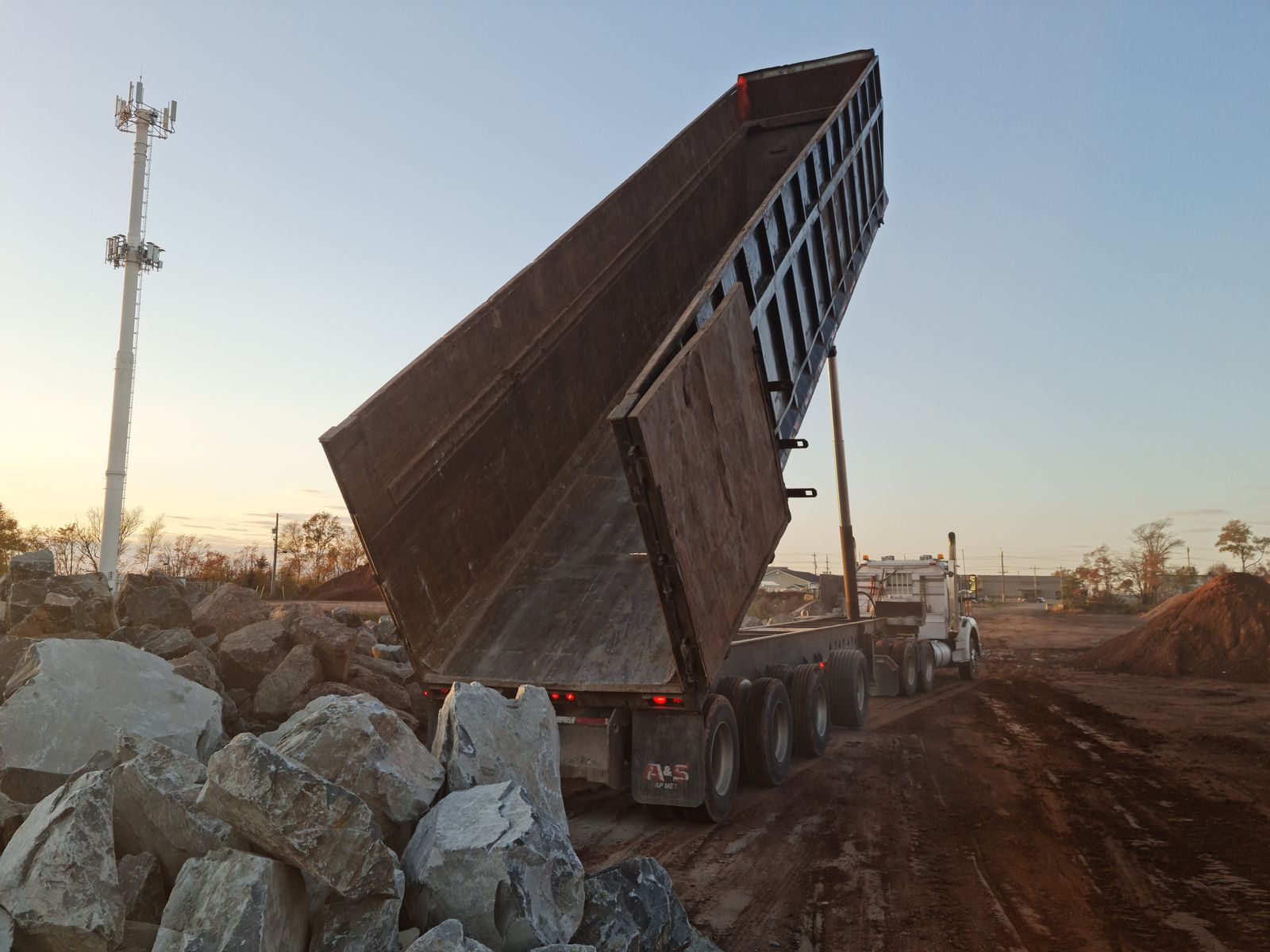
An end dump raises the load high and aft as the body goes up. On a firm, level pad with room to back, that is fine. On a crowned haul road, wet fill, or a pad that settles under one set of tandems, the raised CG and the long lever of a full body turn small surface problems into rollover risk. Many tip-overs happen not because the trailer is “bad,” but because the dump face is uneven, the tractor is still pulling, or the load sticks and then releases all at once.
A side dump keeps the tub lower through the dump cycle and discharges laterally. The tractor-trailer stays flatter relative to the ground while material leaves the tub. That does not make physics optional—you still need a workable pad—but it reduces the high-lift exposure that end dumps accept every time the hoist goes up.
Practical stability checks before you choose:
- Pad quality. Soft shoulders, fresh fill, and freeze-thaw crusts favor geometries that do not need a tall hoist to empty.
- Crowned or cross-sloped roads. Dumping along a road edge is safer when you are not lifting a full body on a slope.
- Stuck loads. Wet clay, demolition debris, and frozen material that hang then dump suddenly amplify end-dump tip risk; side discharge and steep tub angles help material leave before the CG climbs.
- Overhead clearance. Wires, tree limbs, and building eaves rule out a high-lift body even when the pad is perfect.
Where Side Dump Patterns Beat Backing an End Dump
Jobsite dump patterns matter as much as trailer brand. An end dump usually needs a clear back-in, a firm dump pad, and a pile shape the loader or dozer can work from the rear. A side dump can windrow along a haul road, berm, or trench edge without spinning the whole combination into a tight cul-de-sac.
Situations where side discharge often wins:
- Road and berm building. Placing aggregate or spoil in a continuous windrow along the alignment cuts backing cycles and keeps traffic or haul lanes clearer.
- Tight urban or plant sites. When there is room to drive parallel but not enough room to back a long combination square to the pile, lateral dump is the workable option.
- Riprap and large rock. Controlled side placement along a slope or ditch line can be easier to dress than a tall rear pile that rolls unpredictably when the body dumps.
- Live traffic or one-way haul roads. Dumping without a long reverse into the travel lane reduces conflict with other trucks and equipment.
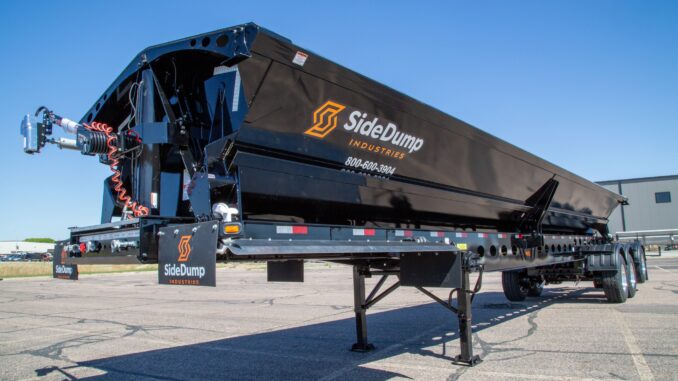
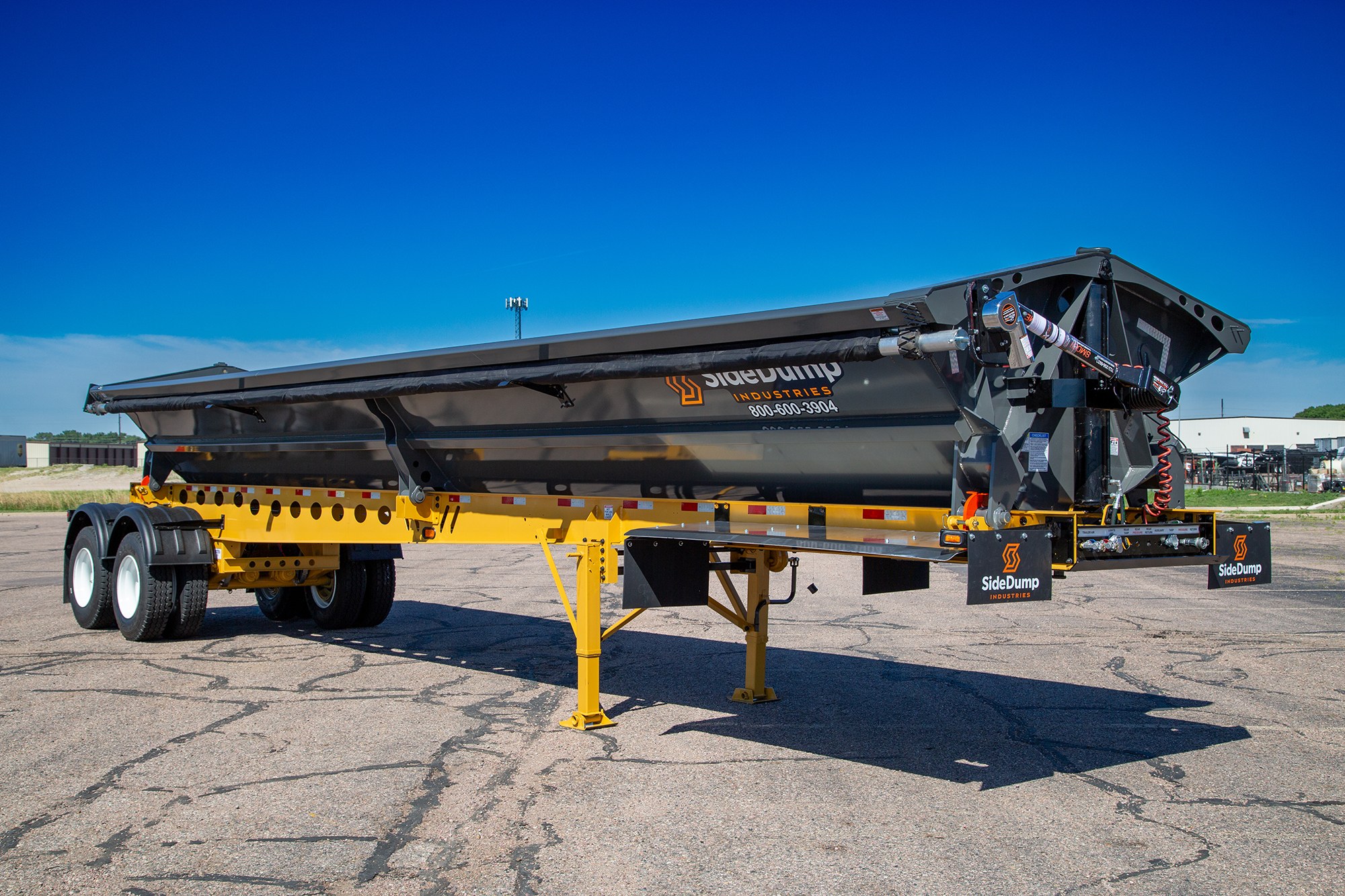
Builders of purpose-built side dump trailers, including manufacturers such as Side Dump Industries, design around that lateral pattern—low CG through the dump, steep unload angles, and configurations sized for construction, mining, and demolition materials rather than a one-size rear hoist.
Material Behavior: Aggregates, Riprap, and Sticky Spoils
Clean aggregates and sand flow from almost any dump body. The decision is more about placement pattern, cycle time, and pad risk than about whether the material will leave the tub. Choose the trailer that puts stone where the paver, spreading crew, or dozer needs it with the fewest moves.
Riprap and large shot rock punish shallow dump angles and hung loads. You want a steep unload, a tub that does not trap rock in corners, and a dump pattern that does not throw rock into the travel lane or onto the tractor. Side dumps that open along the length of the tub can meter rock into a windrow the excavator or dozer can dress; end dumps still work well when you have a dedicated rock pad and want a tall stockpile.
Wet spoils, clay, and demolition debris stick. That is where tip-over stories start with end dumps: the body is high, half the load hangs, then everything lets go. Steep side-dump angles, bolted wear accessories that crews can replace, and a dump plan that keeps the combination from walking sideways on soft spoil all matter more than brochure capacity numbers.
Ask three material questions on the bid:
- Will this load hang, freeze, or bridge in the tub?
- Do we need a windrow, a stockpile, or placement along a slope?
- What does the next machine in the chain need the pile to look like?
When an End Dump or Belly Dump Still Wins
Side dumps are not universal. Keep end dumps and belly dumps in the mix when the job fits them.
- End dumps remain efficient for stockpile work on firm pads, quarry and plant dumps with dedicated dump zones, and fleets that already standardize on rear-dump trailers with trained drivers and good dump discipline.
- Belly dumps still own continuous paving trains and long windrows of base or aggregate where you want controlled bottom discharge while rolling—not a parked side dump windrow.
- Payload and bridge formula. Axle counts, legal weights, and route limits can favor one configuration over another regardless of dump style. Spec the legal haul first, then the dump pattern.
- Driver and shop familiarity. A side dump used poorly on soft ground is still a tip hazard. Training, dump checklists, and refusing unsafe pads matter for every style.
Field Checklist Before You Spec the Trailer
- Map dump locations: windrow along alignment, rear stockpile, or slope placement.
- Walk the pads: soft fill, crown, cross-slope, and overhead wires.
- Name the material: clean aggregate, riprap, wet spoil, demo—and whether it sticks.
- Match the next machine: dozer, loader, excavator, or paving train.
- Confirm legal axle weights and route for the trailer length and axle group you plan to pull.
- Write the dump SOP: stop before hoist, stay off the throttle while dumping, abort if the combination leans.
Bottom Line
Choose dump geometry for the pad, the pile shape, and the material—not for habit. Side dump trailers earn their keep when lateral windrows, lower dump height, and sticky or rocky loads make a high-lift end dump slow or unsafe. End dumps and belly dumps still win on firm stockpile pads and rolling aggregate trains. Spec the pattern the jobsite actually needs, then put drivers on a dump discipline that matches that trailer.