
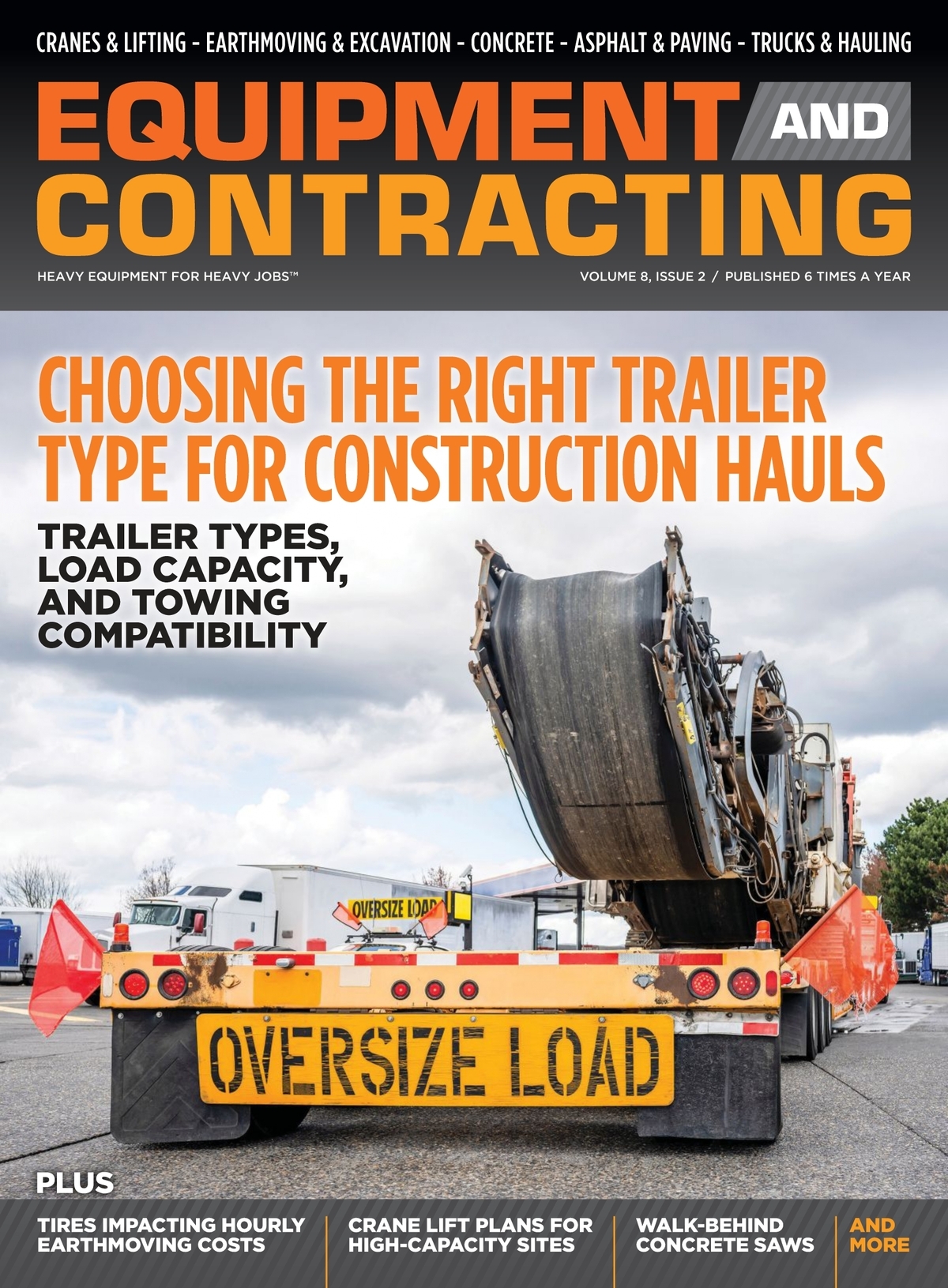

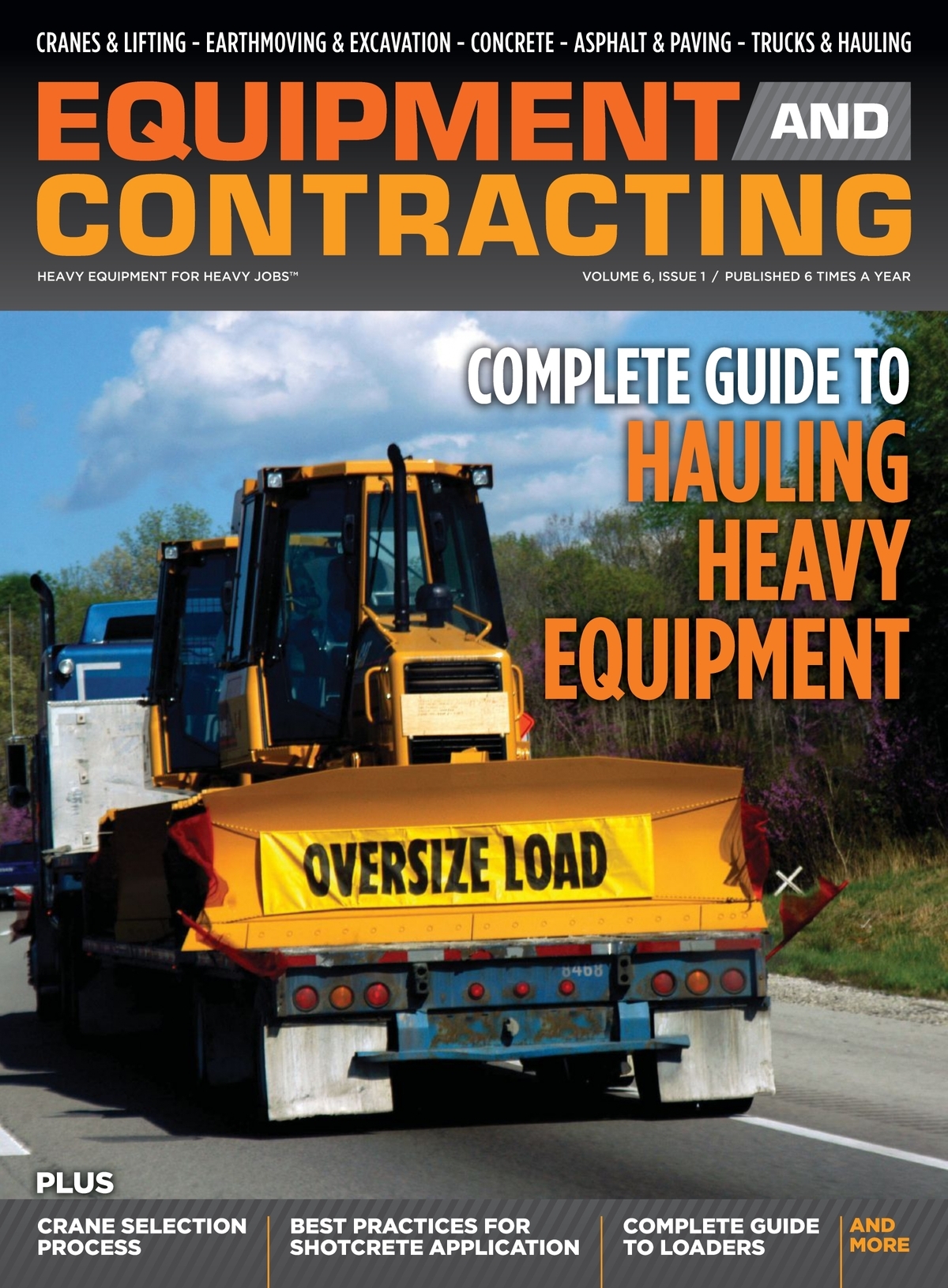




Moving a large excavator, dozer, or crane attachment is not a matter of finding “a lowboy” and hoping the escort shows up. Oversized construction machines punish vague trailer specs: wrong axle count, wrong deck height, or a gooseneck style that does not match how you load on a muddy pad. The result is permit surprises, detours, and a machine that will not clear the first bridge on the route.
This guide is a contractor-side checklist for matching multi-axle and removable-gooseneck (RGN) trailers to the machine—not a brochure tour. Get the weight, center of gravity, height, and load method right before anyone books escorts.
Start With the Machine, Not the Trailer Catalog
Write the load down before you argue axle groups:
- Shipping weight and CG—manufacturer transport weight, plus attachments that stay on, fluids if they stay, and where the mass sits relative to the deck (boom forward, counterweight aft, bucket well, etc.).
- Transport envelope—width, overall height on the trailer, and length once the machine is positioned. Measure the way it will travel, not the way it sits in the yard.
- Self-propelled or crane-only—can it drive on under its own power, or must it be lifted?
- Ground conditions at both ends—firm pad with room to detach a gooseneck versus a tight alley where a crane or hydraulic tail is the only honest option.
- Route constraints you already know—posted bridges, urban height caps, seasonal restrictions, and whether the job is one state or a multi-state corridor.
Those five answers usually narrow trailer type before brand preference does.
Axle Counts: Capacity Is a Group Problem, Not a Sticker
Trailer “ton” ratings are not a free pass through every scale and bridge. What matters on the road is how weight lands on axle groups—and how those groups line up with state and permit limits along the actual route.
Practical rules of thumb contractors use when scoping a move:
- Match groups to the load’s CG. A machine that is nose-heavy on a short well can overload the tractor or the front trailer group even when the trailer’s advertised capacity looks fine on paper.
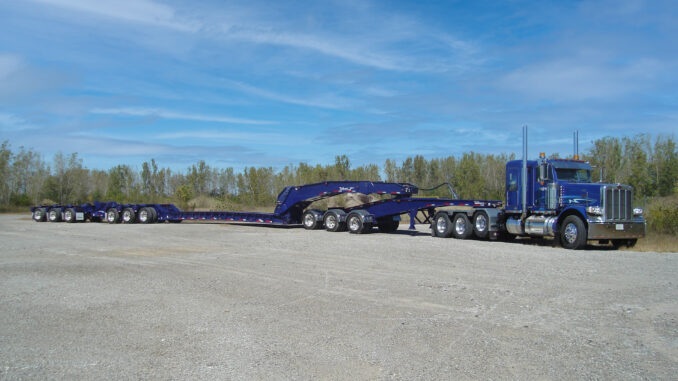
- Close-couple versus spread. Close-coupled multi-axle packages concentrate capacity in a shorter length; spread and modular setups (including removable axles) trade length and complexity for bridge and permit flexibility. Neither is “better”—they solve different corridor problems.
- Jeeps, boosters, and dollies are not afterthoughts. If the quote needs them to stay under group limits, they belong in the first configuration discussion, not the morning of the haul.
- Empty trailer weight eats payload. Heavier frames and extra axles raise capacity—and lower what you can legally put on the deck. Compare usable payload for your machine, not brochure peaks.
If you cannot sketch where the mass sits over which axles, you are not ready to lock a trailer spec.
Deck Height vs Over-Height Permit Reality
Deck height is often the difference between a routine overweight move and a corridor that fights you at every overpass.
Loaded deck heights on construction lowboys commonly land in the roughly 18–24 inch range depending on model, tires, and load—but the number that matters is machine height plus loaded deck height against the route’s controlling clearances. A few inches of deck can push a tall excavator or crane component from legal height into a permit problem—or from a manageable permit into a route that needs more escorts, night moves, or a hard redesign.
Check these before you fall in love with a trailer photo:
- Loaded deck height and road clearance with the suspension and tires you will actually run.
- Bucket wells, boom wells, and drop sections that let parts of the machine sit lower than the main deck.
- Outriggers and width—an 8 ft 6 in deck with swinging outriggers changes how you stage and what you permit for width.
- Air-ride raise/lower—useful for loading and for scraping under a known low spot, not a substitute for choosing the right base deck height.
Spec deck height against the route, then confirm with a tape on the machine in transport configuration. Guessing from a sales sheet is how crews discover a bridge the hard way.
When an RGN Beats a Fixed Gooseneck
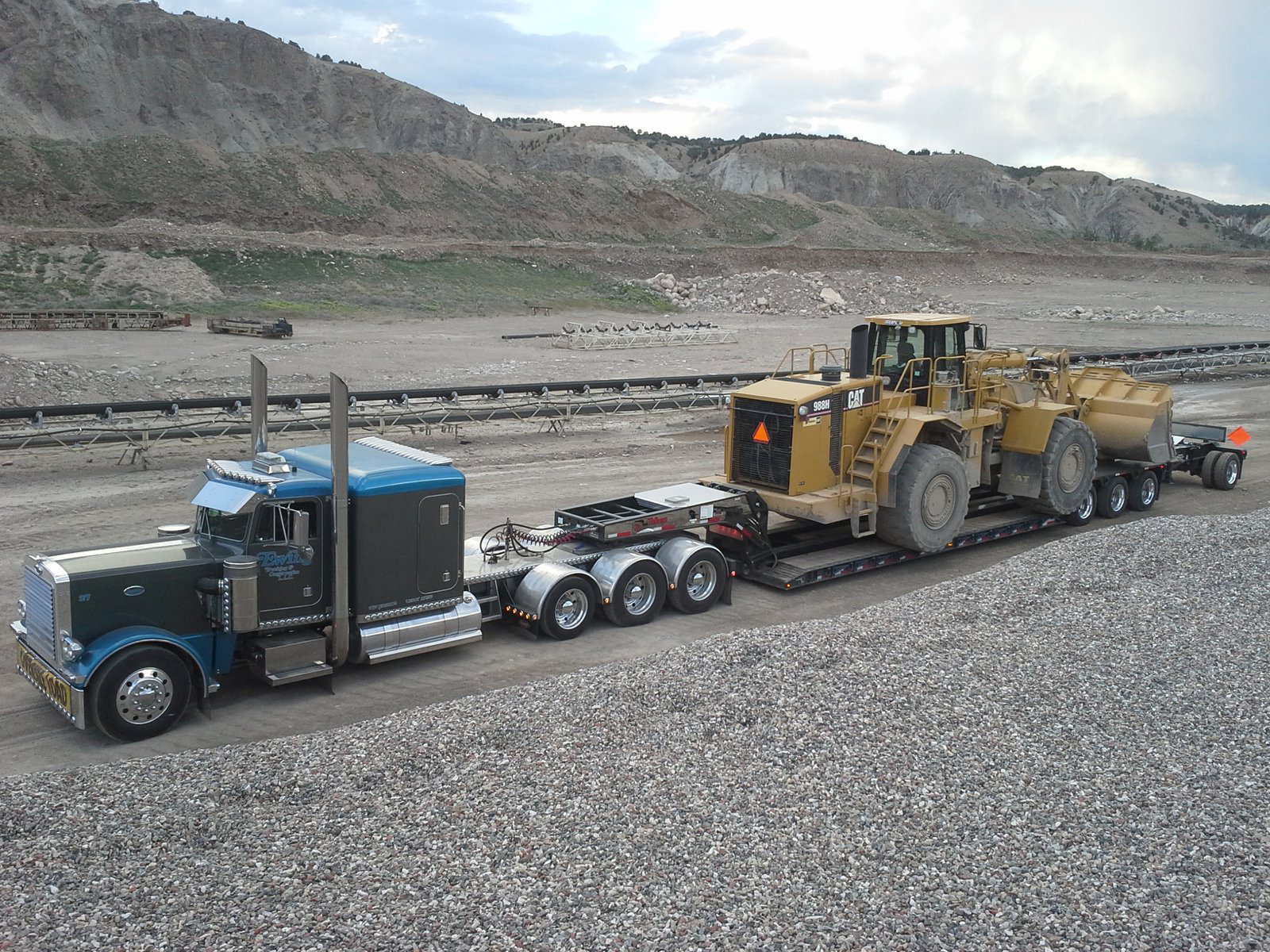
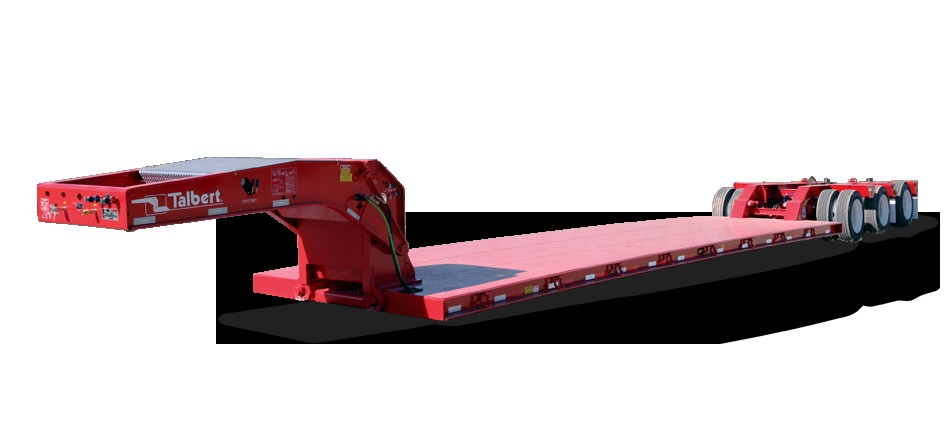
In shop talk, “lowboy” often means a fixed-gooseneck double-drop, while “RGN” means a removable gooseneck that drops the front of the deck for drive-on loading. Both are low-profile tools. They are not interchangeable on every job.
Choose RGN-style loading when:
- The machine is self-propelled and you want drive-on / drive-off without a crane.
- Jobsite access is remote or crane time is expensive, unreliable, or impossible.
- You need the gentler approach angle a dropped front deck provides for tracked machines.
A fixed gooseneck (or non-detach setup) can still win when:
- The load is not driveable and a crane is already on the plan.
- You want a simpler, often lighter package for a known payload and loading method.
- Site geometry will not let you pull the gooseneck clear safely.
Hydraulic tails and traveling-axle designs solve other access problems—rear drive-on in tight yards, for example—but they do not erase axle-group and height math. Pick the loading method for the pad you have, then confirm the same trailer still clears the corridor.
Load Angle, Cribbing, and Stability
Spec sheets that ignore loading kill schedules as often as bad permits.
- Approach angle—tracked machines and low-ground-clearance attachments care about how steep the deck rises from grade. An RGN helps; cribbing, mats, and a level pad help more.
- Position on the well—centerline, fore-aft placement, and attachment stowage change axle loads. Mark the plan before the operator climbs on.
- Securement points—chain slots, D-rings, and bolsters only help if they line up with the machine’s approved tie-down points and the working-load math for the weight.
- Soft ground—a trailer that is perfect on pavement can dig in or tip a loading sequence on fill. Mats and a spotter are part of the spec when the pad is questionable.
If the loading plan needs a second piece of equipment “just in case,” write that into the move—not the change order after someone is already late.
Permit Reality Belongs in the Quote
Permits are not paperwork you bolt on after the truck is loaded. They are part of trailer selection.
- Sequence the corridor early—origin, destination, and every state or locality that will touch the load. Escort rules, travel windows, and holiday blackouts differ.
- Overwidth, overheight, and overweight stack. Fixing height with a lower deck can still leave you overwidth once outriggers or counterweights are considered.
- Bridge and route surveys for the heaviest moves are schedule items. Budget days, not hours, when the load sits near the edge of routine permits.
- Escort and utility coordination (pole cars, signal lifts, police) belong in the same conversation as axle count. A cheap trailer that forces a nightmare route is not cheap.
Specialized multi-axle and RGN platforms from manufacturers such as Talbert give contractors real configuration choices—modular axles, deck heights, and gooseneck styles—but the permit map still decides which configuration is honest for the move.
Spec Checklist Before You Sign
Before you lock a trailer or a haul quote, confirm:
- Machine shipping weight, CG notes, and transport dimensions (with attachments decided).
- Trailer type: fixed gooseneck, RGN, hydraulic tail, or another access solution—and why.
- Axle count / grouping, any jeep-booster-dolly needs, and usable payload after trailer tare.
- Loaded deck height versus controlling route clearances; wells or drops called out if used.
- Loading and unloading method at both ends, including mats, cribbing, and crane if required.
- Permit and escort assumptions written into the price and the schedule.
- Securement plan matched to machine tie-downs and weight.
Heavy construction machines do not forgive “close enough.” Spec the trailer like you spec the lift plan: weight first, geometry second, paperwork in the same meeting—not after the escorts are already on the clock.