








































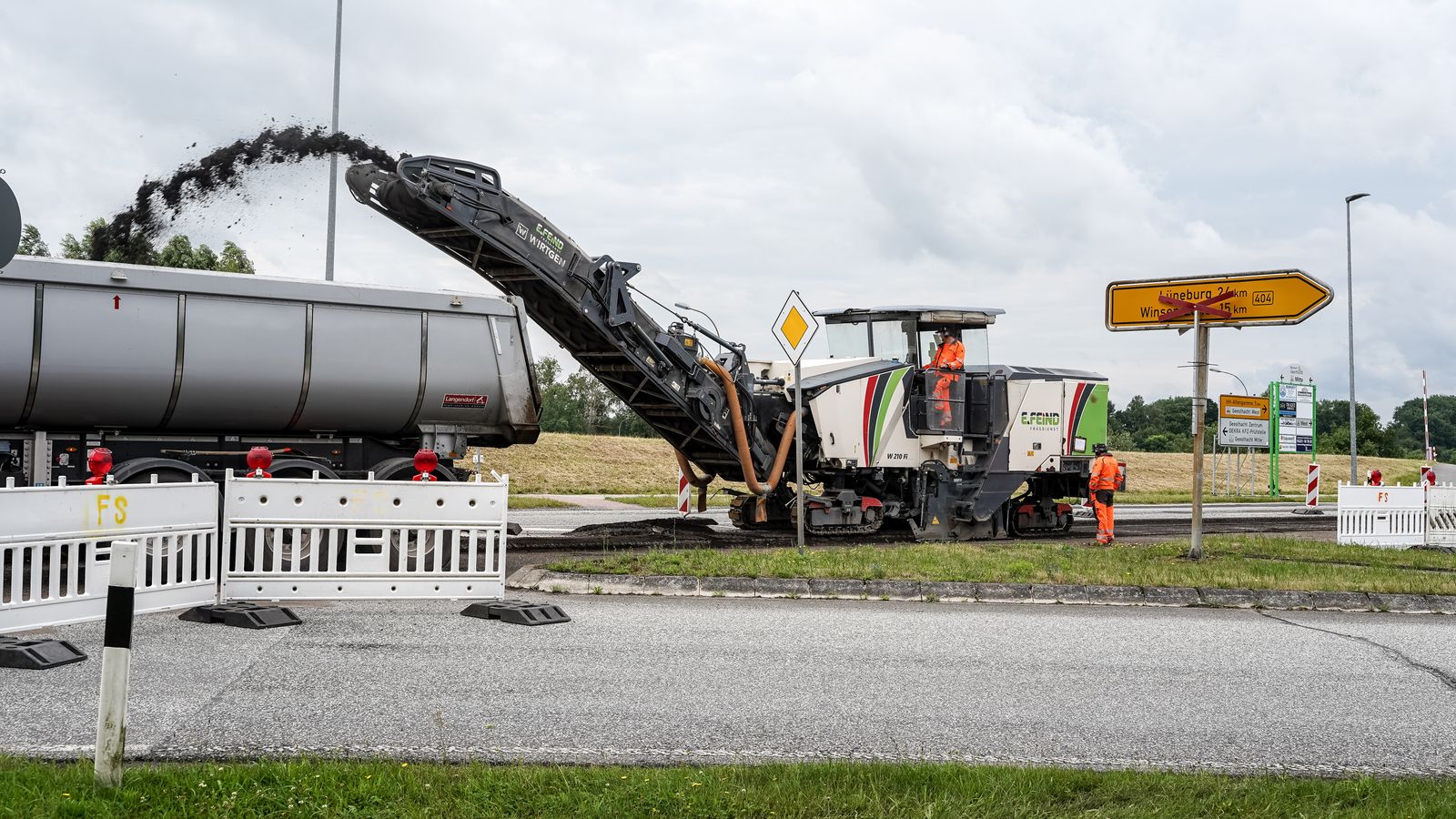
Mill the lane, haul the RAP, tack, pave—and still chase raveling, blotches, or early overlay failures because the deck never got truly clean. Fines, dust, and leftover millings are bond breakers. They sit between tack and existing pavement, steal adhesion, and turn a tight paving window into rework. Sweep quality is not housekeeping. It is a schedule and warranty control.
This guide walks through why cleanup after the cold planer decides overlay performance, how to sequence broom and transfer passes behind the mill, and when a mid-mount construction broom is enough versus when sweep-and-load collapses truck time.
Why Dirty Mill Decks Kill Bond
A milled surface looks rough and “ready,” but the texture that helps mechanical interlock also traps fines. Dust, micro-RAP, and clay tracked in from shoulders coat the ridges. When tack is sprayed over that film, the emulsion bonds to dirt—not to the pavement you paid to expose.
Common field results when cleanup is short-changed:
- Tack that never “grabs.” The film looks applied, but a boot scuff or tire turn peels it because the substrate was powdered.
- Overlay slippage and early raveling at the interface, especially under braking, hills, and heavy truck lanes.
- Blotchy mat and roller marks where windrowed millings or wet fines left soft spots the paver and rollers cannot fix.
- Night-work schedule hits when the paving train waits on a second loader pass that should have been part of the cleanup plan.
Specs often say “clean and dry” before tack. That phrase means free of loose material and dust to the degree the tack can wet the milled texture—not “looks mostly clear from the pickup truck.”
Cleanup Sequence Behind the Mill
Treat sweeping as a station in the train, not a leftover task for whoever is free.
- Match broom speed to mill production. If the planer outruns cleanup, windrows thicken, trucks stack, and night closures slip. Size the broom (or brooms) to the cut width and depth you actually run—not last year’s light mill.
- Primary pass while material is still loose. Fresh millings move easier than material that has been driven on, watered heavily, or left overnight to pack into the texture.
- Control the windrow. Push or convey millings to a load-out path the trucks can work without crossing the clean deck you just earned.
- Secondary pass before tack. After heavy pickup, a light finish pass removes the dust veil and scatter the first pass left in the valleys of the mill pattern.
- Hand work and edges. Gutters, curb lines, rumble strips, bridge joints, and around manholes need broom angle changes or crew attention. Edges left dirty show up as edge raveling later.
- Verify before the distributor. A quick walk or low-speed ride: no piles, no soft fines underfoot, no mud streaks from water trucks. If you would not put tack on it, neither should the distributor.
Water for dust control is not a substitute for sweeping. Over-wetting turns fines into a paste that smears into the texture and blocks tack worse than dry dust. Use enough spray to knock down airborne dust for traffic and crews—then sweep the slurry and damp fines off before they dry into a crust.
Windrow and Push vs Pickup and Transfer
Not every job needs the same cleanup tool. Match method to tonnage, lane space, and haul logistics.
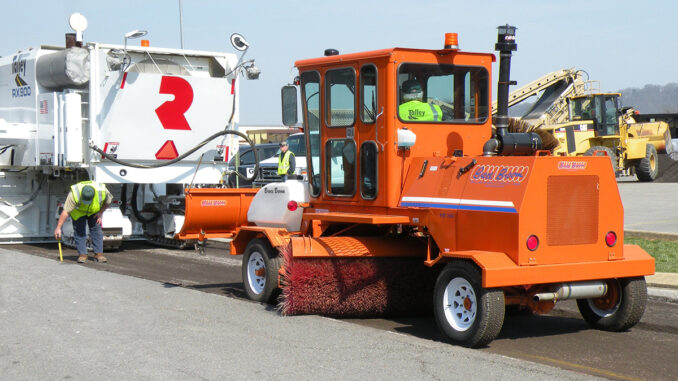
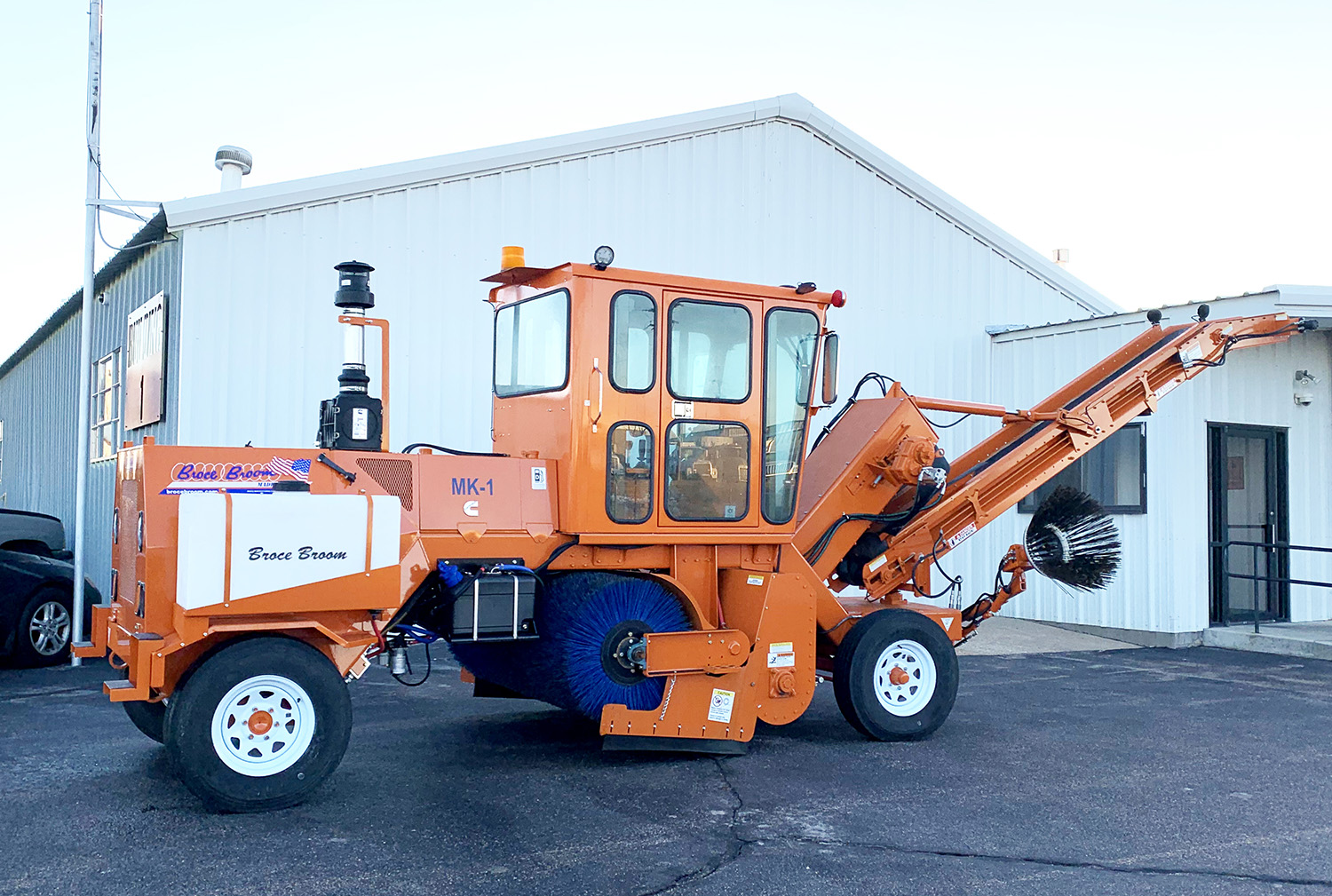
Mid-mount construction brooms excel at moving material across the deck, cleaning mill texture, and staging windrows for loaders. They are the workhorse when millings will be loaded separately, when you need multiple light passes, or when space is tight and you want a purpose-built broom rather than a skid-steer attachment fighting heavy RAP.
Loader-and-box-blade or skid-steer broom setups can work on small patches and light cuts, but they often lose time and leave more fines on production milling. Attachments that were fine for dirt yards struggle when the planer is putting out continuous, abrasive RAP and the paving train is burning clock.
Transfer (sweep-and-load) sweepers combine broom and conveyor so millings go straight to a truck in one pass. On highway and arterial mill-and-fill, that can collapse the cleanup-to-haul cycle: fewer loader cycles, less double-handling, and a cleaner deck sooner for tack. The tradeoff is having the right machine and truck choreography—not parking a transfer unit on a job that only needs a light broom pass.
Purpose-built construction and transfer sweepers from companies such as Broce Broom exist because millings cleanup is a paving quality step—not an afterthought with a loader bucket.
Dust Control Without Creating Bond Problems
Dust is a safety, visibility, and neighbor issue—and a bond issue when it settles back onto the milled face.
- Use broom spray bars and water trucks to keep airborne dust down for traffic and adjacent properties.
- Avoid flooding the cut. Standing water and slurry hide soft spots and leave a dried film that tack cannot penetrate.
- Time water ahead of the finish broom so damp fines are lifted, not smeared.
- On windy nights, expect dust to redeposit; plan a final pass immediately before tack rather than hours earlier.
If the project has environmental or municipal dust limits, document your spray and sweep sequence the same way you document temperature and density. Inspectors notice when the air looks good but the deck still feels sandy.
Traffic, Night Work, and Schedule Risk
Cleanup lives on the critical path between mill and pave. Typical failure modes:
- One broom behind two planers—or a broom sized for a 2-inch cut running a 4-inch cut.
- Trucks dedicated to mill haul only, with no plan for windrow load-out, so the broom piles material the paving crew later drives through.
- Leaving finish sweep until “after lunch” while the distributor and paver are already staged.
- Reopening lanes over a dusty deck so traffic grinds fines back into the texture before night paving.
Build the schedule backward from tack time: finish-sweep complete, deck accepted, then distributor. If mill production is the pride of the shift but cleanup is under-crewed, the overlay pays for it.
Secondary Applications Worth the Same Discipline
The same habits transfer to other broom-critical work:
- Chip seal—sweep excess aggregate on time so you do not starve the mat or leave windshield hazards; reclaim usable stone instead of wasting it.
- Rumble-strip milling—fines left in the cut and on the adjacent lane create noise complaints and bonding problems if a thin overlay or surface treatment follows.
- Shoulder and barrier wall cleanups—material pushed off the travel lane still has to leave the project; transfer or controlled windrow load-out beats scattering it into the ditch for the next rain.
Field Checklist Before Tack
- Mill pattern visible and free of piles or windrows in the paving lane.
- No soft fines underfoot; boot does not leave a dust print that smears.
- Edges, joints, and around structures cleaned or called out for hand work.
- Dust spray used without leaving slurry crust.
- Traffic not grinding dirt back onto the deck between final sweep and distributor.
- Broom and truck plan matched to planer output for the remaining cut.
Bottom Line
Overlay bond starts when the mill leaves the lane—not when the paver shows up. Sweep quality controls whether tack wets clean milled texture or a film of RAP dust. Sequence primary and finish passes behind the planer, choose windrow-and-load versus sweep-and-transfer for the tonnage you are running, and treat dust water as a control—not a wash that paints fines into the deck. Crews that put broom capacity on the critical path protect both the mat and the night’s schedule.


