






Truck loading looks simple until the bucket will not clear the sideboards. Then every cycle turns into a dance: climb higher than the machine wants, tip early, spill over the near rail, crawl forward to center the load, and burn fuel while the haul truck waits. The instinctive fix is a bigger carrier with more lift. Sometimes that is right. Often it is the expensive way to solve a geometry problem.
A high-dump bucket adds a secondary dump pivot so the same skid steer or compact track loader can discharge material higher and farther into the bed. Used on the right trucks and materials, that attachment can protect cycle time without financing a larger machine. Used on the wrong trucks, it is dead weight that steals rated operating capacity. This guide is about knowing the difference.
Dump Height Is a Clearance Problem—Not a Horsepower Problem
Dump height (and dump clearance at the cutting edge or teeth) decides whether a full bucket empties cleanly over the tallest side you regularly load. Engine power, hydraulic flow, and breakout force do not invent clearance you do not have. If the lip cannot clear the top rail at full lift with a controlled dump angle, operators compensate with partial dumps, extra approaches, and risky tip-overs that spill material onto tires and hitch hardware.
Before you upsize the carrier, measure the job:
- Tallest frequent truck or hopper—sideboard height at the loading face you actually use, not the shortest trailer on the yard.
- Required dump clearance—side height plus a safety margin so the bucket does not kiss the rail when the pile is heaped or the ground is uneven.
- Reach to centerline—many high-sided dumps need material placed toward the middle of the bed, not dumped against the near wall.
- Carrier lift geometry—published dump height with your current bucket versus what a high-dump linkage adds at full lift.
If the gap between what you have and what you need is measured in tens of inches of dump height—and the carrier otherwise has the ROC, traction, and cycle speed for the pile—attachment geometry is usually cheaper than a class jump in machine size.
What a High-Dump Bucket Changes in the Cycle
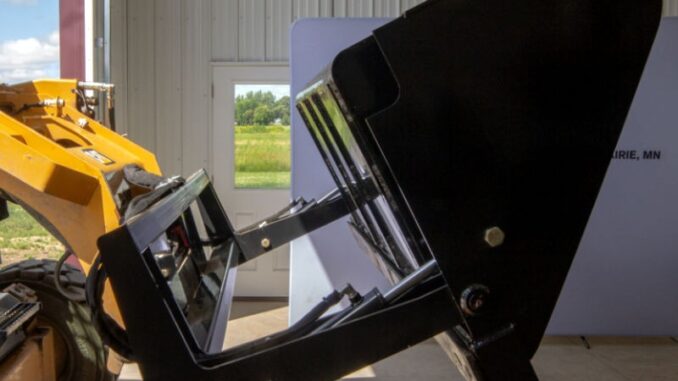
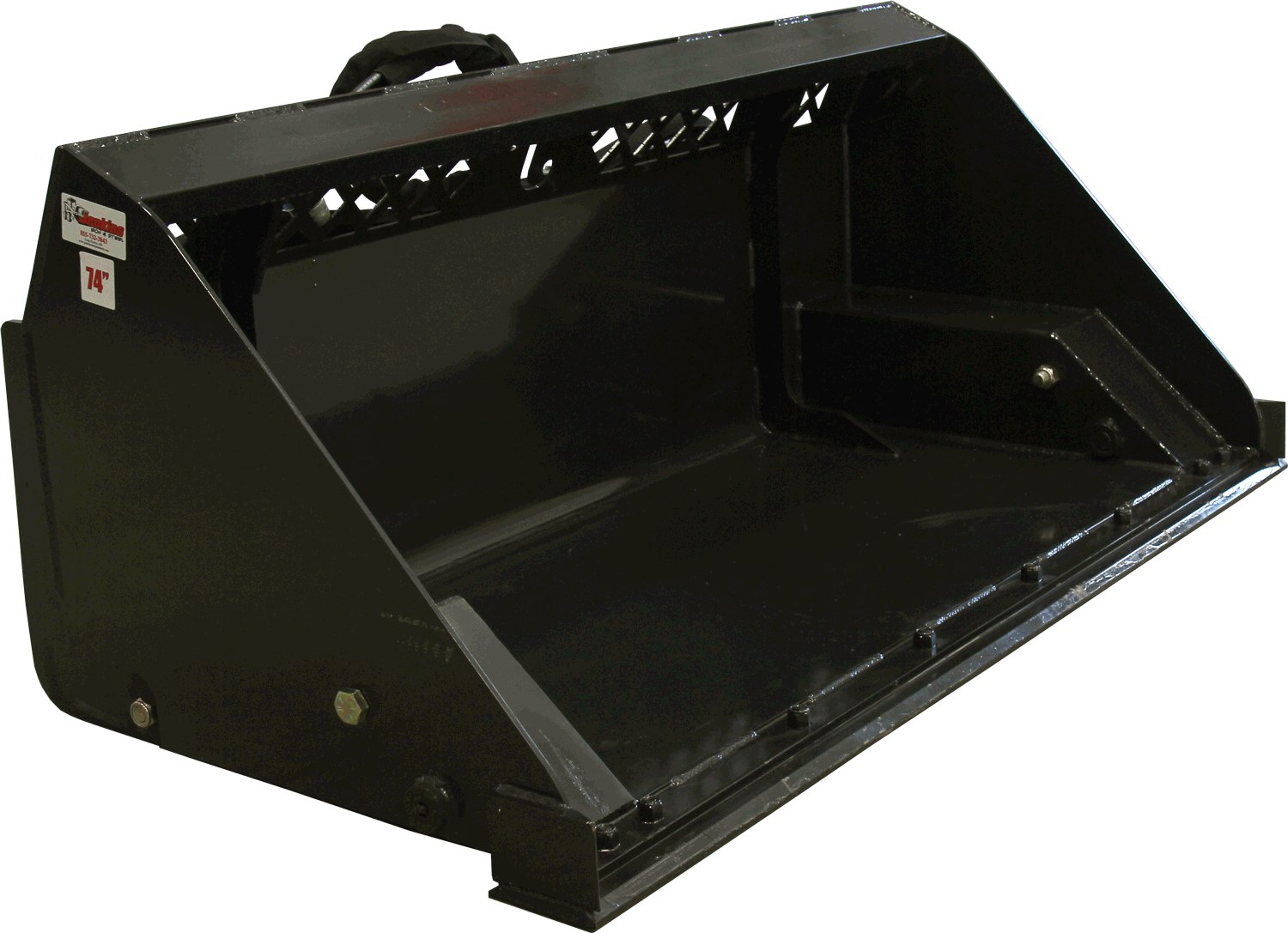
A conventional dirt bucket dumps by tilting at the coupler / loader linkage. A high-dump design keeps a frame on the quick-tach and pivots the bucket farther out and down through dedicated cylinders and greaseable pins. The practical effects on truck loading:
- More dump height without raising the loader arms beyond their useful envelope—or without buying arms that start higher.
- Better reach over the side so operators can center the pile instead of building a wall against the near rail and then wasting passes to level it.
- A more controlled discharge into feed mixers, hoppers, and high-sided dumps where a standard tip sprays material short of the target.
Commercial high-dump designs from shops like Jenkins Iron & Steel commonly add on the order of ~50 inches of dump height—use that as a planning input, then verify against your truck sides and rated operating capacity.
Cycle Time: When Geometry Beats a Bigger Machine
Cycle time is scoop, travel or swing, dump, and return. A larger loader can move more yards per pass—but only if it fits the pad, does not wait on trucks, and does not spend the gain climbing over sideboards it still barely clears. High-dump economics show up when:
- Your current compact carrier already fills trucks fast from the pile, but dump clearance is the bottleneck.
- Truck sides or mixers are consistently tall, so every load pays the clearance tax.
- Yard space, transport weight, or rental rates make a larger class machine painful even if the brochure dump height looks better.
- Operators currently double-handle—dump short, rehandle into the bed, or stage with a second machine just to finish centering.
Watch a few timed loads. If dump and repositioning eat more clock than digging and travel, height and reach are the constraint. Upsizing the carrier to chase a few more inches of dump height—while adding transport cost, ground pressure, and a bigger payment—is the wrong lever.
When Upsizing the Carrier Is Still Wrong—and When It Is Right
A high-dump bucket is not a universal patch. Leave it on the trailer when:
- Trucks are low-sided or you mostly load pickups, landscape trailers, and short-side dumps. Extra linkage weight buys nothing.
- Hauls are short and sides are modest—a standard bucket already clears, and cycle time is pile distance or truck spacing, not dump height.
- Material density plus attachment weight pushes you over rated operating capacity (ROC). High-dump frames are heavy; payload shrinks. Spilling lighter heaps more often can erase the height advantage.
- You need digging breakout and a clean grade edge more than truck clearance. A purpose-built dirt bucket (or teeth package) may outperform a high-dump on cut-and-load from bank.
Upsize the carrier when the machine—not the dump geometry—is the limit: true lack of ROC for the material density, chronic traction or stability problems on the loading face, truck cycle demand that needs a larger bucket class even with perfect dump height, or multi-shift production where a bigger loader’s pass count dominates. Do not confuse “we cannot clear this rail” with “we need a bigger iron.” Measure both before you sign a lease.
Payload, ROC, and Attachment Weight Discipline
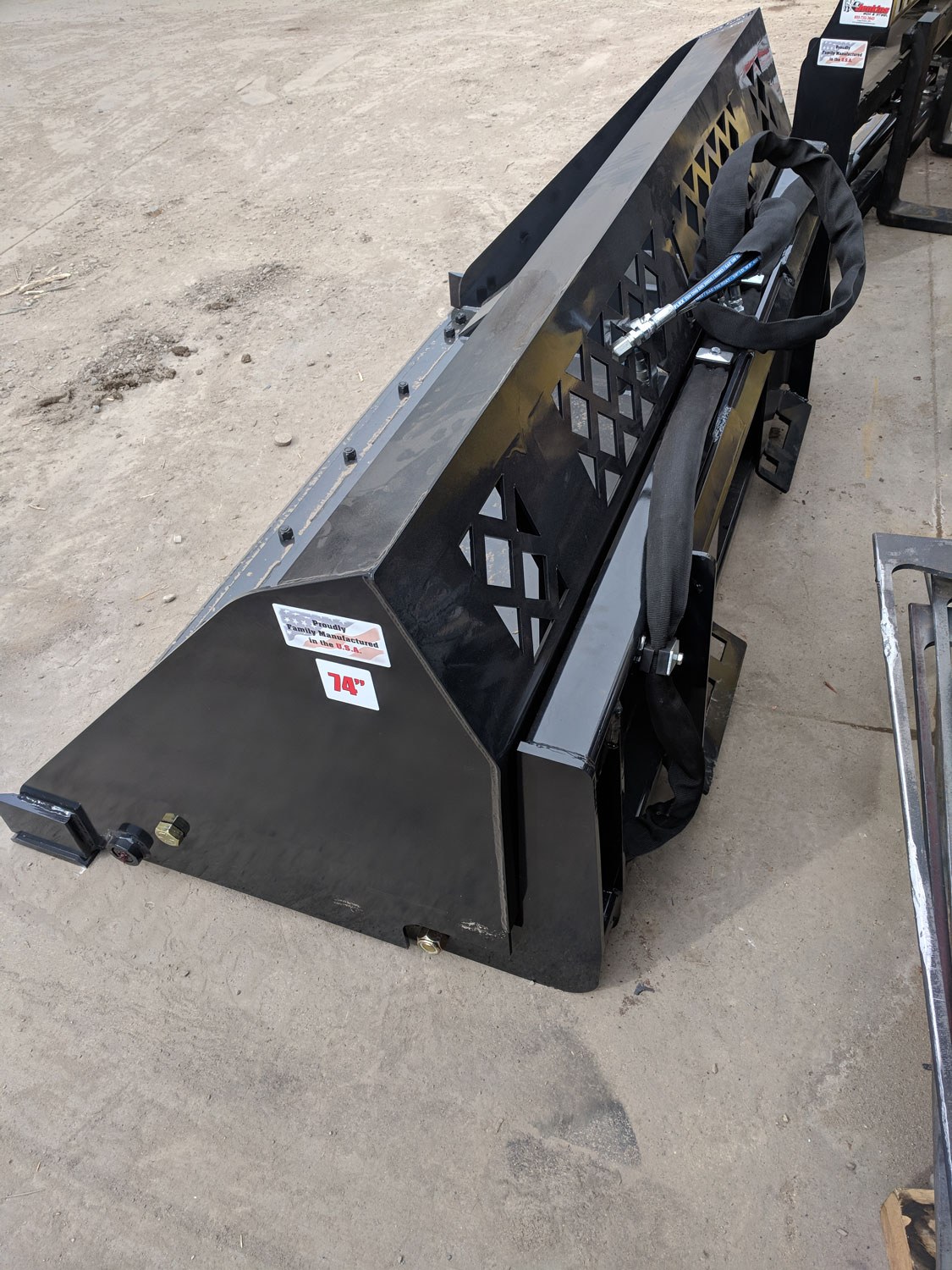
Every pound of attachment is a pound that is not payload. High-dump buckets in the compact class often land well over a thousand pounds depending on width. That matters on skid steers and CTLs that already run near ROC with a heavy dirt bucket and dense aggregate.
Do the math before the purchase order:
- Start from the carrier’s rated operating capacity for your tire/track and coupler setup (and the derate that applies with a true high-dump geometry if the manufacturer publishes one).
- Subtract attachment weight and estimate heaped material weight at the densities you haul most (wet sand and gravel are not landscape mulch).
- Confirm the hydraulic circuit can run the dump cylinders at working RPM without starving lift or drive when you tip.
- Match width to the machine and the truck—oversized width that hangs past tires is not free capacity; it is a curb and visibility problem.
If the high-dump forces you into light, half-full passes to stay legal on ROC, you did not beat a bigger machine—you bought a taller way to under-load trucks.
Operator Setup and Pivot Care
High-dump productivity depends on habits as much as steel:
- Approach square and commit to one dump path. Hunting for clearance mid-tip is how material lands on the near rail.
- Use the secondary dump to center the bed, then lower and rack for travel—do not drive with the bucket hanging in the dump arc.
- Grease every pivot on the published interval. Dry pins oval the bushings and change dump geometry until the “extra height” feels soft and noisy.
- Keep the bolt-on cutting edge and screens serviceable. Visibility through rear screening helps operators see the edge and the rail—mud-packed screens erase that advantage.
- Watch hose routing through full lift and full dump so couplers and cylinders are not pinched at the top of the cycle.
Train new operators on the dump sequence empty first. The linkage moves differently than a standard bucket; surprise tip speed is how loads slap the far side of a mixer or slap back onto the cab guards.
A Simple Decision Checklist
- Measure the tallest truck/hopper you load weekly and the dump clearance you have today.
- Time ten cycles and note where the seconds go—pile, travel, dump, wait.
- Weigh attachment + material against ROC at your real densities.
- If clearance and centering dominate the clock, and ROC still works, specify a high-dump before you upsize the carrier.
- If ROC, traction, or pass count dominate—and dump height is already adequate—buy or rent the larger machine and keep a standard bucket.
Bottom Line
A high-dump bucket beats a bigger machine when dump height and bed centering are the real bottlenecks and the compact carrier still has the capacity and cycle speed for the material. Upsizing is wrong when you are paying for mass and transport to solve a geometry gap an attachment can close—and it is right when the carrier itself is out of ROC, traction, or production class. Measure the rail, the cycle, and the payload. Then choose height, not ego.