















































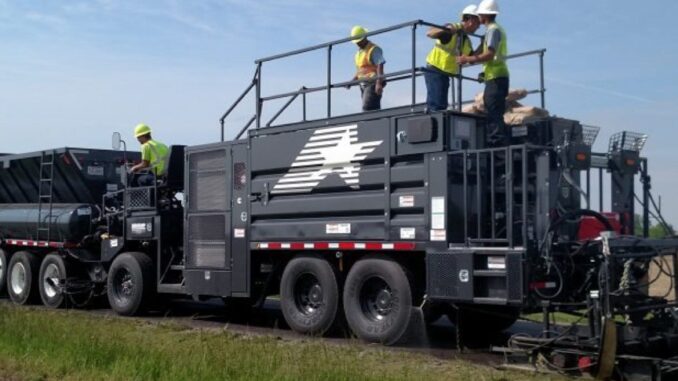
Slurry seal and microsurfacing both place a thin, emulsion-bound wearing course over existing asphalt. Both can seal the surface, restore texture, and buy years of service life when the pavement is still structurally sound. They are not interchangeable on every street—and the difference shows up in mix design, traffic return, and the defects you fight when the wrong treatment is forced onto the wrong road.
This guide is a field production how-to: when each treatment fits, how mix and calibration decide mat quality, and what “traffic ready” should mean before cones come up.
Slurry Seal vs Microsurfacing—What Actually Differs
Slurry seal is a mixture of emulsified asphalt, well-graded fine aggregate, water, and additives applied in a thin layer with a spreader box. It is typically used for sealing, weathering protection, and friction restoration on lower- to moderate-volume roads where deep rut fill is not the primary need.
Microsurfacing uses polymer-modified emulsion, selected aggregate, mineral filler (often cement), water, and additives. The chemistry and gradation are designed for a faster break, higher early strength, and the ability to place thicker lifts—including wheel-path rut fill with a rut box—on higher-traffic routes and night work where early reopen matters.
Both are pavement preservation tools, not structural overlays. If the base is failing, alligator cracking is active through the full depth, or rutting is from weak support, neither treatment fixes the structure. They protect good pavement and extend life when applied early in the deterioration curve.
When Each Treatment Fits
Choose slurry seal when:
- Traffic is light to moderate and overnight or same-day reopen is acceptable under local specs and weather.
- The primary need is seal and texture—not deep rut correction.
- Climate and schedule allow a conventional break without forcing a polymer-modified micro mix onto a quiet residential loop just because it was leftover on the train.
- Agency specs and mix designs already call for slurry—do not substitute micro without approval; binder and aggregate packages differ.
Choose microsurfacing when:
- Higher volumes, night windows, or early traffic return drive the schedule.
- Wheel-path ruts need profile correction within the treatment’s thickness limits—often with a dedicated rut box pass before a full-width scratch or surface course.
- Polymer-modified emulsion and mineral filler are required by the job mix formula for early strength and durability under traffic.
- Multiple lifts or variable thickness are planned as part of the preservation strategy.
Climate, emulsion break time, and ambient/humidity windows still govern both. Hot, dry wind can break a mix too fast; cool, damp weather can leave a mat that tracks under the first cars. Match treatment to traffic and weather—not only to the machine available that week.
Mix Design That Survives the Pugmill
A lab mix design is not a field guarantee. Aggregate moisture, stockpile segregation, emulsion temperature, water addition, and mineral-filler feed all move the mix away from the design sheet if nobody is watching.
Hold the design in the field with discipline:
- Know the job mix formula—aggregate type and gradation, emulsion type and residual asphalt content, filler rate, water and additive ranges, and target application rates.
- Control aggregate moisture—wet stockpiles change free water and break behavior; dry, dusty piles can starve the emulsion of coating water.
- Keep emulsion in its handling window—too cold and it stiffens or breaks inconsistently; overheated emulsion is not a shortcut to faster paving.
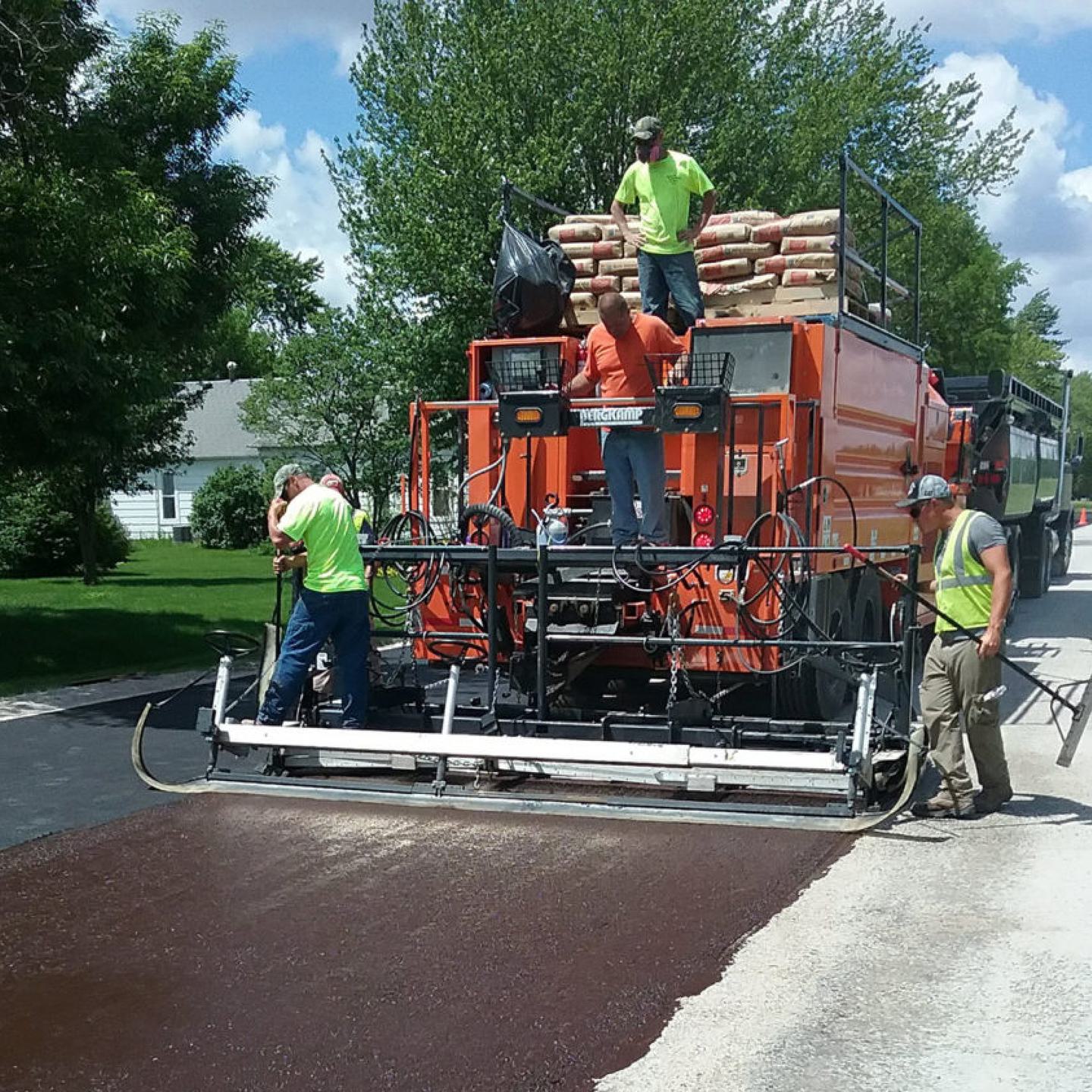
- Meter mineral filler—cement or other fillers affect break and cohesion; “eyeballing bags” is how mats ravel or set under the box.
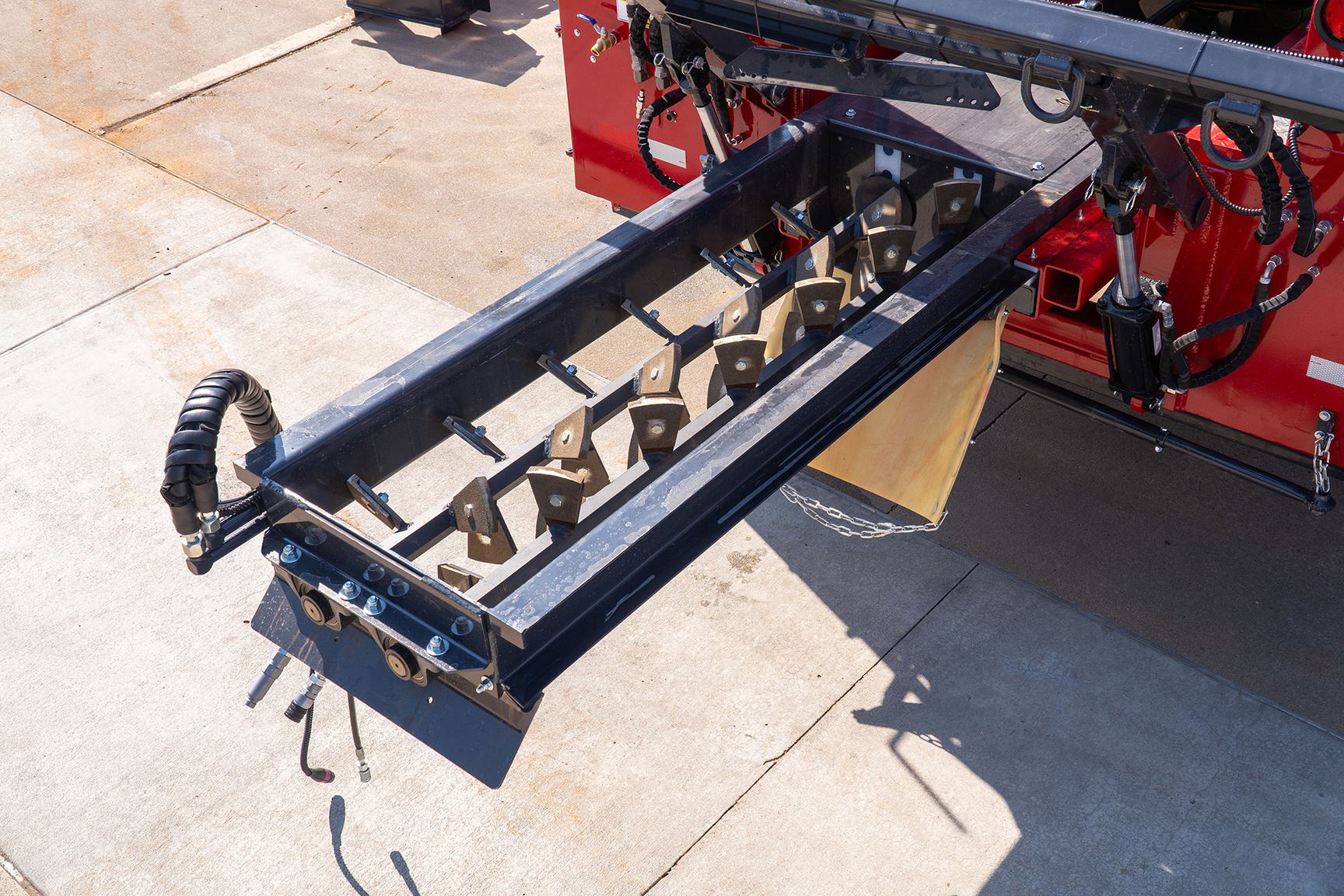
- Watch consistency at the pugmill discharge—the mix should coat aggregate uniformly, flow into the box without flooding or balling, and leave a mat that the squeegee crew can dress without fighting soup or stiff cake.
Continuous and truck-mounted slurry/micro trains from builders like Bergkamp put calibrated feed of aggregate, emulsion, water, filler, and additive at the center of production—so ratios follow the mix design instead of drifting with every truck swap.
Calibration, Break Time, and Handwork
Calibration is not a once-a-season ritual. Recheck when aggregate source changes, emulsion lot changes, or production rates and box widths shift. Record belt/gate settings, pump rates, and filler feed so the next shift can repeat yesterday’s mat—not reinvent it.
Break and set decide traffic timing. Microsurfacing is formulated for a faster chemical break; slurry often needs more patience. Neither should be “forced open” because the traffic plan was optimistic. Watch for a mat that is cohesive, no longer brown and wet-looking in a way that picks on tires, and approved under the agency’s reopen criteria.
Handwork at edges, joints, driveways, and manholes is where many jobs look amateur. Keep a small crew with the right tools for:
- Longitudinal joints that feather clean instead of leaving ridges
- Driveway returns and curb lines without excess material that tracks into yards
- Utility lids and boxes that stay accessible and flush
- Start/stop joints that do not create a slap for traffic
Drag marks, ripples, and uneven texture usually trace to box setup, travel speed, mix consistency, or a spreader box that was not adjusted for width and crown—not to “bad emulsion” alone.
Surface Prep and Crack Policy
Neither slurry nor micro bridges active structural cracks or heals a failing base. Sweep thoroughly, remove vegetation and mud, and repair failed areas before the train arrives. Crack sealing policy should follow the agency and existing best practice—do not dump a thin surface treatment over open cracks and expect them to disappear. For crack evaluation and seal-vs-fill decisions, use your agency guide and the crack-treatment pieces already published for crews; this article stays on slurry/micro production.
Dirty pavement is a delamination factory. Oil spots, dust cakes, and loose millings under the mat show up as peeling weeks later.
Traffic Return Without Guessing
“Traffic return” is a specification and a field judgment—not a marketing claim. Confirm:
- Agency reopen criteria (time, rolling traffic, temperature, or mix-specific tests)
- Ambient and pavement temperature trends through the first hours after placement
- Whether night work humidity and cool pavement will slow break on a micro job that was planned for a fast reopen
- That first traffic is not turning, braking, or tracked equipment that will scrub a green mat
Plan the day so the last pass is not fighting sunset and a school-dismissal rush on a residential slurry that still needs time. Microsurfacing’s early-strength advantage only helps if the mix was built and placed to the design—not if water and filler drifted all morning.
Defects That Trace Back to Process
Common problems and typical process causes:
- Raveling—lean mix, poor coating, dirty aggregate, traffic too early, or over-sanded surface
- Delamination / peeling—dirty or damp pavement, incompatible prep, or placing over failed substrate
- Drag marks and washboarding—box attitude, speed, stiff mix, or worn rubber
- Flushing / fat spots—excess emulsion, segregation, or poor water control
- Uneven texture or streaking—box setup, inconsistent feed, or stop-start paving without joint care
Fix the process before blaming the emulsion brand. Recalibrate, clean the box, verify stockpile moisture, and slow down enough to dress joints.
Field Checklist Before You Roll
- Confirm treatment type (slurry vs micro), lift plan, and rut-fill needs against the contract and traffic.
- Verify mix design, emulsion lot, aggregate source, and filler on site—and calibrate feeds.
- Sweep and prep; repair failed areas; follow crack policy without using the surface treatment as a crack filler.
- Set box width, crown, and rubber; stage handwork tools for edges and joints.
- Watch pugmill consistency and break; adjust water/additive within design limits—not by tribal “make it wetter.”
- Hold traffic until reopen criteria are met; document weather and any soft spots for the next shift.
Slurry seal and microsurfacing earn their keep when the pavement still has life, the mix matches the road, and the crew treats ratios, break time, and joints as production controls. Choose the treatment for traffic and distress—not habit—and the mat will look like preservation instead of a short-lived coat of hope.