


















For decades, on construction sites—and not just there—”green” had a straightforward meaning: money. Saving on transport costs, reducing disposal expenses, finishing the job faster. Everything revolved around the bottom line.
Today, however, green tells another story. It’s the story of sustainability, the circular economy, and urban regeneration. Yet, interestingly, it still comes back to money. Because recovering materials instead of disposing of them often makes solid business sense. And perhaps this is precisely where economics and environmental responsibility stop travelling along separate roads.
Let’s start with a simple idea: a building awaiting demolition is not just a pile of rubble to be hauled away. It’s more like an urban mine, hidden within the walls of every building, warehouse, or bridge that reaches the end of its life. Concrete, steel, bricks, every one of these materials required resources and investment to produce, and nobody wants to pay twice by sending them to landfill.
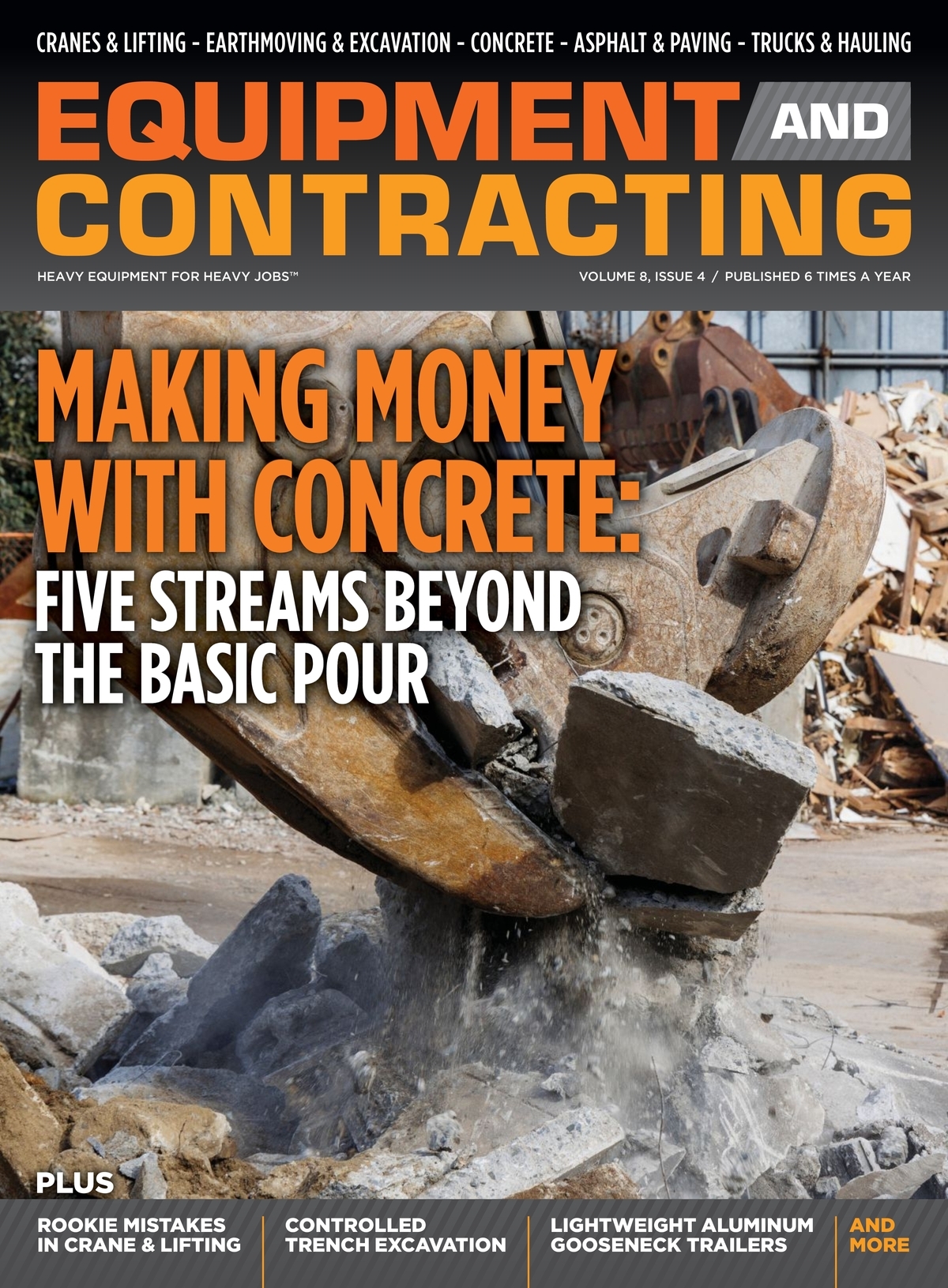
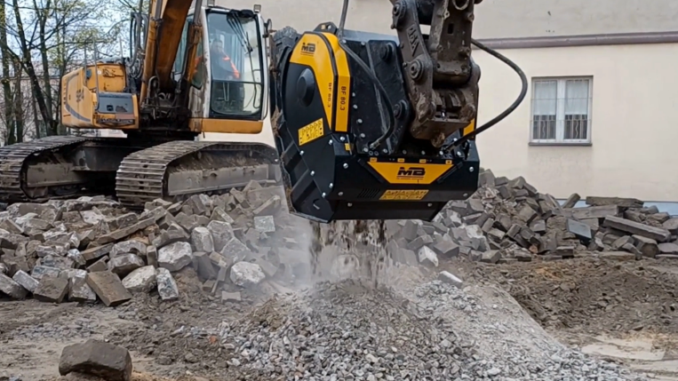
This is where what we could call the “crushing duo” comes into play: on one side, the demolition pulverizer; on the other, the crusher bucket. Naturally, both from MB Crusher.
The pulverizer works with surgical precision. It demolishes only where required, avoids unnecessary destruction while preparing the material for the next stage. When paired with an MB Crusher sorting grapple, material separation becomes even faster and more accurate.
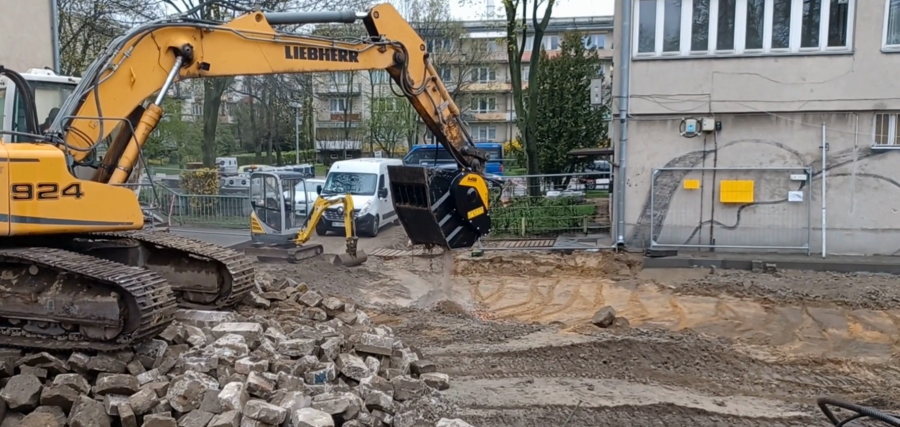
The crusher bucket then gives that material a second life. Demolished concrete remains on site, is crushed to the required size, and becomes a new recycled aggregate ready for reuse. When a project calls for specific specific grading, MB Crusher’s screening bucket completes the process by separating the material directly on site.
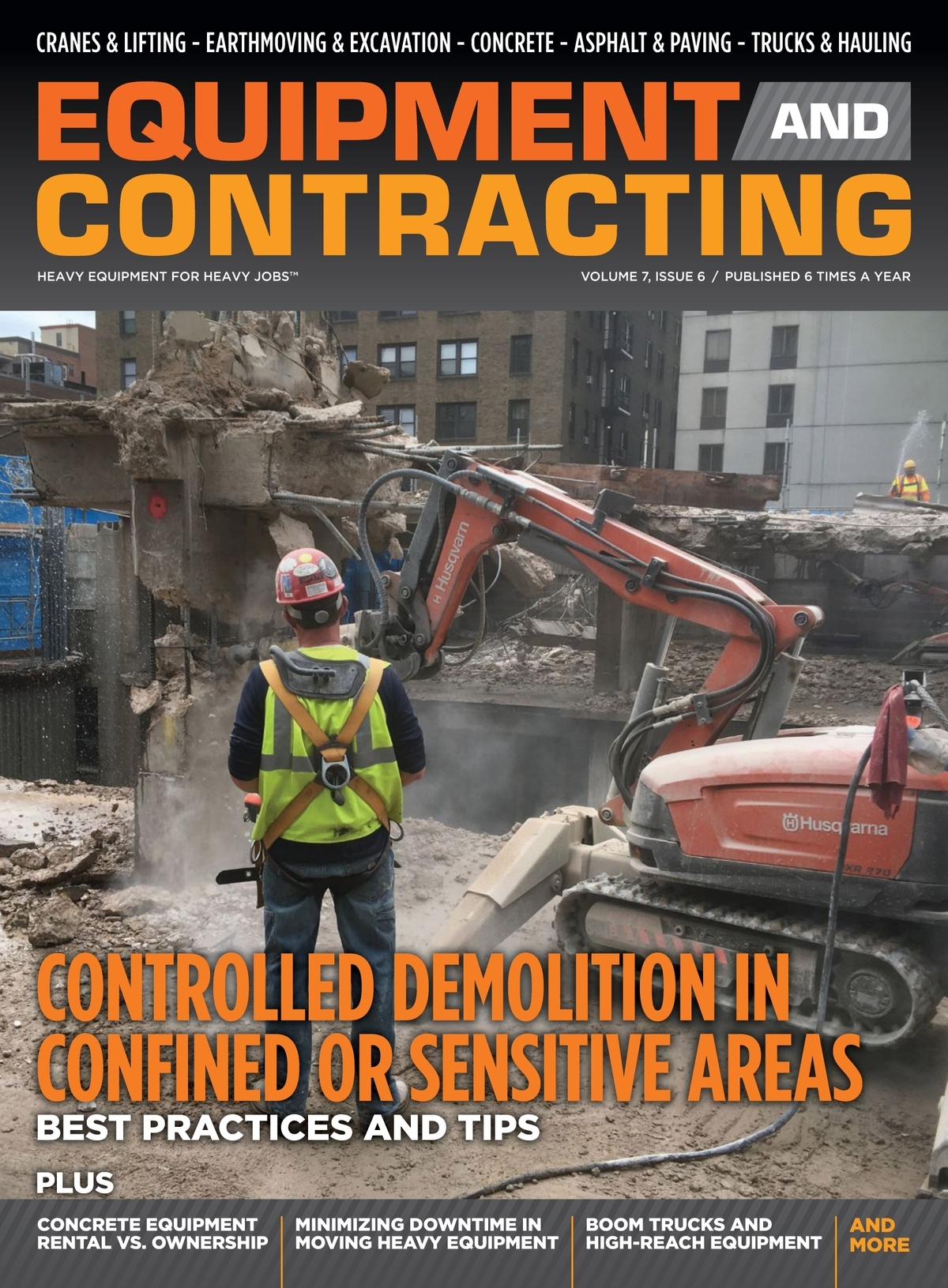
This approach is becoming increasingly valuable in urban environments. Today, many demolition projects take place alongside homes, schools, hospitals, or buildings that must remain fully operational while demolition is underway.
In these situations, precision matters; but so do noise, vibration, and dust.
Controlled demolition minimizes impact, helping to protect neighbouring structures. MB Crusher’s dust suppression system, available for both crusher and screening buckets, helps reduce airborne dust emissions, improving working conditions while minimizing disruption for nearby residents and businesses.
So much for the theory.
But what actually happens on site?
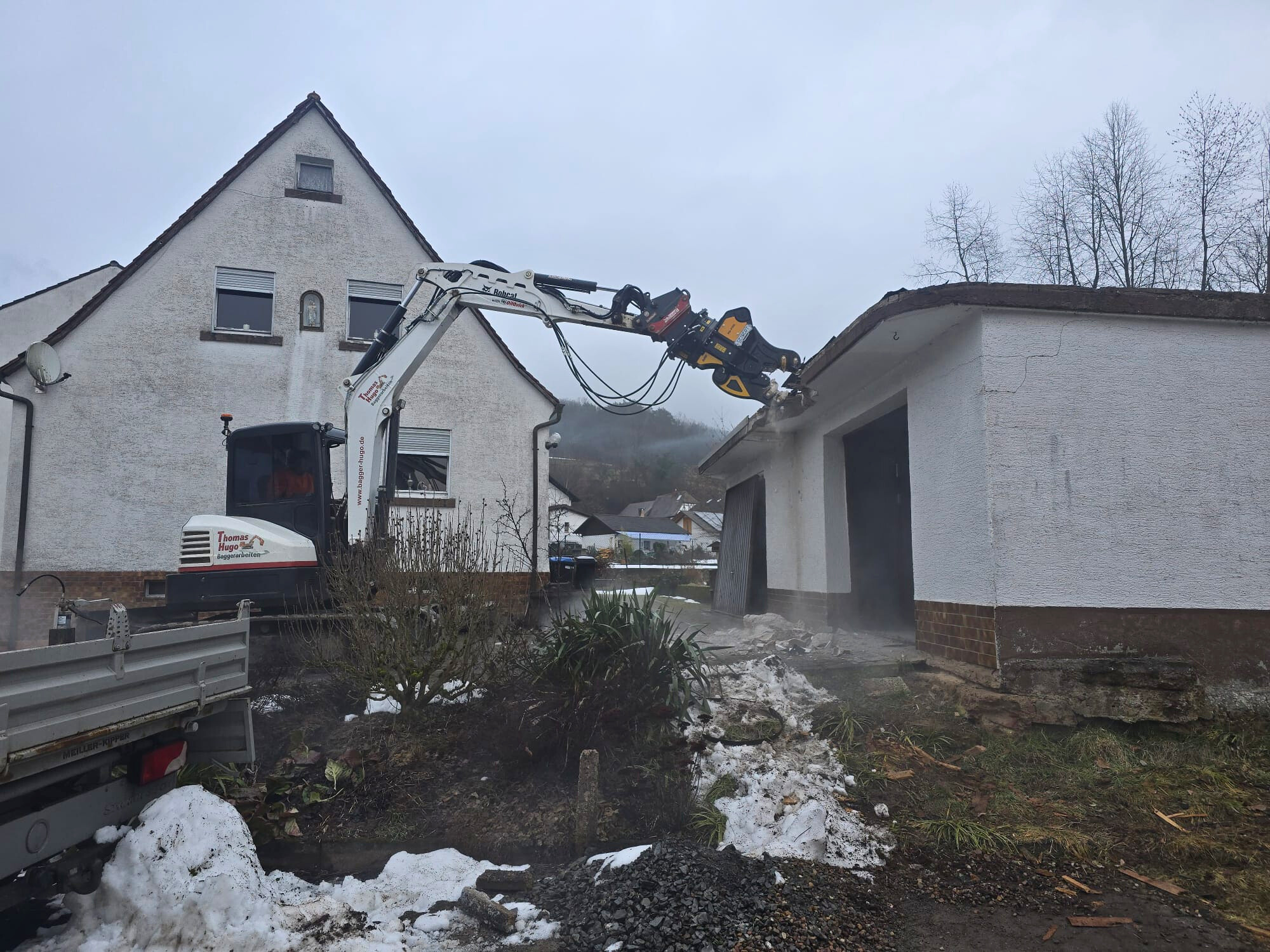
1. Germany: One Garage and One Neighbour Not to Disturb
During the partial demolition of a double garage, Thomas Hugo Baggerarbeiten, based in Sulzbach am Main, chose the MB Crusher MB-P380 demolition pulverizer mounted on a 5.5-ton Bobcat E55 excavator. The goal was to selectively demolish one half of the garage without damaging the adjoining structure.
After removing the garage door, propping the floor slab, stripping the roof waterproofing, and cutting the separation joint between the two structures, the concrete demolition began.
A hydraulic breaker was never due to the risk of transmitting vibrations to the neighbouring building. Instead, the MB-P380 delivered controlled, vibration-free demolition. . Its integrated cutting blades allowed the reinforcing steel to be cut during the demolition process itself. Concrete and steel reinforcement were cleanly separated and reduced on site to a size suitable for crushing.
In other words, the demolition pulverizer didn’t simply demolish the structure—it preserved the value of the material.
Because high-quality recycling always starts with high-quality demolition.
2. Poland: When Material Never Leaves the Jobsite
Reducing operating costs by as much as 30–40% using material that was once considered nothing more than waste. That’s exactly what MBKOP, a Polish company specializing in demolition and earthmoving, achieved by recycling demolition debris directly on site with an MB Crusher BF80.3 crusher bucket.
The turning point came by eliminating one of the biggest productivity bottlenecks: dependence on haulage, landfill sites and external aggregate suppliers. Today, demolition waste is crushed and reused on site for sub-bases, backfilling and ground stabilisation without ever leaving the project.
The benefits are significant: faster project execution, fewer truck movements, no landfill disposal costs, and no need to purchase new aggregates.
So, what is green demolition really all about?
It means recovering as much material as possible exactly where it already is, without transporting it away only to bring new material back. Less waste to dispose of, fewer truck movements and less demand for newly quarried aggregates.
It also aligns with the regulations adopted in many countries, where construction and demolition (C&D) waste recovery targets exceed 70%, and public procurement increasingly rewards, or even requires, the use of recycled materials.
And, returning to our opening play on words, perhaps that’s what green really means today: keeping a little more green on site, in every sense of the word.