







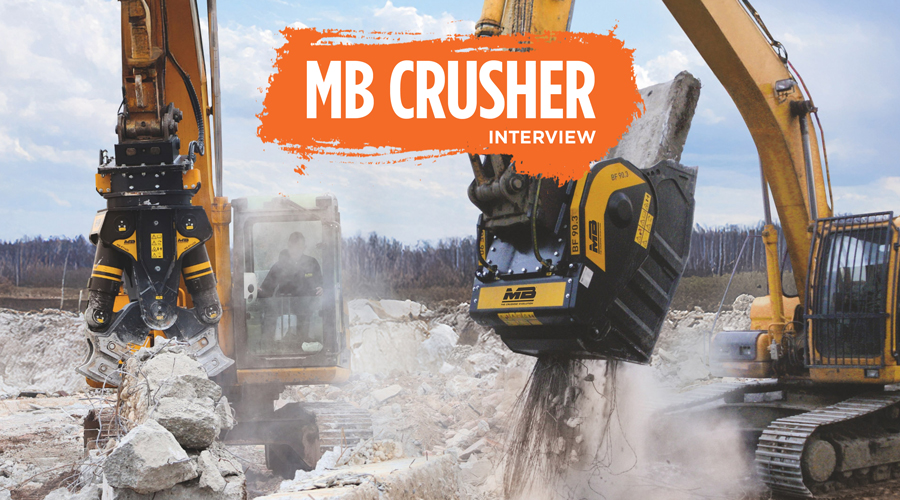
Material handling remains one of the most time-consuming and resource-intensive parts of any construction or demolition project. From moving debris off-site to sourcing new material, each step can impact productivity and workflow. In this interview, MB Crusher discusses how contractors are approaching these challenges today, how equipment design plays a role in improving performance, and what factors matter most when managing and processing material directly on the jobsite.
E&C: How is material typically handled on most jobsites today, from excavation or demolition through final disposal or reuse?
MB: Traditionally, material is excavated or demolished, loaded onto trucks, and transported off-site for disposal or processing. If new material is required, it is then purchased and brought back to the site. This linear process involves multiple handling stages, heavy logistics, and significant downtime between operations. What we see with MB Crusher customers is a shift away from this model. By using attachments like our crusher and screening buckets, the same material is processed and reused directly on-site, eliminating unnecessary handling steps.
E&C: At which stages of that process do contractors tend to lose the most time or efficiency?
MB: Transport, waiting time and double handling remain the biggest inefficiencies. Every truckload represents loading trucks, traveling to disposal sites, queuing at landfills or recycling centers, and sourcing new materials. Each step needs time, fuel, and coordination. MB Crusher attachments are designed specifically to remove these stages by enabling immediate processing where the material is generated.
E&C: How does improving material handling impact overall project timelines and crew productivity?
MB: Improving material handling directly accelerates project timelines. When contractors adopt MB Crusher solutions, they often see an immediate impact: fewer machines on-site, reduced waiting times, and continuous workflow. Instead of stopping to manage logistics, crews stay focused on production.
E&C: What are some operational bottlenecks that can be reduced when material is handled more efficiently on site?
MB: Key bottlenecks include truck availability, disposal site access, and material shortages. On-site processing eliminates these constraints, with MB Crusher equipment, contractors essentially bring the recycling plant to the jobsite, removing reliance on external delays.
E&C: How does processing material directly on the jobsite influence how crews plan and execute daily work?
MB: It introduces a level of flexibility that traditional setups cannot match. With MB Crusher attachments, operators can switch from demolition to crushing to screening in the same day using the same carrier machine, adapting instantly to site needs.
E&C: What changes in logistics or coordination occur when materials are no longer transported off-site?
MB: Logistics become significantly simpler and become internal rather than external. Instead of coordinating trucks and suppliers, contractors manage everything with their existing fleet. This is where MB’s plug-and-play attachment concept delivers real value—no additional machines or complex setup required.
E&C: For contractors who are new to this type of equipment, can you explain how a crusher bucket works once it is attached to an excavator?
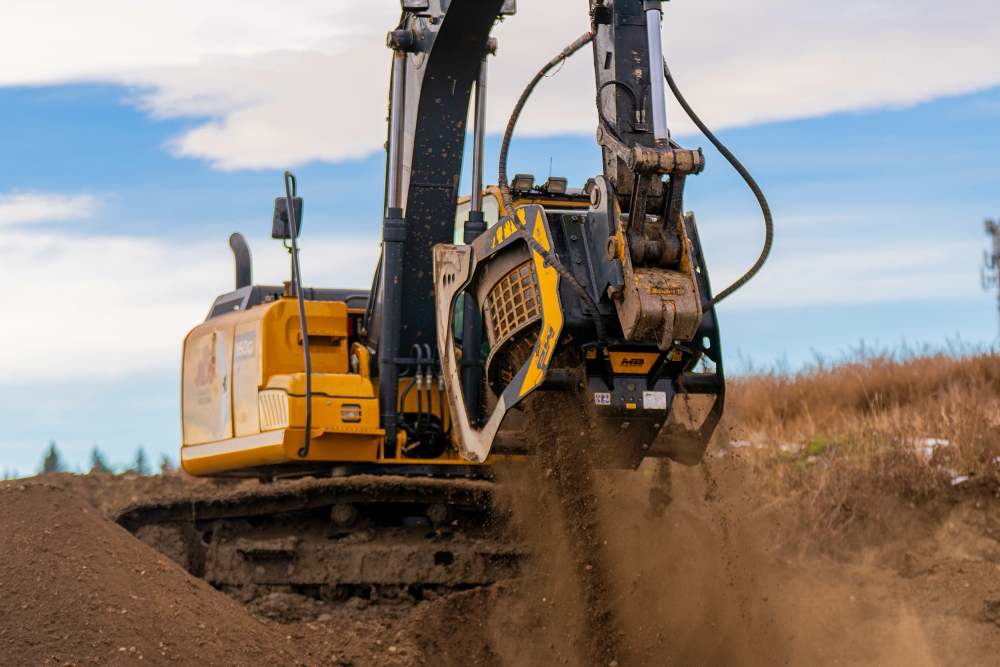
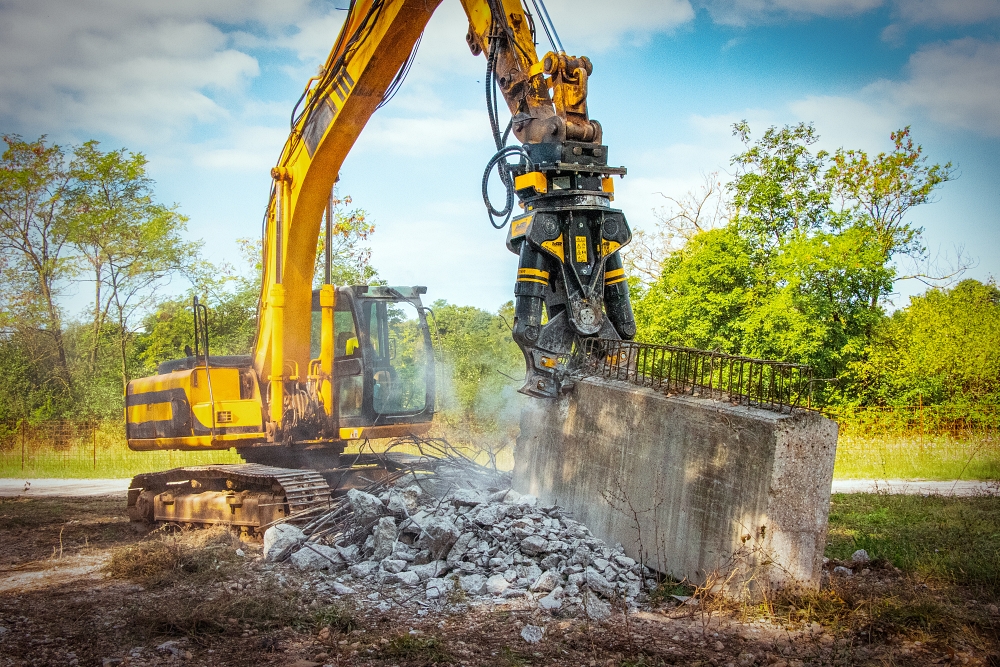
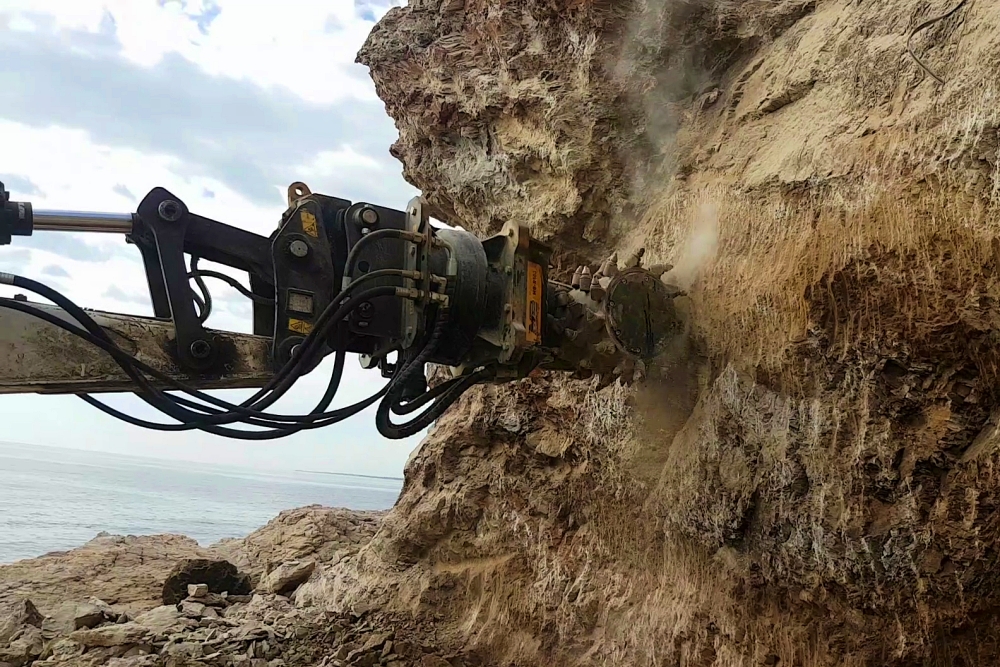
MB: An MB attachment is designed to transform an excavator, loader, or skid steer into a multifunctional tool carrier. Once connected, the attachment is powered directly by the machine’s hydraulic system, allowing the operator to perform a wide range of tasks—crushing with a crusher bucket, screening with screening buckets or shafts screeners, cutting with drum cutters, handling materials with grapples, or demolishing reinforced structures with a demolition pulverizer.
What differentiates MB Crusher is the ability to cover multiple jobsite phases with one carrier machine and a suite of interchangeable attachments. From primary demolition and material reduction to sorting and reuse, each tool is engineered for seamless integration and quick changeover. This allows operators to adapt in real time, maximize machine utilization, and keep the entire process on-site without introducing additional equipment or complexity.
E&C: How does the hydraulic system of the carrier machine power and control the attachment during operation?
MB: MB Crusher attachments are engineered to fully integrate with the excavator’s hydraulic system with a plug-and-work system. Simply connect the hoses to the MB Crusher attachment and work. They work with any brand and MB Crusher offers a wide range to cover different weight of heavy machinery, allowing contractors to maximize equipment they already own.
E&C: How is the output size of the material controlled during the crushing process?
MB: Output size control depends on the type of attachment being used, and this is where MB’s Crusher range offers a clear advantage. With crusher buckets, operators can adjust the jaw gap to produce specific aggregate sizes directly on-site. When more precise selection is required, screening buckets allow operators to separate material by size using interchangeable meshes.
MB Crusher padding buckets take this a step further offering several interchangeable shafts for each model. It can be said that by combining these attachments, contractors can move from reduction to classification to final application with full control over output size—without ever leaving the jobsite.
E&C: What design features help maintain stability and reduce vibration during operation?
MB: Balanced design, high-quality materials, and advanced engineering reduce vibration and ensure smooth operation. This not only improves performance but also minimizes wear on both the attachment and the carrier machine — something operators immediately notice in daily use.
E&C: How do you ensure consistent production rates across different types of materials?
MB: Consistency comes from robust design and adaptable settings. Whether processing concrete, asphalt, or natural rock, the equipment is engineered to maintain steady output with minimal adjustments. MB Crusher attachments are developed to handle a wide variety of materials—from reinforced concrete to natural stone—without compromising output. This reliability is one of the reasons contractors trust MB Crusher across different job types.
E&C: What role do wear parts and material selection play in long-term durability and performance?
MB: Wear parts are critical. Using high-quality, durable materials ensures longer service life and consistent performance, even in demanding conditions. Easy maintenance and replacement also reduce downtime. Wear parts can be replaced on-site.in fact, MB Crusher’s focus is not just durability, but minimizing downtime. Contractors don’t just buy an attachment—they invest in uptime and predictable performance.
E&C: How are contractors approaching the use of existing material on site differently today?
MB: Contractors are increasingly viewing on-site material as a resource rather than waste. Recycling and reusing materials directly on-site has become a strategic advantage in both cost control and sustainability. There’s a clear shift toward treating material as an asset. With MB Crusher’s attachments contractors can crush, recover, separate and classify material directly on-site, unlocking value that would otherwise be discarded.
E&C: What determines whether material can be reused directly versus needing further processing?
MB: It depends on the material type, contamination level, and intended application. Some materials can be reused immediately after crushing, while others may require additional sorting or processing.
E&C: How important is it for equipment to perform multiple functions on a jobsite?
MB: Multi-functional equipment reduces the need for additional machines, lowers costs, and maximizes the value of existing assets. MB Crusher’s range is built around versatility. One carrier machine can perform multiple tasks, reducing fleet size and increasing utilization.
E&C: How does using one attachment across different phases of a project affect planning and efficiency?
MB: Contractors using MB equipment can move seamlessly between phases—demolition, processing, trenching—without waiting for additional machinery. That continuity translates directly into time savings.
E&C: How does adding an attachment like this change the role of an excavator or loader on a jobsite?
MB: It fundamentally changes how that machine contributes to the project. Instead of being limited to digging or loading, the excavator, skid steer or loader becomes a continuous production asset. With MB attachments, machines spend far less time idle and significantly more time actively generating value—whether that’s crushing, screening, or processing material.
This has a direct impact on ROI. Contractors are able to get more out of equipment they already own, reducing the need to rent additional machines or outsource key phases like material processing or disposal. Activities that were previously handled off-site can now be managed in-house, improving control over timelines and costs.
There’s also a sustainability benefit. By keeping materials on-site and reducing transport, contractors lower fuel consumption, emissions, and overall environmental impact. So it’s not just about multifunctionality—it’s about maximizing machine utilization, increasing profitability, and operating in a more efficient and responsible way.
E&C: How do different environments such as urban sites, remote locations, or confined spaces influence how materials are handled?
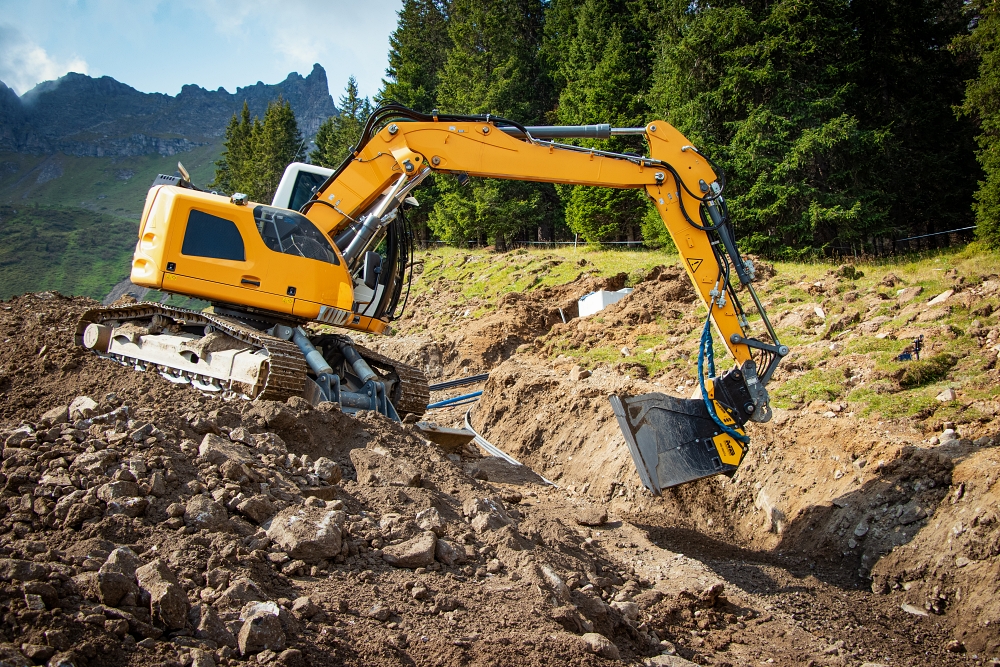
MB: These environments are often seen as constraints—but in reality, they highlight the limits of traditional logistics, not the job itself. If only an excavator can physically reach a site—whether it’s a mountain slope, a trench line, or an off-road location—then relying on trucks to move material in and out simply isn’t practical.
This is where the MB approach changes the equation. Instead of adapting the job to the limits of transport, you bring the processing capability directly to where the work is happening. Even compact carrier machines can be equipped with crusher buckets, screening solutions, or demolition tools, turning them into fully functional processing units in places where no fixed plant or transport fleet could operate.
The same applies in urban or confined sites, where access, regulations, and space make logistics a constant challenge. With MB attachments, materials are processed, reused, and managed on-site—no waiting for deliveries, no dependency on external supply chains.
So rather than seeing location as a limitation, contractors can treat it as an operational advantage. The work gets done where the material is, using the machines already on-site—eliminating logistical bottlenecks and ensuring continuous productivity regardless of the environment.
E&C: What changes are you seeing in how contractors approach efficiency and productivity today?
MB: Contractors are moving toward self-sufficiency. They want solutions that reduce dependency on external suppliers and services. MB Crusher fits directly into this trend by enabling complete on-site material management.
E&C: How do you see material handling practices evolving over the next few years?
MB: Material handling will continue to move toward on-site processing, digital integration, and smarter equipment. The focus will be on efficiency, cost reduction, and environmental responsibility—areas where innovation will play a central role.
