








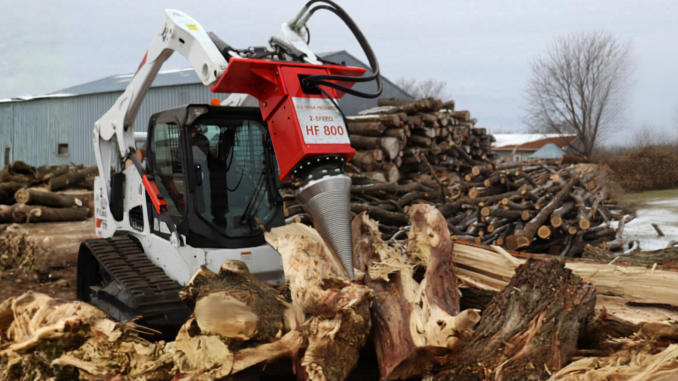
A cone screw splitter is a hydraulic attachment used to split large logs, stumps, and oversized wood into smaller pieces. Instead of using a straight wedge, the attachment uses a rotating threaded cone that pulls into the wood and separates the fibers as it turns. For contractors working around tree removal, land clearing, firewood, mulch, wood fuel, or biomass material, a cone screw splitter can be one equipment option for reducing large wood into more manageable sections.
What is a Cone Screw Splitter?
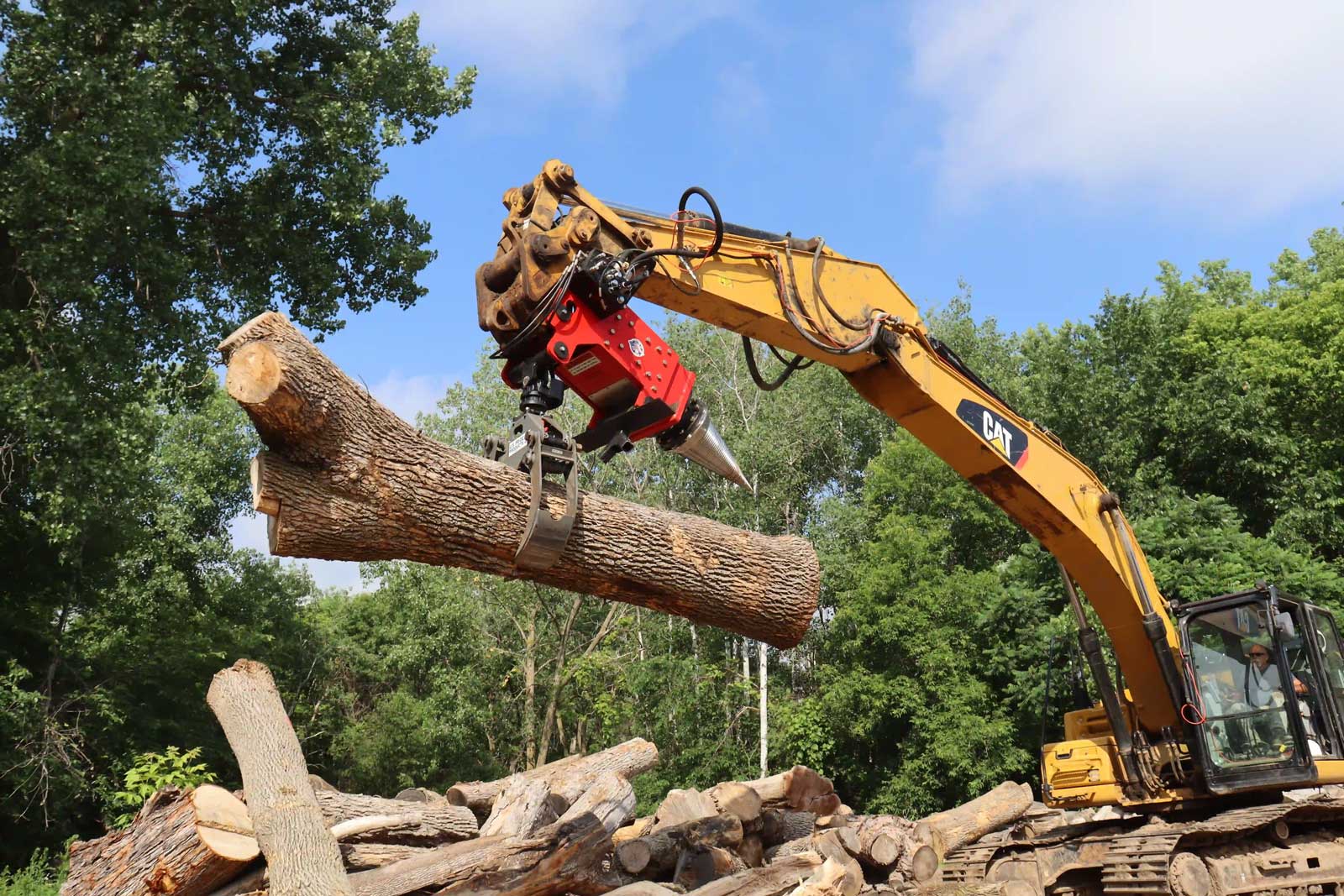
A cone screw splitter is also called a cone log splitter, screw log splitter, auger cone splitter, or excavator log splitter. The working principle is based on a cone-shaped screw. As the cone rotates, its thread engages the wood. The cone shape then applies outward pressure, which causes the wood to split.
This makes the attachment different from a traditional hydraulic log splitter. A conventional splitter usually pushes a log against a wedge. A cone screw splitter is often mounted to a carrier machine, such as a mini excavator, excavator, skid steer, loader, or other hydraulic equipment. The carrier gives the operator the ability to position the splitter at the wood instead of moving every log to a fixed splitting machine.
How a Cone Screw Splitter Works
The Role of The Threaded Cone
The threaded cone is the main working component. Its pointed end starts the split, while the wider section of the cone increases pressure inside the wood. As the cone turns, it can draw itself into the log and separate the wood along the grain.
The attachment does not cut wood in the same way as a saw. It splits wood by applying rotational force and pressure. This is why cone screw splitters are often discussed as part of wood handling, land clearing, and log processing equipment rather than cutting equipment.
The Role of The Carrier Machine
The carrier machine provides the hydraulic power needed to rotate the cone. The attachment must be matched to the carrier’s hydraulic flow, hydraulic pressure, size, and mounting setup. A splitter designed for a smaller carrier may not be suitable for a larger machine, and a splitter made for larger equipment may not be practical for a compact machine.
Contractors should review machine compatibility before choosing an attachment. Carrier weight, auxiliary hydraulics, attachment weight, reach, coupler type, and intended use all matter when comparing equipment options.
Where Contractors Use Cone Screw Splitters
Land Clearing and Site Preparation
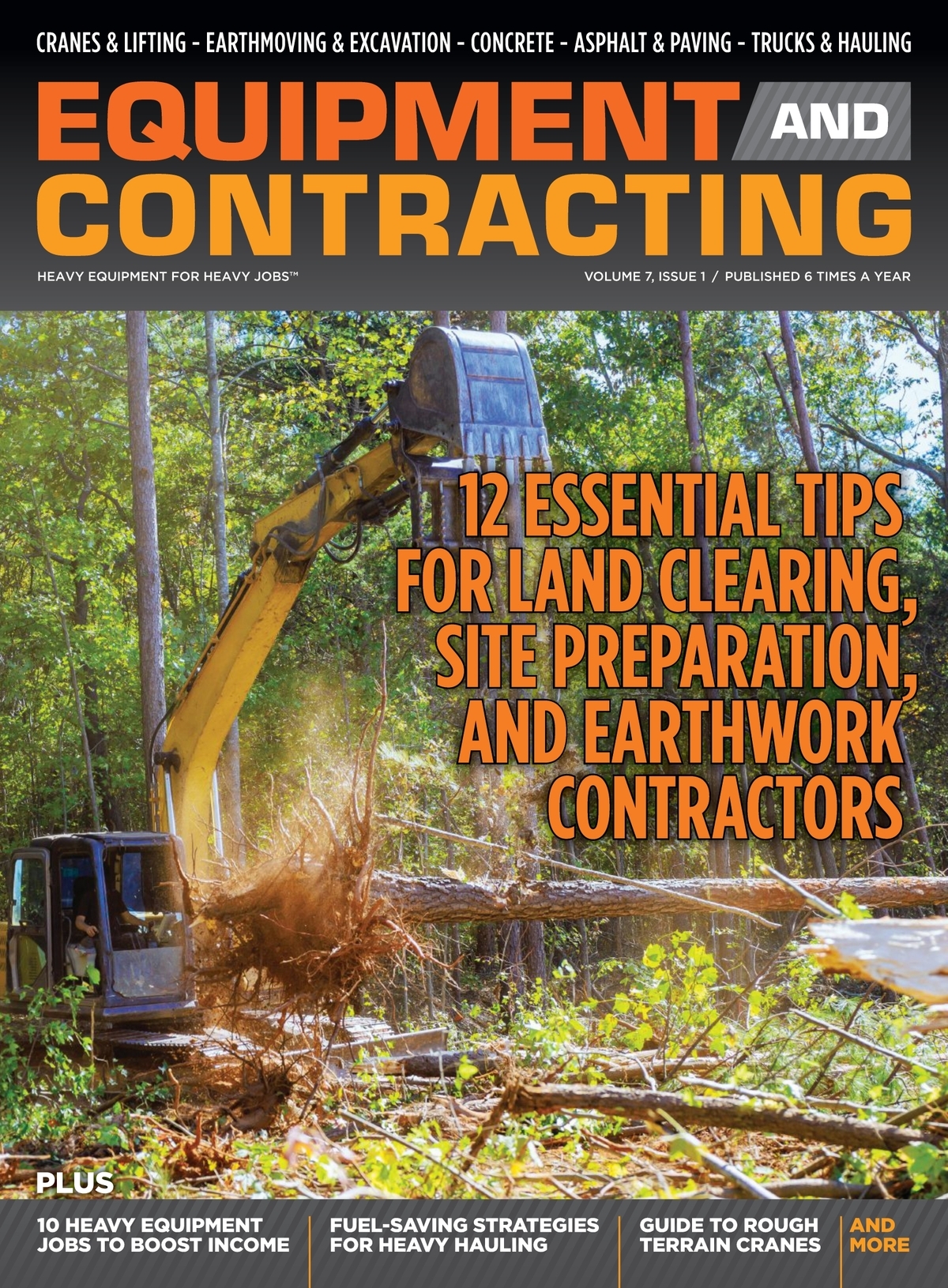
Land clearing work often creates large logs, stumps, trunk sections, and other wood debris. Some pieces may be too large to move, load, chip, or stage without further processing. A cone screw splitter can be used to split these pieces before they are moved or processed further.
This type of attachment may be relevant for contractors working on site clearing, right-of-way work, storm cleanup, tree removal, farm cleanup, or property development. The exact use depends on the carrier machine, the type of wood, site access, and the contractor’s workflow.
Tree Service and Firewood Work
Tree service companies may encounter large rounds and trunk sections after tree removal. Firewood producers may also need to break down large pieces before further splitting, cutting, or stacking. A cone screw splitter can be one option for handling large wood when a compatible machine is already available.
In these applications, the attachment is usually part of a broader process. Crews may still need saws, grapples, loaders, trailers, chippers, or other equipment depending on the job. The splitter’s role is to reduce the size of large wood so it can be handled in a more practical way.
Mulch, Biomass, and Wood Fuel Operations
Mulch yards, biomass operations, and wood fuel processors often handle wood in different sizes and conditions. Large logs or oversized pieces may need to be reduced before further processing. A cone screw splitter can be used before grinding, chipping, stacking, or loading, depending on the operation.
This does not mean a cone screw splitter replaces other processing equipment. Instead, it can work as one attachment within a larger equipment setup. Its value depends on the type of incoming material, available machines, and how the site manages wood before final processing.
Cone Screw Splitter vs Traditional Log Splitter
A traditional hydraulic log splitter usually uses a ram and wedge. The log is placed on the splitter, and hydraulic force pushes it into the wedge. This setup is common in firewood production and smaller wood processing tasks where logs are already cut into manageable lengths.
A cone screw splitter works differently because it is usually attached to mobile equipment. Instead of bringing every log to the splitter, the operator can bring the splitter to the log. This can be useful when wood is large, heavy, irregular, or spread across a jobsite.
Both types of equipment have a place. A conventional splitter may be a better fit for controlled firewood production with cut rounds. A cone screw splitter may be considered when large wood needs to be split on site with a carrier machine.
Equipment Options for Contractors
Mini Excavator-Mounted Splitters
Mini excavators are used on many jobsites because they offer reach and control in compact spaces. A mini excavator-mounted cone splitter may be used where a contractor needs to split wood while working around trees, piles, slopes, or limited access areas.
The attachment must be sized correctly for the machine. Contractors should confirm the required hydraulic flow and pressure, attachment weight, coupler setup, and operating recommendations before choosing a splitter for a mini excavator.
Skid Steer and Loader-Mounted Splitters
Skid steers and loaders are common on land clearing, farm, landscape, and material handling jobs. A splitter mounted to one of these carriers may be useful where the machine can move around a wood pile and position the cone against the material.
This setup may be considered when contractors already use skid steers or loaders for cleanup, loading, or handling. As with any hydraulic attachment, compatibility with the carrier is the main starting point.
Larger Excavator Setups
Larger excavators may be paired with heavier attachments when the work involves larger wood or higher-volume material handling. The added reach and machine size can make larger excavator setups suitable for open jobsites, clearing operations, and wood processing yards.
However, larger equipment also requires more space and planning. Contractors should consider access, ground conditions, machine stability, hydraulic requirements, and nearby workers or equipment before using any rotating attachment.
Key Factors to Consider
Hydraulic Requirements
Hydraulic flow and pressure are central to splitter performance. If the carrier does not provide the required hydraulic output, the attachment may not operate as intended. If the attachment is not designed for the carrier, it may also create compatibility issues.
Before purchasing or renting a splitter, contractors should compare the attachment specifications with the carrier’s hydraulic system. This is especially important when using compact equipment, older machines, or machines with limited auxiliary hydraulic capacity.
Wood Size and Material Type
The type of wood matters. Log diameter, length, species, moisture, grain, knots, and condition can all affect splitting. Straight-grained wood may behave differently from knotty, twisted, frozen, or dirty material.
Contractors should choose equipment based on the kind of material they expect to process most often. A small splitter used occasionally for lighter material is a different decision from a splitter used regularly on large timber or heavy wood debris.
Mounting and Handling Needs
Mounting style also matters. Some contractors may need a splitter for a mini excavator. Others may need one for a skid steer, loader, or larger excavator. The right option depends on the carrier already in the fleet, the jobsite layout, and how the crew moves material.
In some cases, the splitter may be used along with grapples, buckets, forks, saws, chippers, grinders, or trailers. The attachment should fit into the overall jobsite process, not just the machine.
Safety Considerations
A cone screw splitter uses rotating force, so proper safety practices are important. Operators should follow the manufacturer’s instructions for both the attachment and the carrier machine. Workers should remain clear of the attachment while it is operating, and only trained personnel should operate the equipment.
Potential hazards can include rotating components, moving logs, unstable material, hydraulic pressure, and changing ground conditions. Contractors should inspect the attachment, check hydraulic connections, maintain safe distances, and shut down equipment before service or adjustment.
Is a Cone Screw Splitter Right for Your Operation?
A cone screw splitter may be worth considering for contractors who regularly handle large logs, tree debris, clearing material, firewood logs, mulch feedstock, or biomass wood. It is most relevant when a crew already has a compatible carrier machine and needs an attachment for splitting oversized wood before moving or processing it further.
Before choosing a splitter, contractors should compare carrier size, hydraulic flow, hydraulic pressure, attachment weight, cone size, mounting setup, material type, and jobsite conditions. The best choice depends on the equipment already in the fleet and the type of wood being handled. For contractors comparing attachment options, a properly matched wood splitting attachment can be considered as part of a larger wood handling or land clearing setup.

What is a cone screw splitter used for?
A cone screw splitter is used to split large logs, stumps, and wood debris into smaller, more manageable pieces using a rotating threaded cone.
Can a cone screw splitter be mounted on an excavator or skid steer?
Yes, cone screw splitters are available for excavators, mini excavators, skid steers, loaders, and other hydraulic carrier machines when properly matched to their hydraulic specifications.