

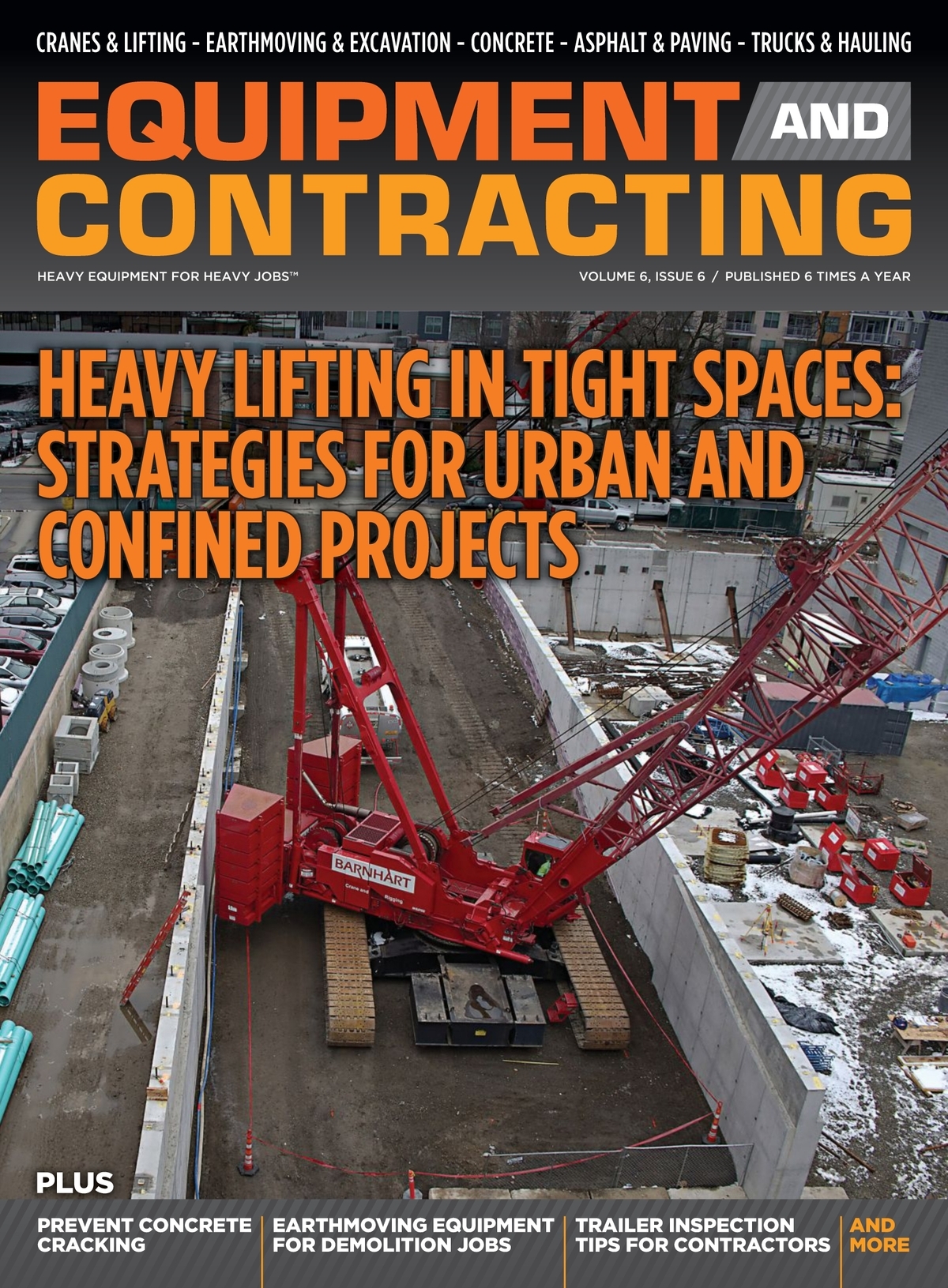






Urban construction continues to push equipment limits as projects move into tighter spaces, taller structures, and more complex logistics. Crane selection plays a critical role in productivity, safety, and scheduling, especially in cities where access, footprint, and noise restrictions shape every decision. Two crane types frequently considered for urban work are self-erecting tower cranes and all-terrain mobile cranes. While both serve lifting needs in dense environments, their capabilities, setup requirements, and operational strengths differ significantly.
Understanding Urban Crane Applications
Urban projects demand lifting solutions that can operate efficiently without disrupting surrounding infrastructure. Street closures are limited, staging areas are small, and lift paths must often clear neighboring buildings. Contractors must balance lift capacity with mobility, setup time, and regulatory compliance.
In these environments, choosing the right crane type is less about maximum capacity and more about how the machine integrates into the jobsite workflow. This is where the contrast between tower-based and mobile crane designs becomes especially clear.
Self-Erecting Tower Cranes Explained
Compact Design For Confined Sites
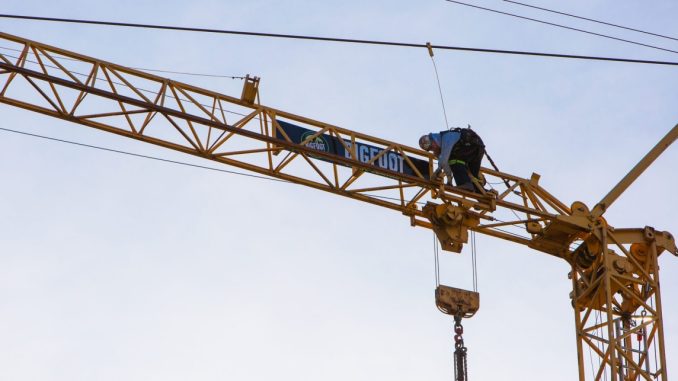
Self-erecting tower cranes are designed to arrive at a jobsite in a folded transport configuration and raise themselves into operating position using integrated hydraulic systems. This design eliminates the need for auxiliary cranes during assembly, which is a major advantage in congested urban areas.
Once erected, the crane operates from a fixed base, offering consistent vertical lifting coverage across the jobsite. Its compact footprint allows it to fit into narrow lots, courtyards, or areas with limited ground access.
Consistent Lift Cycles
Because the crane remains stationary throughout the project, it excels at repetitive lifting tasks. Materials such as formwork, rebar bundles, pallets, and prefabricated components can be moved efficiently to upper floors with minimal repositioning. This predictability supports streamlined scheduling and reduces crane idle time.
Contractors evaluating self-erecting tower crane solutions for urban construction often prioritize these cranes for mid-rise residential and commercial builds where daily lifting patterns remain consistent over several months.

All-Terrain Mobile Cranes in Urban Work
Mobility Across Multiple Lift Points
All-terrain mobile cranes combine road-legal travel with off-road capability, making them well suited for projects that require lifting at multiple locations. These cranes can be driven directly to the jobsite, set up, perform lifts, and relocate without disassembly.
In urban environments, this mobility is especially valuable for short-duration lifts, infrastructure work, or projects spread across several city blocks. The ability to reposition quickly reduces downtime and minimizes the need for extended street closures.
Flexible Boom Configurations
Equipped with telescopic booms, all-terrain cranes offer adjustable reach and height without the fixed geometry of a tower crane. Operators can adapt boom length and angle to accommodate changing lift requirements, obstructions, or load paths.
This flexibility makes mobile cranes a common choice for lifting heavy structural elements, mechanical equipment, and prefabricated assemblies that require precise placement.
Setup Time and Jobsite Impact
Tower Crane Setup Considerations
Self-erecting tower cranes are known for rapid deployment compared to traditional tower cranes. However, they still require careful planning around ground bearing capacity, outrigger placement, and swing radius clearance.
Once installed, the crane becomes a permanent fixture on the site until dismantling. This works well for long-term projects but can limit flexibility if site conditions change unexpectedly.
Mobile Crane Setup and Breakdown
All-terrain cranes require setup time for outriggers and leveling, but this process is typically completed within hours rather than days. The crane can then be removed just as quickly once lifts are complete.
For projects with intermittent lifting needs or tight construction windows, this ability to mobilize and demobilize efficiently can be a decisive advantage.

Lifting Capacity and Reach Differences
Tower Crane Load Characteristics
Self-erecting tower cranes generally offer moderate lifting capacities that are optimized for typical building materials rather than extreme loads. Their strength lies in vertical reach and consistent coverage rather than maximum pick weight.
For repetitive material handling within a defined radius, these cranes deliver reliable performance with minimal repositioning.
Mobile Crane Strength and Reach
All-terrain cranes typically provide higher lifting capacities and longer reach options, depending on configuration. Their ability to handle heavier components makes them suitable for steel erection, equipment installation, and infrastructure projects where load weights vary significantly.
However, capacity decreases as boom length increases, requiring careful lift planning and load chart analysis.
Safety and Operational Control
Both crane types demand rigorous safety planning, but risks differ based on configuration. Tower cranes require attention to wind exposure, load swing, and proximity to surrounding structures. Mobile cranes must account for ground stability, outrigger placement, and dynamic load movement during setup and travel.
Urban jobsites often impose strict safety requirements, making operator training, lift planning, and equipment maintenance critical regardless of crane type.
Choosing The Right Crane for Urban Projects
Selecting between a self-erecting tower crane and an all-terrain mobile crane depends on project duration, lift frequency, site access, and load characteristics. Tower cranes favor long-term projects with consistent lifting needs and limited ground space. Mobile cranes excel in projects requiring flexibility, heavy lifts, or frequent relocation.
Understanding these differences helps contractors reduce downtime, improve safety outcomes, and control project costs.
What is the main advantage of self-erecting tower cranes in urban construction?
They provide a compact, fixed setup with consistent vertical lifting, ideal for tight sites and repetitive lifts.
When should an all-terrain mobile crane be preferred for city projects?
They are best for short-duration or multi-location lifts where mobility, heavy loads, and flexible reach are needed.