

Rotating telehandlers and traditional rough terrain forklifts serve similar lifting and material handling roles, yet they offer very different capabilities on active jobsites. Many contractors compare the two when planning purchases or rentals, especially as more projects require tighter maneuvering and higher placement accuracy. Modern fleets often blend both machine types, and many buyers begin their evaluation by reviewing broader material handling solutions to understand performance differences in real field conditions.
Understanding The Core Design Differences
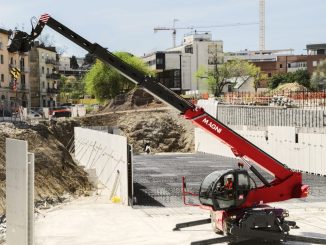
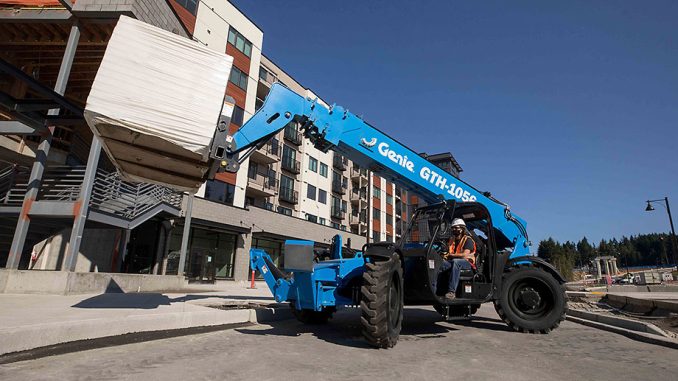
Rotating telehandlers are built with a turret system that allows the upper frame and boom to rotate a full 360 degrees while the chassis stays in place. This design enables operators to approach a load from one direction and place it in another without repositioning the entire machine. Traditional rough terrain forklifts use a fixed mast structure that lifts vertically and moves with the machine. Their design is centered on transporting palletized materials over uneven ground with strong forward stability and consistent lift performance.
The rotation feature changes how operators interact with jobsite obstacles. Instead of driving back and forth to line up with a placement point, rotating telehandlers let operators fine tune load positioning simply by rotating the boom. This advantage becomes especially clear in urban sites, industrial plants, or any area where maneuvering space is limited. Rough terrain forklifts need a clear driving path for each lift, which can slow workflow in tighter environments.
Lift Height, Reach, and Stability Factors
Lift height is a major difference between the two machines. Rotating telehandlers often achieve significantly higher boom reach thanks to their telescopic design, with some models capable of lifting beyond 70 feet depending on size class. Traditional forklifts are limited to the height of the mast structure, which is typically much lower. This is why forklifts remain ideal for horizontal material movement, while telehandlers are widely used for tasks involving multi story structures.
Stability systems also differ. Rough terrain forklifts rely on wide frames, large pneumatic tires, and a naturally low center of gravity. Their stability favors forward and backward load travel over uneven surfaces. Rotating telehandlers use hydraulic outriggers that extend outward from the chassis to create a secure base during high lifts. Once deployed, these outriggers allow the machine to maintain stability as the boom rotates and extends. The result is a lift platform that combines the functionality of a telehandler with some capabilities closer to small cranes.
Versatility Through Attachment Options
Rotating telehandlers are known for a wider range of attachment compatibility. Many models can accept forks, buckets, platforms, jibs, and winches, making them a multi purpose tool for construction, maintenance, and industrial applications. Their ability to lift workers, move loose material, handle palletized goods, and perform light lifting tasks gives them broader utility across a full project lifecycle.
Traditional rough terrain forklifts focus primarily on palletized loads and material transport. Attachments exist, such as sideshifters and fork extensions, but their core job remains ground level material movement. They excel in lumber yards, manufacturing facilities, and outdoor supply areas where high frequency load transport is required.

Cost, Training, and Long Term Fleet Planning
Rotating telehandlers typically cost more to purchase due to their advanced hydraulics, rotating turret assemblies, and multi function design. Contractors often justify the cost by replacing several single purpose machines with one versatile unit. Traditional rough terrain forklifts offer simpler maintenance, lower upfront cost, and straightforward controls that reduce the training curve for new operators.
Operator training differs between the two machine types. Telehandler operators must learn stabilizer operation, boom angles, load charts, and safe rotation practices. Forklift training focuses on mast control, load center awareness, and safe travel across jobsite conditions. Both categories require proper certification based on regional regulations.
Fleet managers must also consider long term equipment utilization. Telehandlers often bring value through their ability to support a wider variety of tasks across different job phases. Forklifts deliver consistent performance for repetitive ground transport, which keeps them essential in many fleet operations. Contractors who want to test equipment before purchasing often turn to heavy equipment rentals to compare performance under real project conditions.
Choosing The Right Machine For The Application
The best choice depends entirely on jobsite layout and task requirements. In confined sites or multistory building projects, rotating telehandlers outperform forklifts due to their combination of reach, rotation, and attachment versatility. They reduce machine repositioning and allow operators to lift, place, and adjust loads from a fixed position. This improves productivity in environments where movement is restricted.
For large open areas, material yards, and operations that involve frequent horizontal travel, traditional forklifts remain the most efficient option. Their rugged tires, low center of gravity, and straightforward design make them reliable workhorses for repeated transport cycles.
Rotating telehandlers offer unmatched flexibility, extended reach, and multi purpose functionality that supports a wide range of lifting and placement tasks. Traditional rough terrain forklifts continue to shine in heavy duty material transport where stable forward movement and pallet handling are priorities. Both machines serve essential roles within modern fleets, and contractors who understand their strengths can align equipment choices with specific project needs for better productivity and safer operations.
A rotating telehandler can rotate its boom 360 degrees for precise load placement without repositioning, while a rough terrain forklift uses a fixed mast and must drive to align each lift.
A rotating telehandler is better for confined or multi story jobsites that require extended reach, rotation, and attachment versatility, while forklifts excel at repetitive ground level material transport. What is the main difference between a rotating telehandler and a rough terrain forklift?
When should a contractor choose a rotating telehandler over a rough terrain forklift?