


Choosing the right trailer type for construction hauls is a decision that affects efficiency safety and cost on a job site. Construction projects require moving everything from heavy equipment to loose materials and site debris. The variety of available trailer types can be confusing for contractors and fleet managers who must decide which trailer best suits their hauling demands while ensuring compliance with vehicle towing capacities. Key factors such as load capacity, axle configuration, trailer design and connection type all contribute to operational success in construction hauling. Understanding trailer options and matching them to specific construction needs allows teams to work more productively and safely.
Selecting a trailer that meets your hauling requirements involves considering the size and weight of materials or equipment you will transport and ensuring the trailer works with your towing vehicle. Exploring construction hauling trailer options that support diverse load requirements can help contractors choose a solution that fits their fleet needs, performance expectations and budget over time.
Trailer Load Capacity And Towing Compatibility
Matching GVWR and Payload
One of the most critical considerations when choosing a trailer for construction work is understanding the Gross Vehicle Weight Rating (GVWR). The GVWR represents the maximum allowable weight of the trailer and its cargo that the trailer structure, tires, axles and hitch can safely handle. Contractors must ensure the trailer’s GVWR exceeds the total weight of the materials or machinery to be hauled to prevent unsafe handling, strain on towing components and premature wear. Matching this rating with the towing vehicle’s capacity is equally important because exceeding the vehicle’s tow rating can lead to mechanical issues or legal compliance problems.
Equally important is understanding payload capacity, which is derived by subtracting the trailer’s empty weight from its GVWR. Payload capacity dictates the actual load weight a trailer can safely carry. Accurately calculating payload needs before selecting a trailer prevents overloading and enhances safety. Estimating slightly more capacity than initially anticipated gives construction teams room for additional gear or unexpected weight increases during a haul.
Axle Configuration and Road Stability
Another key factor affecting trailer performance is axle configuration. Single-axle trailers generally suffice for lighter loads and offer easier maneuverability in tight spaces. However tandem or multiple axle setups distribute the weight more evenly across the trailer, increasing stability, road handling and load capacity. For construction tasks that involve transporting heavy equipment or materials over long distances or varied terrain, trailers with tandem axles provide enhanced safety and control. Consideration for suspension type also influences ride comfort and stability which can affect cargo security during transit.
Proper axle configuration improves stopping control and reduces wear on tires and suspension components which supports longevity of the trailer investment. Braking systems designed for heavier loads, such as electric or hydraulic brakes, further enhance safety when pulling large construction hauls. Identifying the correct combination of GVWR, axle configuration and braking ensures trailers perform reliably under real job site demands.

Common Trailer Types for Construction Hauls
Flatbed and Deck Trailer Options
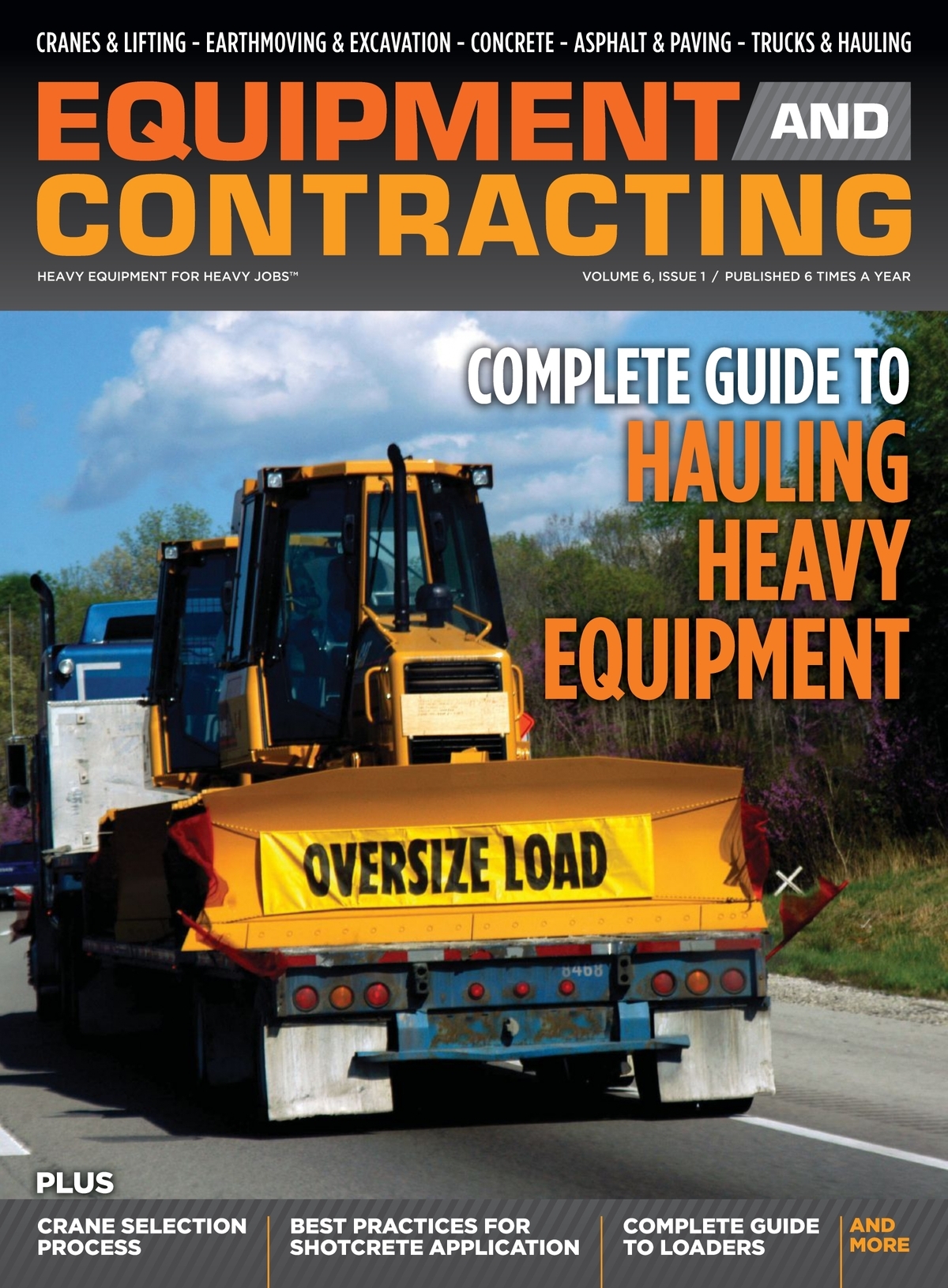
Flatbed trailers are among the most versatile options for construction hauling because of their open top design and ability to accommodate large, irregular or heavy loads. Without sidewalls or a roof, flatbeds allow easy access from all directions which simplifies loading and unloading of machinery, lumber, steel beams and other bulky materials. This configuration also supports oversized equipment that might not fit in an enclosed space. Contractors frequently choose flatbeds when hauling equipment that does not need weather protection or when multiple tie-down points are necessary.
Deck over trailers are similar but position the deck above the wheels which maximizes usable width for larger cargo. Both flatbed and deck over trailers are suitable for transporting construction materials and equipment that vary in shape and size. Their adaptability makes them a preferred choice for contractors who haul diverse loads regularly.
Gooseneck, Tilt and Specialized Trailers
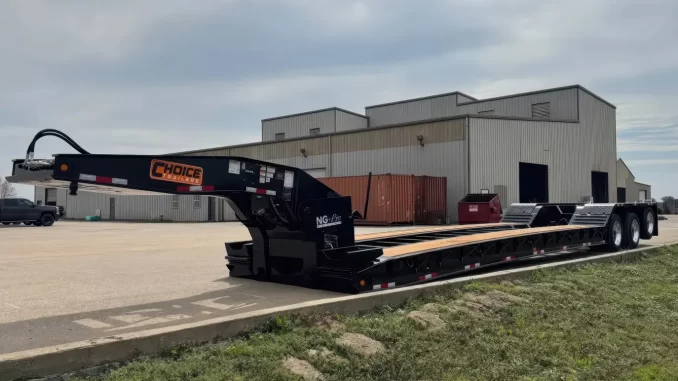
Gooseneck trailers connect to a hitch mounted in the bed of a truck which shifts some weight closer to the vehicle and improves stability. This design is particularly effective for hauling heavy machinery or long loads because it offers better weight distribution and tighter turning ability compared to traditional bumper pull trailers. Gooseneck trailers are often chosen for heavier construction requirements, long hauls and tasks where stability and capacity are high priorities.
Tilt trailers simplify loading by allowing the deck to tilt so equipment can be driven or winched aboard without separate ramps. This type of trailer is particularly useful for wheeled or tracked machinery that may not be able to be lifted easily. Other specialized trailer types serve specific hauling needs such as debris, loose material and vehicles depending on job demands. Understanding which trailer design aligns with your construction hauling use cases improves workflow and reduces handling complexity.
Functional Features and Practical Considerations
Frame Material and Build Quality
The durability and longevity of a trailer are influenced by frame material and build quality. Steel frames are often used for heavy duty hauling because they offer strength and rigidity needed for construction applications. Proper welding and reinforced structural components help a steel frame withstand the stresses of heavy loads and rugged use. Aluminum trailers offer advantages in lighter weight and corrosion resistance which can be beneficial for hauling lighter loads or when environmental exposure is a concern.
Ultimately the decision between materials involves balancing weight capacity, maintenance needs and overall cost. Choosing a robust build quality tailored to the type of construction hauling you undertake ensures your trailer investment performs well over time and reduces costly downtime caused by repairs.
Loading, Tie Downs and Ease of Access
Efficient loading and cargo security are central to trailer functionality on a construction site. Trailers equipped with appropriate tie-down points allow crews to secure loads firmly which prevents shifting during transit. Some designs include removable ramps or integrated machinery loading systems which speed up loading and unloading operations. Accessibility features reduce labor time on site and improve safety, particularly when dealing with heavy or awkward loads. Considering these practical attributes early in the trailer selection process optimizes job site performance.

Safety, Compliance and Operational Efficiency
Regulatory and Safety Standards
Selecting a trailer that aligns with regional regulations and safety standards safeguards your hauling operations. Ensuring compliance with braking requirements, lighting systems and load ratings prevents legal issues and promotes safe transport practices. Operators should confirm that trailer wiring, reflectors and braking systems meet local road safety laws which vary by jurisdiction. Regular maintenance of safety components like brake lights, breakaway switches and hitch connections further supports compliance and reduces the risk of fines or accidents.
Operational Efficiency and Cost Management
The right trailer type contributes not just to safety but to operational efficiency and cost management. When trailers are well matched to hauling tasks, crews spend less time loading, securing and unloading cargo which accelerates project progress. Trailers that are too large or too small for their intended use can increase fuel costs, labor time and tractor wear. Investing in the appropriate trailer for job requirements ensures more predictable operational performance and can reduce long term ownership costs.
Choosing the right trailer type for construction hauls is a multifaceted decision that combines load requirements, trailer design, towing compatibility and functional features. Understanding the strengths and limitations of common trailer types such as flatbeds, gooseneck and tilt trailers helps contractors make informed decisions that fit their specific hauling needs. Careful consideration of GVWR, axle configuration, frame build and accessibility features contributes to safer, more efficient hauling operations. By matching trailer characteristics to construction tasks, project teams can be better prepared, work more productively, and improve overall fleet performance.
For contractors seeking reliable heavy haul trailer solutions suited to construction workflows, selecting options that balance capacity build quality and practical features enhances both safety and productivity.