






































View the complete article here.
Unplanned concrete damage can disrupt commercial operations faster than almost any other construction issue. In facilities where floors, loading areas, and structural slabs are in constant use, even minor deterioration can force shutdowns that ripple through production schedules, logistics, and revenue. Rapid concrete repair solutions have become a critical part of commercial construction and maintenance strategies because they allow damaged surfaces to be restored quickly while maintaining performance under demanding conditions.
Why Downtime Shapes Concrete Repair Decisions
Commercial projects rarely have the luxury of extended closure periods. Warehouses, parking structures, manufacturing plants, and retail properties depend on continuous access and movement. When concrete repairs require long cure times, the indirect costs often outweigh the direct cost of materials and labor. Lost productivity, delayed deliveries, and safety concerns quickly escalate when repairs stretch over multiple days.
For this reason, facility owners increasingly prioritize repair methods that shorten reopening timelines. Rapid repair solutions are often selected not because they are the least expensive option upfront, but because they reduce total project impact. The ability to return a surface to service within hours or a single workday can prevent cascading operational disruptions that affect multiple departments or tenants.
Common Conditions That Require Fast Concrete Repairs
Urgent concrete repairs typically stem from predictable conditions found in commercial environments. Repeated heavy traffic from forklifts, pallet jacks, and service vehicles places concentrated stress on slab surfaces and joints. Over time, this loading leads to cracking, spalling, and joint edge breakdown that can worsen rapidly once damage begins.
Environmental exposure also accelerates deterioration. Moisture intrusion, freeze thaw cycles, chemical exposure, and thermal movement all contribute to concrete failure in parking garages, cold storage facilities, and industrial buildings. Aging infrastructure compounds these issues, especially in facilities where original construction did not account for modern load demands or usage patterns.
Performance Requirements of Rapid Concrete Repair Solutions
Speed alone does not define an effective rapid repair. Materials used in fast track repairs must develop early strength without sacrificing long term durability. High early strength allows traffic to resume quickly, but repairs must also resist abrasion, impact, and repeated loading once the facility returns to full operation.
Bond strength is equally critical. Rapid repairs rely on strong adhesion to existing concrete to prevent delamination under stress. Even the best repair material will fail prematurely if surface preparation is inadequate. Proper profiling and cleaning remain essential steps, regardless of how quickly the repair must be completed.
Contractors evaluating rapid-setting concrete repair materials must balance early strength development with compatibility, durability, and jobsite conditions to ensure repairs perform as intended beyond the initial reopening window.
Repair Methods Used to Minimize Operational Disruption
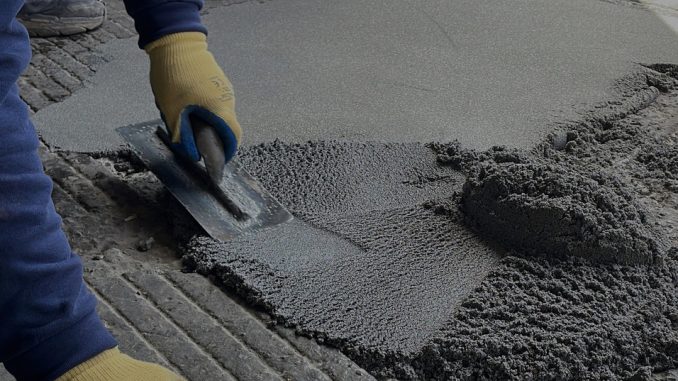
Rapid concrete repair solutions are applied using several methods depending on the type and severity of damage. Shallow surface repairs are commonly used to address minor spalls, worn areas, and surface cracking in high traffic zones. These repairs restore smoothness and safety while allowing fast return to service.
More severe deterioration often requires full depth patching. In these cases, damaged concrete is removed entirely and replaced with materials capable of reaching load-bearing strength quickly. Joint and edge repairs also play a major role in minimizing downtime, as deteriorated joints can transfer stress to adjacent slabs if left untreated.
Selecting the correct repair approach requires accurate assessment of damage depth and cause. Applying shallow solutions to deep structural issues may shorten downtime initially, but often leads to recurring failures that create repeated disruptions.

Planning Repairs Around Active Facilities
Successful rapid repairs depend as much on planning as on materials. Contractors frequently work in phases to keep portions of a facility operational while repairs are underway. This approach is common in warehouses and distribution centers where shutting down the entire floor is not an option.
Environmental conditions also influence repair timelines. Temperature and moisture levels affect curing and strength gain, particularly in fast setting systems. Coordinating repairs with facility schedules, weather conditions, and production cycles helps ensure that speed does not come at the expense of performance.
Long Term Performance After Rapid Repairs
When properly designed and executed, rapid concrete repairs can deliver service lives comparable to traditional repair methods. Many modern systems are engineered to withstand high abrasion and continuous traffic, making them suitable for demanding commercial environments.
Compatibility between new repair material and existing concrete remains a key factor in long term performance. Repairs that accommodate movement and resist moisture intrusion help prevent secondary cracking and edge failure. Routine inspection and maintenance further extend repair life by identifying early signs of deterioration before they require emergency response.
Choosing the Right Strategy for Commercial Projects
Selecting the appropriate rapid repair solution requires understanding both the technical demands of the repair and the operational priorities of the facility. Traffic loads, exposure conditions, repair depth, and reopening requirements all influence material and method selection.
Clear communication between contractors and facility managers is essential. Scheduling repairs during off peak hours, coordinating access routes, and defining reopening criteria reduce confusion and help projects stay on schedule. Avoiding temporary fixes in favor of durable solutions ultimately reduces long term downtime and lifecycle costs.
For projects where reopening time is critical, fast-curing concrete repair solutions provide a practical balance between speed and durability when combined with proper assessment, preparation, and execution.
The Role of Rapid Repairs in Asset Management
Rapid concrete repair solutions are no longer limited to emergency situations. They play an important role in proactive asset management by addressing deterioration before it escalates into major structural problems. Early intervention reduces moisture intrusion, limits load redistribution, and helps preserve the integrity of surrounding concrete.
By incorporating rapid repairs into routine maintenance strategies, facility owners can improve reliability, control budgets, and extend the usable life of commercial concrete assets. In environments where downtime is costly and continuous operation is essential, rapid repair solutions have become a core component of modern commercial construction and maintenance planning.