








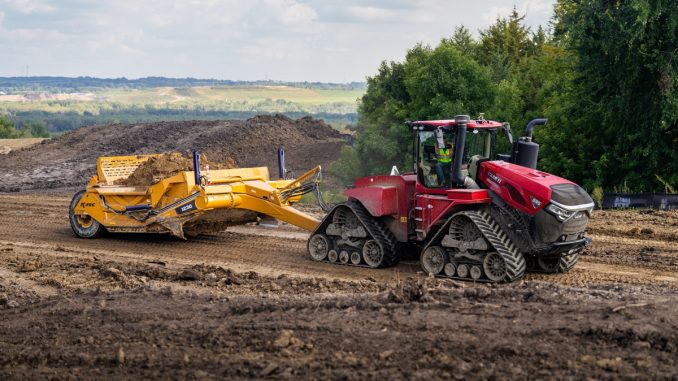
Large earthmoving projects live or die by cost per cubic yard. On paper, both pull-pan scrapers and articulated dump trucks can move massive volumes of material efficiently. In the field, the economics are shaped by haul distance, material type, site layout, fuel use, labor requirements, and fleet utilization. Understanding how these variables affect cost per yard is critical for contractors deciding which system delivers the best return on large-scale jobs. Many operations begin by reviewing proven earthmoving equipment options before locking in a hauling strategy that fits the project profile.
Understanding Cost-Per-Yard in Earthmoving
Cost per cubic yard is the most reliable metric for comparing hauling systems because it captures the full operational picture. It includes ownership costs, fuel consumption, maintenance, labor, cycle time, and payload efficiency. While production rates are often highlighted in equipment brochures, real-world cost performance depends on how consistently a machine can move material under jobsite conditions.
On large earthmoving projects, even small differences in cost per yard can translate into significant savings or overruns. A difference of a few cents per yard becomes meaningful when multiplied across hundreds of thousands or millions of cubic yards. That is why contractors often evaluate hauling systems based on verified production data rather than headline specifications.
Pull-Pan Scrapers in High-Volume Operations
How Pull-Pan Scrapers Move Material
Pull-pan scrapers are tractor-drawn units designed to cut, load, haul, and spread material in a single cycle. They excel in relatively uniform soil conditions where long, uninterrupted hauls are possible. Because the scraper bowl loads material directly from the ground and deposits it without additional handling, the system minimizes touch points and reduces idle time.
On large, open sites such as highway embankments, land development, and agricultural earthworks, pull-pan scrapers often achieve high production rates with fewer machines. Their ability to self-load and self-dump makes them especially effective when material does not require blasting or heavy ripping.
Cost Drivers for Pull-Pan Scrapers
The cost efficiency of pull-pan scrapers is strongly influenced by haul distance and ground conditions. Short to moderate haul distances typically favor scrapers because cycle times remain low and fuel use per yard stays predictable. Tire wear, tractor power requirements, and soil abrasiveness also affect operating costs, but these factors are generally stable on well-prepared sites.
Labor costs are another advantage. A scraper system often requires fewer operators per yard moved compared to truck-based systems. This can reduce overall labor exposure on large projects where staffing efficiency matters as much as machine productivity.

Articulated Dump Trucks in Variable Conditions
Why ADTs are Widely Used
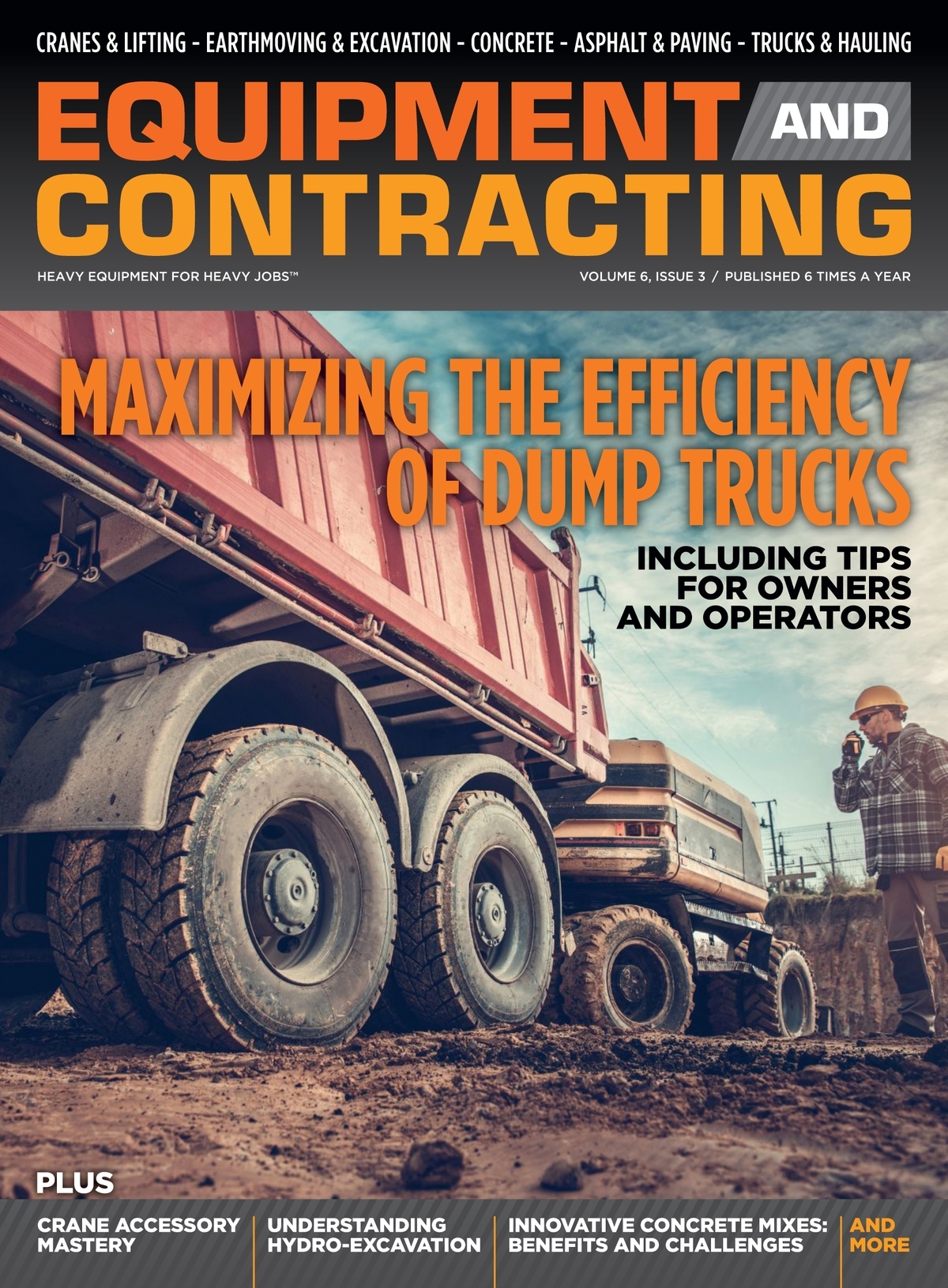
Articulated dump trucks are valued for their versatility and mobility. Their articulated frames and all-wheel drive capabilities allow them to operate in soft ground, steep grades, and confined spaces where scrapers may struggle. ADTs are commonly paired with excavators or wheel loaders, creating a flexible system that adapts well to changing site conditions.
On projects with fragmented work zones, variable material types, or frequent grade changes, ADTs provide logistical advantages. They can navigate tight turns and uneven terrain without the same site preparation requirements as scraper systems.
Cost Considerations for ADT Fleets
The cost per yard for articulated dump trucks is heavily influenced by fleet size and loading efficiency. Because ADTs rely on separate loading equipment, idle time at the loading face can quickly increase operating costs. Fuel consumption per yard is also affected by haul road conditions, grades, and stop-and-go traffic patterns.
Maintenance costs for ADTs can be higher on abrasive or rocky sites, especially when operating in fleets where utilization rates vary between trucks. While individual trucks may appear cost-effective, total system cost must account for loaders, operators, and support equipment.
Comparing Production and Cycle Time
Cycle Efficiency and Haul Distance
Cycle time is a decisive factor in cost-per-yard calculations. Pull-pan scrapers tend to outperform ADTs on long, straight hauls where they can maintain consistent speeds and minimize turning. As haul distance increases beyond optimal ranges, however, scrapers may lose efficiency compared to truck fleets that can scale production by adding units.
Articulated dump trucks often perform better on short, irregular hauls where frequent turns and elevation changes are unavoidable. Their ability to maintain traction and stability in challenging conditions helps preserve cycle consistency even when site conditions deteriorate.
Payload Consistency and Utilization
Payload consistency plays a major role in real-world cost performance. Scrapers typically deliver consistent bowl loads when soil conditions are uniform. ADTs, by contrast, depend on operator skill and loader performance to achieve optimal payloads. Underloading or overloading can significantly affect fuel use, tire life, and long-term maintenance costs.
Utilization rates also differ between systems. Scraper fleets often operate as tightly coordinated units, while ADT fleets may experience uneven utilization if loading or dumping points become congested.
Fuel, Maintenance, and Ownership Costs
Fuel Use Per Cubic Yard
Fuel consumption per yard is a measurable and verifiable cost factor. Scrapers often achieve lower fuel use per yard on suitable sites because they combine loading, hauling, and dumping into a single operation. ADTs consume fuel across multiple machines in the system, including loaders and support equipment.
That said, fuel efficiency for ADTs can remain competitive on short hauls or in conditions where scrapers cannot operate effectively. The key is matching machine capability to site conditions rather than assuming one system is universally cheaper.
Maintenance and Long-Term Ownership
Maintenance costs vary based on operating environment and utilization. Scrapers experience wear on cutting edges, tires, and hydraulic components, but these costs are predictable and often planned into long-term projects. ADTs face drivetrain, suspension, and articulation joint wear, particularly on rough haul roads.
Ownership costs also differ in how they scale. Scraper systems may require higher upfront investment in tractors and bowls, while ADT fleets spread capital costs across multiple units. Contractors evaluating large projects often look at total ownership cost over the project duration rather than purchase price alone.

Choosing the Right System for Large Jobs
Matching Equipment to Site Conditions
The most cost-effective hauling system is rarely chosen based on machine type alone. Soil characteristics, moisture content, haul road quality, and project layout all influence cost per yard. Contractors managing high-volume earthmoving often compare scraper-based hauling solutions with truck fleets using historical production data from similar projects.
In many cases, hybrid approaches are used, with scrapers handling bulk cuts and ADTs supporting localized or difficult sections. Understanding where each system performs best allows contractors to control costs without sacrificing schedule reliability.
Evaluating Total Project Economics
When evaluating pull-pan scrapers versus articulated dump trucks, total project economics matter more than individual machine metrics. Factors such as crew availability, fuel logistics, maintenance support, and weather resilience all affect final cost outcomes. Contractors focused on long-term efficiency often review heavy-duty scraper systems alongside ADT fleets to determine which approach aligns with the project’s scale and duration.
Final Thoughts on Cost-Per-Yard Performance
The real cost-per-yard math on large earthmoving jobs favors equipment that matches site conditions and production goals. Pull-pan scrapers often deliver lower costs on large, open sites with consistent material and long hauls, while articulated dump trucks provide flexibility and reliability in variable terrain. By grounding equipment decisions in verified production data and total system costs, contractors can reduce risk and improve profitability. Many successful operations revisit proven earthmoving scraper configurations at the end of the planning process to ensure the hauling strategy remains aligned with real-world jobsite demands.
When should I use pull-pan scrapers versus articulated dump trucks?
Use scrapers for long, uniform hauls on open sites and ADTs for short, irregular routes or challenging terrain.
What factors most affect cost per cubic yard in earthmoving?
Haul distance, site conditions, payload consistency, fuel use, and equipment utilization determine cost per yard.