





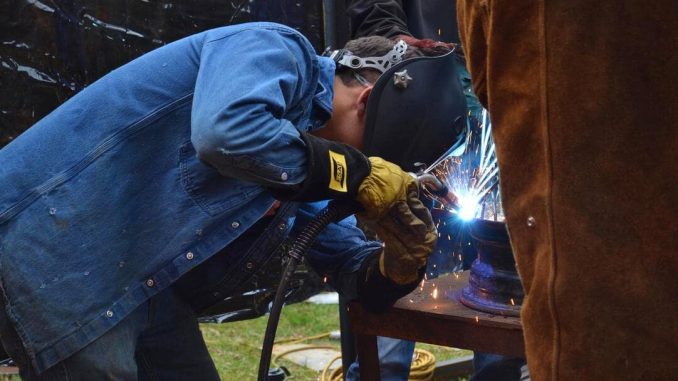
Heavy machinery used in construction, mining, demolition, and material handling works under intense mechanical stress every day. Weld repairs are essential for keeping this equipment in service, but the success of those repairs depends heavily on selecting the proper welding equipment. Repair quality, equipment uptime, and operator safety are all influenced by the capability and reliability of the tools used. Companies that invest in durable industrial welding equipment often see lower downtime because their welds hold up longer under demanding field conditions.
Understanding Power Source Requirements
The welding power source determines the range of materials and thicknesses an operator can work with. Heavy machinery repairs frequently involve high strength steels and thick structural components, which require steady amperage delivery and appropriate voltage settings. Machines with higher duty cycles allow longer welding intervals before overheating, which is especially important when repairing buckets, frames, or booms that require multiple passes.
Output stability also plays a role. Power sources designed for industrial environments provide more consistent arc characteristics, which leads to cleaner welds and fewer defects. Repair teams often work in varying conditions, including open jobsites, workshops, and remote locations. Power sources that support a wide input voltage range offer flexibility when switching between onsite temporary power and shop based electrical systems. Choosing the correct power source reduces the risk of incomplete penetration, porosity, and premature cracking.
Selecting the Right Wire Feeder
Wire feeding accuracy is critical for maintaining arc stability and consistent deposition. Heavy equipment repair involves both flux cored and solid wire, so feeders must be versatile enough to handle different wire types and diameters. A feeder with durable drive rolls and a sealed housing performs better in environments filled with dust, dirt, and moisture.
Remote feeder options are valuable when working on large machines because they reduce unnecessary movement around the work area. Faster adjustments mean operators spend more time welding and less time repositioning equipment. This improves productivity and lowers the chance of mistakes that stem from repeated setup changes. A reliable wire feeder also contributes to more uniform weld beads, which strengthens repair longevity.
Matching the Torch to the Application
Torch selection affects weld quality and operator comfort. Air cooled torches are suitable for lighter tasks, but heavy machinery repairs often involve higher amperage applications where heat buildup becomes a problem. Water cooled torches stay cooler during prolonged welding and reduce the risk of consumable failure.
Comfort and control also matter. Torches with ergonomic grips and balanced designs help operators maintain proper angles, which supports consistent penetration and bead shape. Many repair tasks involve welding in tight or elevated positions, such as around undercarriage components or inside large attachments. A torch that is easy to manipulate leads to more efficient work and reduces the fatigue that often contributes to errors.

How Proper Equipment Enhances Repair Quality
High quality welding equipment leads to stronger welds and reduces the likelihood of rework. Heavy machinery experiences cyclic loading, vibration, and impact, so welds must withstand significant mechanical forces. Stable arc performance, accurate wire feeding, and appropriate torch cooling all contribute to weld integrity.
When repairs are completed with properly matched equipment, operators can achieve deeper penetration and more uniform fusion. This helps prevent common issues like cracking in high stress areas, poor adhesion on hardened components, or distortion in structural members. Better repair quality protects the machine from future failures and minimizes the need for emergency downtime.
Safety Benefits for Operators and Maintenance Teams
Safety improves when welding equipment is chosen intentionally for the work environment. Clear and stable controls reduce operator mistakes, and robust torch designs lower the risk of burns and heat related injuries. Equipment that maintains stable output reduces the chance of arc instability that can cause unexpected movement or flash.
Better weld quality also contributes to safer equipment operation. Properly repaired frames, buckets, and linkage components perform as intended, reducing the chances of unexpected breakage. Maintenance teams rely on high quality welding repairs to keep machines operating safely, and equipment selection is a key part of that process.
Long Term Productivity Gains
Choosing the right welding equipment has a direct impact on long term fleet productivity. Machines that receive high quality weld repairs stay operational longer and retain more of their structural strength over time. These benefits increase the service life of components such as arms, booms, cutting edges, and mounting plates.
Fleets that adopt versatile multi process welders also streamline training and reduce the number of machines required in the shop. A single system that supports stick, MIG, TIG, or flux cored processes simplifies workflow and keeps operators focused on the task rather than switching between different platforms. This improves efficiency and helps repair teams handle a wider range of equipment conditions.
Proper welding equipment selection is one of the most effective ways to extend the working life of heavy machinery. Power sources with stable output, wire feeders with reliable control, and torches designed for demanding tasks each contribute to stronger repairs and safer operation. High quality equipment helps repair teams work more efficiently, reduces the frequency of structural failures, and protects overall fleet performance. When the right tools are used, heavy machinery stays productive longer and delivers better value across its entire service life.
Proper welding equipment ensures stronger welds that withstand high stress, reducing rework, downtime, and premature component failure.
High duty cycle power sources, reliable wire feeders, and properly cooled torches are essential for consistent penetration and durable repairs. Why is choosing the correct welding equipment important for heavy machinery repairs?
What welding features matter most when repairing heavy construction equipment?