






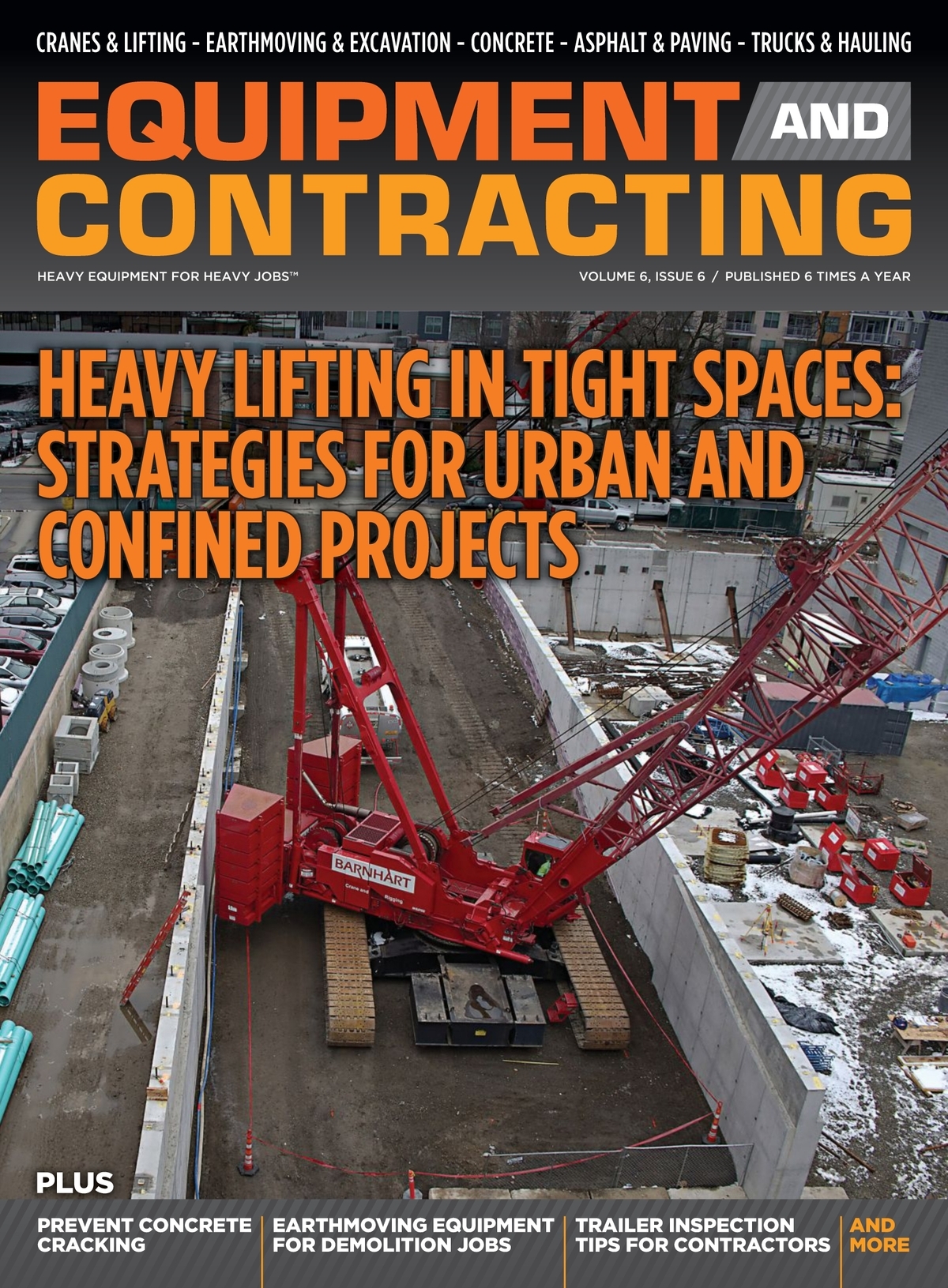




























Lattice boom crawler cranes have become the backbone of ultra heavy lift construction because they combine structural efficiency, high capacity, long reach, and unmatched site adaptability. These machines are engineered to lift hundreds of tons while maintaining stability across soft, uneven, or restricted terrain, making them essential for infrastructure, energy, and industrial megaprojects. Contractors rely on them not only for raw strength, but for predictable performance when handling massive components at long radii. Their ability to integrate with heavy lift equipment and engineered rigging systems makes them a central part of modern large scale construction planning.
Structural Design That Enables Extreme Lifting
The Strength of Lattice Boom Engineering
The lattice boom design is based on truss engineering principles, which distribute loads through triangular structures rather than solid members. This allows the boom to achieve a higher strength to weight ratio than telescopic or box boom designs. The reduced self weight of the boom increases net lifting capacity while limiting deflection under load. This is why lattice boom cranes are commonly used for loads exceeding several hundred tons, particularly when long reach is required.
The modular boom sections can be assembled to different lengths and configurations depending on project needs. Contractors can adjust boom geometry to optimize load charts for specific radii, heights, and lifting paths. This flexibility is critical on complex projects where every lift must be engineered to account for load weight, radius, and site restrictions.
Counterweight and Load Moment Balance
Ultra heavy lifts are governed by load moment, which is the product of load weight and horizontal distance from the crane’s center of rotation. Lattice boom crawler cranes use extensive counterweight systems to balance this moment and maintain stability. The counterweight arrangement can be customized to match specific lift configurations, allowing the crane to operate safely at long radii without exceeding structural or ground limits.
This ability to manage load moment is one of the key reasons lattice boom cranes outperform other crane types in high capacity applications.

Crawler Undercarriage and Ground Performance
Low Ground Bearing Pressure
Crawler tracks distribute the crane’s weight across a much larger surface area than tires or outriggers. This significantly reduces ground bearing pressure, which is critical when operating on soft soils, reclaimed land, or partially improved sites. Lower ground pressure minimizes the risk of settlement or tilt during heavy lifts, which is a major safety and performance concern.
This design allows cranes to move under load and reposition without requiring extensive ground reinforcement, saving time and cost on large projects.
Site Mobility and Positioning
Unlike cranes that must retract outriggers and re level between moves, crawler cranes can travel with suspended loads at slow speeds. This capability improves workflow efficiency by reducing the need for multiple crane setups. On large construction sites such as refineries, bridge works, and wind farms, this mobility shortens lift cycles and reduces congestion.
Lift Planning And Engineered Performance
Load Chart Precision and Radius Control
Every heavy lift is governed by load charts that define safe lifting limits at specific boom lengths and radii. Lattice boom crawler cranes are favored because their load charts remain stable across long reaches, allowing engineers to design lifts that would be impossible with shorter or telescopic systems.
Accurate radius control is essential, as even small changes in radius can dramatically increase load moment. These cranes are specifically designed to manage those changes safely.
Wind, Deflection, and Safety Margins
Tall lattice booms create large surface areas that are affected by wind forces. Industry standards require wind speed limits, deflection allowances, and operational shutdown thresholds to be built into lift planning. Lattice boom cranes are engineered with stiffness and damping characteristics that limit deflection, improving control during long radius lifts.
Safety systems continuously monitor boom angle, load weight, and radius to prevent overload or instability.
Why These Cranes are Used for Megaprojects
Infrastructure Construction
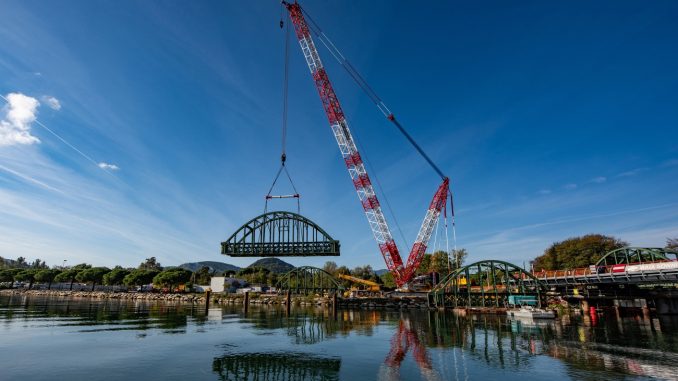
Bridge segments, precast girders, and large steel assemblies often exceed the capacity of standard cranes. Lattice boom crawler cranes provide the height and reach needed to place these components without disassembly, reducing installation time and alignment risks.
Energy and Industrial Facilities
Power plants, wind farms, refineries, and petrochemical facilities depend on cranes capable of lifting turbine components, reactors, and structural modules. These projects require precise placement of extremely heavy loads at height, often in confined or congested environments.
The flexibility and capacity of lattice boom crawler cranes make them indispensable for these industries.

Transport and Assembly Advantages
Modular Transport Logistics
Although these cranes are large, they are designed to be transported in modular components that meet highway and port regulations. Sections are delivered separately and assembled on site using smaller support cranes. This modular approach allows even the largest machines to be mobilized to remote locations.
Efficient On Site Erection
Once delivered, the crane is assembled in stages. Counterweights, crawlers, and boom sections are installed progressively, allowing the crane to self erect large portions of its own structure. This reduces the number of external lifts required and speeds up commissioning.
Long Term Project Efficiency
Continuous Operation Capability
Ultra heavy lift projects often run for months or years. Lattice boom crawler cranes are built for continuous duty cycles, performing repeated lifts without frequent reconfiguration. This reliability makes them cost effective over long project timelines.
Integration with Engineered Lift Systems
These cranes are frequently paired with engineered rigging, lifting frames, strand jacks, and transport systems. Their ability to integrate with advanced lifting solutions enhances project efficiency and safety.
This integration is why contractors rely on crawler crane performance to manage the most demanding construction challenges.
Lattice boom crawler cranes dominate ultra heavy lift projects because their structural design, ground adaptability, and engineered load control allow them to handle extreme weights at long radii with predictable stability. Their ability to operate on challenging terrain, maintain safety margins, and support long term construction schedules makes them essential for modern infrastructure and industrial development. When projects demand precision, capacity, and reliability at scale, these cranes remain the industry standard.
Why are lattice boom crawler cranes used for ultra heavy lifts?
They provide a high strength-to-weight boom design, large counterweight capacity, and stable load charts that allow safe lifting of extreme loads at long radii.
How do crawler tracks improve crane performance on difficult terrain?
Crawler tracks spread the crane’s weight over a wide area, reducing ground pressure and allowing stable operation and movement on soft or uneven ground.