































Crane operations depend on wire ropes that can handle heavy tensile loads, frequent bending, and continuous directional changes through reeving systems. High performance wire ropes were developed to meet increasing expectations for strength, durability, rotation resistance, and extended service life. Modern crane fleets rely on improved strand geometry and manufacturing methods that help maintain lifting stability, reduce operational wear, and support longer replacement intervals. Many operators integrate high performance wire rope solutions into their hoisting systems to ensure that crane lines perform consistently across varied duty cycles.
Role of Wire Rope in Crane Work
Wire rope functions as a primary tension carrying element that transfers load smoothly through sheaves and drums. Its construction is based on multiple layers of high strength steel wires arranged into strands that are wound around a core. This design allows the rope to bend repeatedly while carrying the applied load. As cranes lift at greater heights and operate with longer boom systems, wire rope must maintain its structural integrity under fluctuating forces. Performance depends on the rope’s ability to resist stretch, preserve strand alignment, and maintain predictable handling during each lift.
Construction Features in High Performance Ropes
High performance ropes differ from general purpose constructions due to specialized strand compaction, improved fill factors, and enhanced internal support. Compacted strands offer a higher metallic area and smoother outer surface, which improves the rope’s interaction with sheaves and reduces localized wear. Some ropes incorporate plastic layers between the core and outer strands. This plastic stabilizes the structure, limits internal friction, and helps keep lubricant in contact with the wires during service. These features collectively increase bending fatigue resistance and improve overall rope longevity.
Rotation Resistant and Non Rotating Designs
Rotation resistance is vital during single line lifting or lifts performed at significant boom lengths. Rotation resistant ropes use layers of strands that are laid in opposite directions to balance torque during loading. This arrangement helps prevent the hook block from turning while the crane is hoisting. Non rotating ropes also provide stability but differ in how the strands are arranged to minimize torque transfer. Both types are selected based on the lift height, crane model, and required degree of load control.
Bending Fatigue and Sheave Interaction
The primary cause of wire rope deterioration in crane service is bending fatigue. Fatigue increases as the rope cycles over sheaves and drum grooves. Sheave diameter, groove shape, alignment, and surface condition all influence how the rope distributes load during each bend. When sheave grooves are correctly matched to the rope diameter, the rope seats evenly and avoids point loading on outer wires. Regular inspections of sheave condition and alignment help maintain rope performance and reduce stress concentrations that shorten rope life.
Rope Selection for Crane Applications
Rope selection depends on crane type, reeving layout, load characteristics, and environmental conditions. Tower cranes, mobile cranes, and lattice boom cranes each use ropes optimized for their operating patterns. Rotation resistant ropes are often chosen when precise load control is required. Compacted ropes may be selected for applications where high breaking strength and reduced outer wire abrasion are priorities. Environmental factors also influence selection. Coastal and marine environments introduce corrosion risks, making galvanized or specially lubricated ropes more suitable in those situations.
Core Support, Lubrication, and Preservation
Internal lubrication reduces friction between the wires and helps extend rope life. Many high performance ropes come with lubricant embedded within the core and strands during manufacturing. In the field, operators maintain lubrication during service intervals to keep the rope protected. Plastic supported cores further stabilize strand movement and help hold lubricant within the rope. Corrosion control becomes essential in areas exposed to moisture or contaminants. Preserving the metallic area of the rope directly contributes to maintaining breaking strength and operational reliability.
Inspection and Discard Criteria
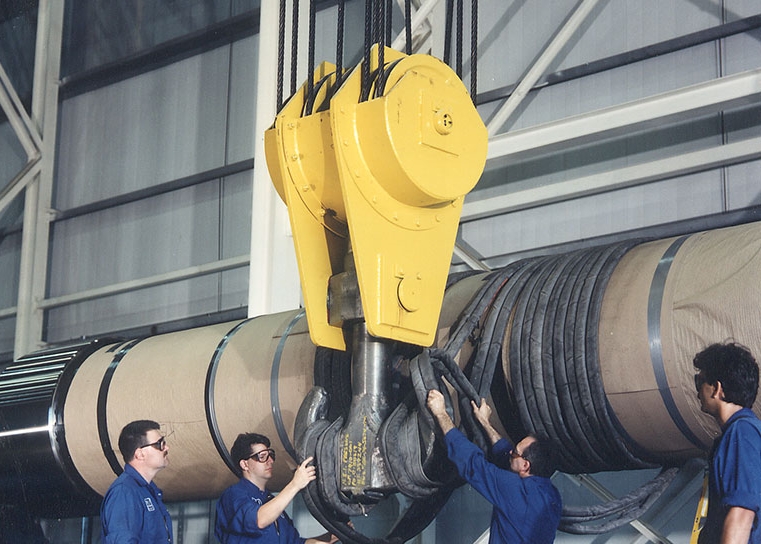
Crane wire ropes must be inspected regularly for external wire breaks, changes in diameter, corrosion, strand displacement, or visible damage caused by improper reeving. Internal deterioration can develop before external wear is visible, which is why consistent inspection intervals are required. Rope removal is based on established discard criteria that consider the number of broken wires, the location of breaks, rope distortion, and measurable loss of diameter. Keeping detailed inspection records helps track wear patterns and supports timely replacement.
Installation, Handling, and Spooling
Rope installation influences longevity as much as rope construction. Correct handling prevents crushing or twisting before the rope enters service. During installation the rope must be spooled with proper back tension so that layers sit uniformly and do not shift under load. Matching rope diameter to drum and sheave specifications ensures correct seating. Operators also avoid contamination that could introduce abrasive materials into the rope. Good installation practice combined with routine maintenance ensures the rope delivers its intended performance.
Advancements in Crane Rope Engineering
Ongoing advancements in rope manufacturing continue to increase breaking strength, control torque behavior, and improve fatigue resistance. Higher tensile wire grades, refined strand geometries, and better core support systems contribute to ropes that perform reliably under demanding lifting cycles. Many crane systems now integrate digital tracking of operational cycles, allowing owners to predict maintenance intervals more accurately. These developments support crane fleets that require both high lifting capacity and consistent long term durability.
Select a rope based on crane type, load requirements, boom length, rotation needs, and environmental conditions.
Maintain proper lubrication, match rope and sheave specifications, avoid twisting or crushing, and perform regular inspections. How do I choose the right wire rope for my crane?
How can I extend the service life of crane wire ropes?