











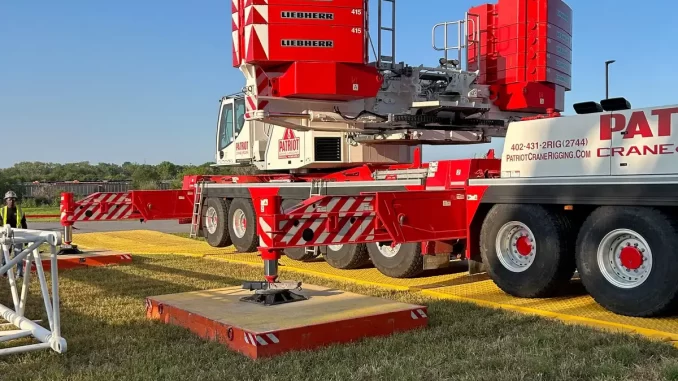
Outrigger pads are one of the most overlooked load-bearing components on construction jobsites, despite their direct influence on equipment stability and ground safety. While cranes and lifting equipment receive extensive engineering attention, the materials placed between outriggers and soil are often chosen based on habit or availability. Comparing fiber-reinforced polymer, wood, and steel pads reveals meaningful differences in load behavior, durability, inspection reliability, and total cost of ownership that directly affect real-world performance.
Why Outrigger Pad Material Matters
Outrigger pads exist to reduce ground bearing pressure by spreading concentrated point loads over a larger area. When pad material performs inconsistently, ground stress increases unevenly, which can lead to settlement, rotation, or loss of level during lifts. These risks are amplified on variable soils, paved surfaces, or locations with underground utilities where predictable load transfer is essential.
Material selection also influences how pads respond to repeated loading cycles, weather exposure, and handling. Over time, these factors determine whether pads remain reliable safety components or become hidden risk points within the lifting system.
Common Materials Used in Outrigger Pads
Wood Pads in Field Applications
Wood pads remain common due to low upfront cost and easy sourcing. Hardwood timbers and laminated mats are typically used to increase surface area beneath outriggers, especially for light to moderate lifting tasks.
However, wood is an anisotropic material, meaning its strength varies depending on grain direction. Under high compressive loads, wood fibers crush unevenly, leading to permanent deformation. Moisture absorption further complicates performance by increasing weight and accelerating biological decay. Internal cracking or rot can develop without visible surface damage, making accurate condition assessment difficult during routine inspections.
In repeated lift cycles, wood pads tend to lose thickness and stiffness, reducing their effectiveness at distributing loads over time.
Steel Pads in Heavy Equipment Use
Steel pads are sometimes selected for their high compressive strength and resistance to surface crushing. In controlled environments with uniform, stable ground conditions, steel can perform adequately as a bearing interface.
In practice, steel’s rigidity limits its ability to spread loads unless paired with additional layers beneath it. Steel pads transmit loads more directly into the ground, which can increase bearing pressure on softer soils. Surface conditions also matter, as steel can slip on asphalt, concrete, or wet ground without proper friction treatment. Corrosion becomes a concern when pads are exposed to moisture, chemicals, or marine environments, potentially reducing service life and complicating inspection.
Steel pads also introduce handling challenges due to their weight, which can slow setup and increase strain on crews during manual placement.
Fiber-Reinforced Polymer Pads
Fiber-reinforced polymer pads are engineered using controlled fiber reinforcement embedded in resin matrices designed to resist compression, moisture ingress, and environmental degradation. Unlike natural materials, FRP pads are manufactured to deliver consistent mechanical properties across units.
This consistency allows predictable load distribution and repeatable performance across different equipment types and ground conditions. FRP materials do not absorb water, rot, or corrode, which helps maintain structural integrity over long service periods. Many contractors adopt engineered outrigger pad systems when operations require reliable performance across frequent lifts and varying jobsite conditions.

Safety Performance Under Load
Ground Pressure Distribution
Effective ground pressure reduction depends on both pad size and material behavior. Wood compresses locally under high loads, which concentrates stress and can lead to uneven settlement. Steel distributes load primarily through contact points, often requiring additional mats to achieve adequate pressure reduction.
FRP pads are designed to distribute loads across their full footprint. This behavior helps lower peak ground pressures and supports more stable equipment positioning, particularly on marginal soils. Consistent load transfer reduces the likelihood of sudden movement during lifts and improves operator confidence.
Failure Characteristics and Predictability
Failure predictability is critical for lift planning. Wood degradation often progresses internally before becoming visible, increasing the risk of unexpected failure under load. Steel failures are less common but can involve sudden slippage or deformation when friction or support conditions change.
FRP pads typically exhibit clear signs of distress, such as surface cracking or deformation, only when loads exceed engineered limits. Because material properties are controlled, rated capacities can be more reliably defined, supporting safer operational decision-making.
Cost Considerations Over the Equipment Lifecycle
Initial Purchase Versus Replacement Frequency
Wood pads are inexpensive initially but require frequent replacement due to crushing, splitting, and environmental damage. Disposal costs and downtime associated with pad failure increase long-term expense.
Steel pads involve higher initial cost and increased handling requirements. While durable under compression, corrosion and surface damage can shorten usable life, especially in outdoor storage or coastal environments.
FRP pads typically carry higher upfront cost than wood but offer extended service life with minimal degradation. Reduced replacement frequency and predictable performance often lower total ownership cost over time, especially for fleets with frequent lifting operations.
Labor and Handling Impacts
Pad weight and handling directly affect jobsite efficiency and safety. Steel pads are heavy and may require mechanical assistance for placement. Wood pads gain weight as they absorb moisture and degrade.
FRP pads are generally lighter than steel while maintaining high load capacity. Easier handling speeds setup, reduces crew fatigue, and lowers the risk of strain injuries. Uniform sizing also simplifies storage and inventory management, particularly for rental fleets investing in composite ground protection and support solutions.
Inspection, Documentation, and Compliance
Inspection Reliability
Wood inspection relies on visual assessment that may not reveal internal damage. Steel inspection focuses on surface condition and corrosion, which can be obscured by dirt or coatings.
FRP pads allow for clearer inspection criteria. Surface damage, deformation, or excessive wear are typically visible, and consistent manufacturing supports standardized acceptance thresholds. This clarity simplifies safety audits and routine equipment checks.
Alignment With Industry Practices
While no single regulation mandates specific outrigger pad materials, industry guidance increasingly emphasizes engineered solutions with defined load ratings. Lift planning practices benefit from materials that offer predictable performance and documented capacities.
Using engineered pads supports internal safety programs and aligns with evolving expectations for risk management on complex lifting projects.

Selecting the Right Material for Job Conditions
Equipment Type and Ground Conditions
Light-duty equipment operating on firm ground may continue to use wood pads when inspection and replacement are tightly controlled. Heavy cranes, variable soil conditions, and repetitive lifts place higher demands on pad performance and consistency.
FRP pads are often selected where stability, repeatability, and long service life are priorities. Steel remains useful in niche applications with controlled surfaces and extreme loads but requires careful management of handling and ground interaction risks.
Long-Term Fleet Planning
Material selection should reflect how often pads are used, how many crews rely on them, and how critical uninterrupted operation is to project schedules. Investing in durable, engineered materials often reduces uncertainty and long-term cost exposure.
As projects grow more complex, consistency in ground support becomes a strategic safety advantage rather than a convenience.
Final Thoughts on Safety and Cost
Outrigger pad material plays a foundational role in lift safety, equipment stability, and operational efficiency. Wood, steel, and fiber-reinforced polymer pads each offer distinct advantages and limitations that become evident under real-world jobsite conditions.
For operations where predictability, inspection reliability, and long-term performance matter, engineered materials provide measurable benefits beyond compressive strength alone. Thoughtful material selection supports safer lifts, more efficient crews, and reduced lifecycle costs across modern construction fleets.
What is the best material for outrigger pads on construction sites?
Fiber-reinforced polymer pads offer the most predictable load distribution, durability, and inspection reliability across varying ground conditions.
Why are wood outrigger pads considered risky for heavy lifting?
Wood can crush unevenly, absorb moisture, and degrade internally, making failures harder to detect and less predictable under load.

