












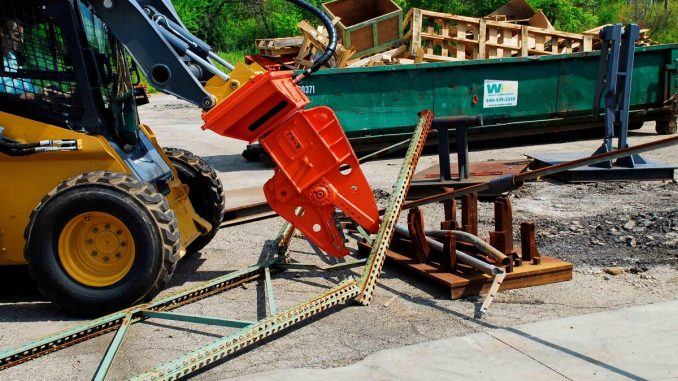
Heavy civil demolition often involves dismantling reinforced concrete frames, structural steel, and industrial facilities that were built to last for decades. In these environments, precision matters as much as raw force. Demolition shears have become a core attachment for controlled steel removal, allowing contractors to cut, separate, and downsize materials efficiently while maintaining safety and productivity on complex teardown projects.
Modern demolition shears are designed to mount on excavators and deliver concentrated cutting power through hardened jaws and hydraulic force. Their role extends far beyond simple material reduction, making them a critical tool for selective demolition, recycling, and structural dismantling across bridges, plants, and large commercial sites.
The Role of Demolition Shears in Heavy Civil Projects
Heavy civil teardowns differ from standard building demolition because they often involve load bearing steel members, thick plate sections, and reinforced connections. Demolition shears provide the ability to cut these elements in a controlled sequence rather than relying on impact based methods.
Unlike breakers or explosives, shears allow operators to isolate beams, columns, and trusses one cut at a time. This level of control is especially valuable in urban environments, active industrial sites, and projects where adjacent structures must remain intact. Contractors frequently rely on equipment such as hydraulic demolition shears to maintain accuracy while working within tight tolerances and safety constraints.
How Demolition Shears Cut Structural Steel
Hydraulic Power and Jaw Design
Demolition shears use excavator hydraulic systems to generate immense closing force at the jaws. This force is concentrated through blade geometry designed to shear steel rather than crush it. Most designs incorporate hardened steel blades positioned to apply progressive pressure as the jaws close.
The shearing action reduces deformation and prevents uncontrolled bending or tearing. This makes it easier to manage cut sections and minimizes the risk of stored energy releasing unexpectedly during the cut.
Blade Materials and Wear Resistance
Shear blades are typically manufactured from high strength alloy steels that are heat treated for durability. These materials allow the blades to maintain sharp edges even when cutting thick steel plates, pipes, or rebar bundles. Many shear designs also allow for blade rotation or replacement, extending service life and reducing downtime on large demolition projects.

Applications Across Steel Intensive Teardowns
Demolition shears are widely used in bridge removal, industrial plant dismantling, shipyard demolition, and large commercial or institutional teardowns. In bridge projects, shears can cut girders and cross members section by section, enabling controlled removal over waterways or active roadways.
In industrial settings, demolition shears are commonly used to dismantle tanks, conveyors, and structural frames while allowing materials to be sorted for recycling. Their ability to cut cleanly supports efficient scrap processing and reduces secondary handling.
Comparing Demolition Shears to Other Demolition Tools
Shears Versus Hydraulic Breakers
Hydraulic breakers are effective for fracturing concrete but are less efficient when dealing with steel. Breakers rely on repeated impact, which can create vibration, noise, and unpredictable material movement. Demolition shears, by contrast, apply steady force and deliver precise cuts without shock loading.
This difference makes shears a preferred option when steel separation is a primary task or when environmental and safety restrictions limit the use of impact tools.
Shears Versus Oxy Fuel Cutting
Oxy fuel cutting is still used in demolition, particularly for thick steel sections. However, it introduces fire hazards, requires skilled labor, and can slow overall production. Demolition shears eliminate open flames and allow cutting to continue in wet or confined environments where torches are impractical.
Excavator Compatibility and Attachment Selection
Matching Shear Size to Carrier Weight
Selecting the correct shear size for an excavator is essential for performance and safety. Undersized carriers may struggle to deliver adequate hydraulic flow or stability, while oversized shears can overload the machine. Manufacturers provide specifications that align shear models with carrier weight classes to ensure optimal cutting force and balance.
Rotation and Positioning Capabilities
Many demolition shears incorporate hydraulic rotation, allowing operators to align the jaws precisely with the material being cut. This improves efficiency and reduces repositioning time, particularly when working on complex steel assemblies with varying orientations.

Safety Considerations During Steel Cutting Operations
Precision cutting does not eliminate risk, but it significantly improves control. Operators must remain aware of load paths, tension in steel members, and the potential for sudden movement once a cut is completed. Proper sequencing and communication between machine operators and ground crews are critical.
Demolition shears also reduce airborne debris and flying fragments compared to impact tools, contributing to safer working conditions. Regular inspection of blades, pins, and hydraulic components further supports safe and reliable operation.
Environmental and Recycling Benefits
Steel recycling is a major component of heavy civil demolition. Demolition shears support this process by producing clean, manageable scrap sizes that can be directly loaded and transported. Cleaner cuts reduce contamination and improve material value at recycling facilities.
By enabling selective demolition, shears also help contractors separate materials on site, reducing waste and supporting sustainability goals increasingly required on public infrastructure projects.
Maintenance and Longevity in Demanding Conditions
Routine maintenance plays a major role in shear performance. Blade inspection, lubrication of pivot points, and monitoring hydraulic pressure help prevent premature wear. Many modern designs emphasize serviceability, allowing blades and wear parts to be replaced without extensive disassembly.
Well maintained shears can operate reliably across long duration projects, even in abrasive and high load conditions common to heavy civil work.
The Growing Importance of Precision Demolition
As infrastructure ages and redevelopment increases, the demand for controlled demolition methods continues to grow. Demolition shears provide contractors with a tool that balances power, precision, and safety in environments where mistakes can be costly.
From bridge decks to industrial frames, steel cutting attachments have become a cornerstone of modern demolition strategy. Contractors seeking efficiency and control increasingly turn to solutions such as excavator mounted steel cutting attachments to meet the demands of complex heavy civil teardowns.
Demolition shears cut and separate steel structures precisely for controlled demolition, recycling, and selective dismantling.
Select a shear that matches your excavator’s weight and hydraulic capacity to ensure safe, efficient cutting. What are demolition shears used for in heavy civil projects?
How do I choose the right demolition shear for my excavator?