





















Selecting the right crane is a critical decision that influences productivity, safety, and overall project cost. Among the most common choices for heavy lifting applications are crawler cranes and all-terrain cranes. Each machine is designed to excel under specific conditions, and understanding their strengths and limitations helps contractors match equipment to project demands. Factors such as ground conditions, mobility requirements, lift capacity, and setup time all play a role in determining which crane type is most appropriate for a given job.
Access to experienced providers offering crane rental and lifting solutions for complex projects can help contractors evaluate job requirements and select equipment that aligns with site conditions and lifting goals.
Understanding Crawler Cranes
Design and Mobility Characteristics
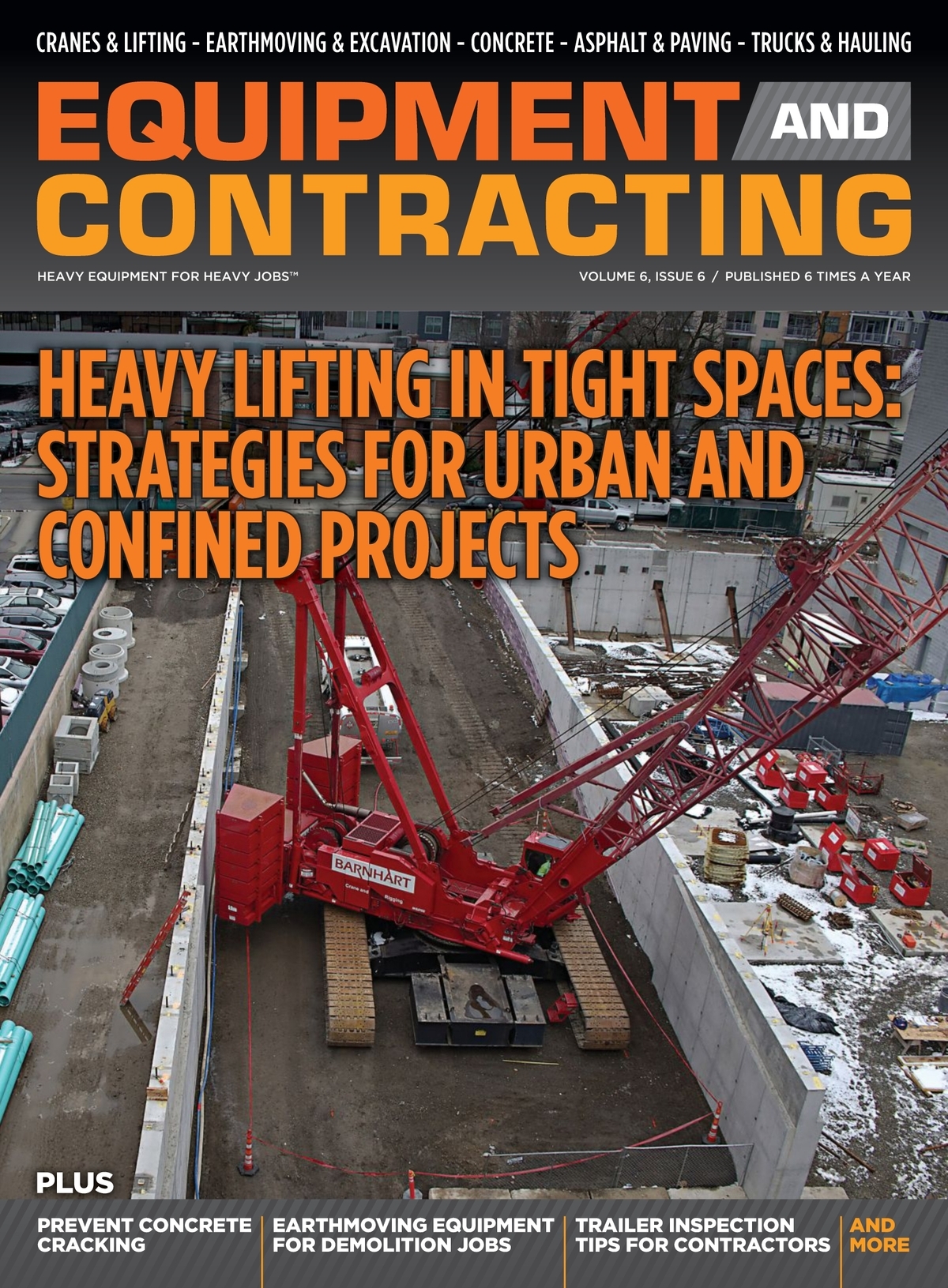
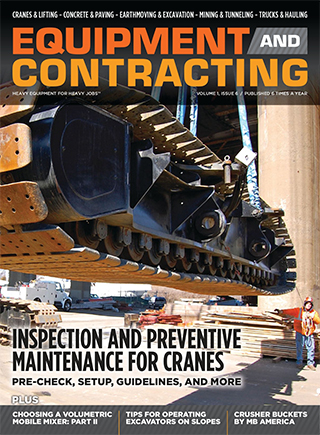
Crawler cranes are mounted on tracked undercarriages that distribute the machine’s weight over a large surface area. This design allows them to operate on soft or uneven ground without the need for extensive ground preparation. Because of their wide track base, crawler cranes provide excellent stability during lifting operations, especially when handling heavy loads at long radii.
Unlike wheeled cranes, crawler cranes are typically transported to job sites in multiple components and assembled on location. While this process requires planning and time, it enables the crane to remain on site for extended periods without the need for disassembly between lifts. Once assembled, crawler cranes can move short distances while carrying loads, which can improve efficiency on large construction sites.
Lift Capacity and Job Applications
Crawler cranes are known for their high lifting capacities and ability to handle heavy loads at significant heights and distances. These characteristics make them well suited for large infrastructure projects, power plants, wind energy installations, and heavy industrial construction. Their ability to support long boom configurations allows for versatility in complex lift scenarios.
The tradeoff for this capacity is limited road mobility. Because crawler cranes are not designed for highway travel, they require transport vehicles and additional logistics planning. For projects where the crane will remain in one location for an extended duration, this limitation is often outweighed by their lifting performance and stability.

Understanding All-Terrain Cranes
Mobility and Road Travel Advantages
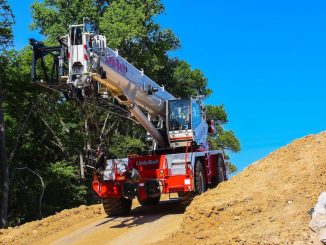
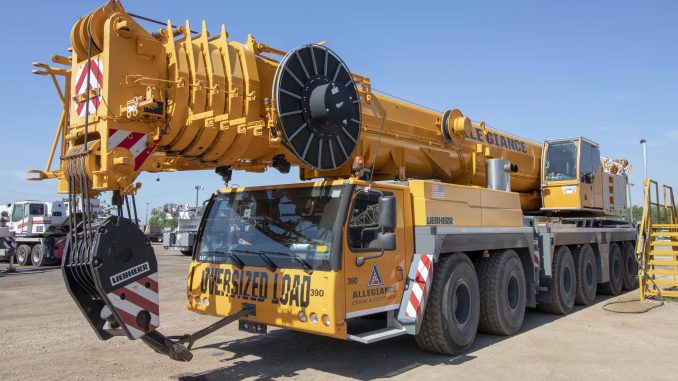
All-terrain cranes are designed to combine the mobility of truck-mounted cranes with the off-road capability needed for challenging job sites. Equipped with multiple axles, advanced suspension systems, and all-wheel steering, these cranes can travel on public roads and navigate rough terrain without disassembly. This mobility allows for rapid deployment between job sites, reducing transportation and setup time.
Because all-terrain cranes are road-legal when properly configured, they are often used for projects that require frequent relocation. Their ability to arrive on site ready for setup makes them a practical choice for contractors managing multiple jobs across a wide geographic area.
Setup and Lift Capabilities
While all-terrain cranes generally have lower maximum lifting capacities than crawler cranes, they still offer substantial performance for many construction applications. Outriggers are deployed during operation to provide stability, allowing the crane to perform lifts safely within rated load limits. Setup times are typically shorter than those of crawler cranes, which can help keep projects on schedule.
All-terrain cranes are commonly used for commercial construction, bridge work, utility installation, and maintenance projects. Their balance of mobility and lifting capability makes them a versatile option for jobs that require both travel efficiency and reliable performance.
Comparing Ground Conditions and Site Access
Performance on Soft or Uneven Ground
Ground conditions play a major role in crane selection. Crawler cranes excel on soft soil, mud, and uneven terrain because their tracked design spreads weight evenly and reduces ground pressure. This allows them to operate safely in environments where wheeled cranes may require additional ground reinforcement.
All-terrain cranes can handle rough terrain but typically require firm, level surfaces when setting outriggers for lifting. In situations where site preparation is limited or impractical, crawler cranes often provide a more stable and efficient solution.
Site Space and Access Limitations
Job site access is another important consideration. Crawler cranes require ample space for assembly and operation, which may not be available on confined urban sites. Their large footprint and component delivery needs can complicate logistics in tight areas.
All-terrain cranes are better suited for restricted sites where access is limited. Their ability to maneuver through narrow roads and set up quickly allows them to work efficiently in urban environments or existing facilities.

Cost, Time, and Operational Efficiency
Mobilization and Setup Time
Mobilization costs differ significantly between crawler and all-terrain cranes. Crawler cranes require disassembly for transport and reassembly on site, which adds time and labor expenses. However, once assembled, they can remain on site for extended durations, supporting long-term projects without repeated setup.
All-terrain cranes offer faster mobilization and setup, making them ideal for short-term or fast-paced projects. Their reduced setup time can translate to lower overall costs when frequent moves are required.
Long-Term Project Considerations
For projects involving repetitive heavy lifts over several months, crawler cranes often provide greater efficiency despite higher initial mobilization costs. Their stability and lift capacity support demanding tasks with minimal repositioning.
All-terrain cranes are often more cost-effective for projects with varied locations or lighter lift requirements. Their flexibility allows contractors to respond quickly to changing schedules and site needs.
Safety and Operator Considerations
Stability and Load Control
Both crane types are engineered to meet strict safety standards, but their stability mechanisms differ. Crawler cranes rely on their wide track base for inherent stability, while all-terrain cranes depend on properly deployed outriggers. Operators must follow load charts and manufacturer guidelines to ensure safe lifting operations.
Proper training and experience are essential regardless of crane type. Understanding how each machine responds to load changes and environmental factors helps reduce risk and improve lift precision.
Operator Skill and Planning
Crane selection should also consider operator familiarity and available expertise. Crawler cranes require careful planning for assembly, disassembly, and long-term operation. All-terrain cranes demand precise setup and outrigger placement to maintain stability.
Engaging professionals who provide heavy crane services and project lifting support can help ensure that the selected crane is operated safely and efficiently throughout the project lifecycle.
Choosing between crawler cranes and all-terrain cranes depends on project scope, site conditions, mobility requirements, and lift demands. Crawler cranes offer unmatched stability and lifting capacity for large, long-term projects on challenging terrain. All-terrain cranes provide flexibility, rapid deployment, and road mobility for projects that require frequent moves or operate in confined spaces.
By carefully evaluating ground conditions, access limitations, and operational timelines, contractors can select the crane type that delivers the best balance of performance and efficiency. Making informed equipment choices supports safer lifts, improved productivity, and successful project outcomes across a wide range of construction applications.