






































Surface restoration is often one of the most expensive and time-consuming phases of trenching projects, especially in urban, commercial, and landscaped environments. Traditional excavation methods can disturb wide areas beyond the trench itself, increasing labor, material, and repair expenses once installation is complete. Controlled trench excavation focuses on minimizing surface disruption while maintaining efficiency, making it a valuable approach for contractors looking to manage budgets and meet client expectations.
By reducing the width and depth of excavation to only what is necessary, controlled trenching techniques help protect surrounding pavement, soil structure, and landscaping. This targeted approach is increasingly used in utility installation, drainage projects, and site upgrades where restoration costs can quickly exceed excavation expenses if not properly managed.
Understanding Surface Restoration Challenges
Common Cost Drivers in Restoration Work
Surface restoration costs are influenced by several factors including the extent of surface disturbance, material replacement needs, and labor required for repairs. When excavation disrupts large surface areas, contractors must replace asphalt, concrete, sod, or pavers over a wider footprint. This increases material usage and extends project timelines due to curing and finishing requirements.
Uncontrolled excavation can also damage adjacent infrastructure such as sidewalks, curbs, and existing utilities. Repairs to these elements add unexpected costs and can lead to disputes or delays, particularly in municipal or commercial projects where surface standards are strictly regulated.
Impact of Over Excavation on Project Budgets
Over excavation occurs when trenches are wider or deeper than necessary for the intended installation. This practice increases spoil removal, backfill volume, and compaction requirements, all of which contribute to higher restoration costs. In paved areas, wider cuts require more patching and increase the likelihood of future surface failures.
Controlled trench excavation addresses these challenges by aligning excavation dimensions closely with project specifications. By reducing unnecessary soil displacement, contractors can significantly limit the scope and cost of surface restoration.
Principles of Controlled Trench Excavation
Precision in Trench Width and Depth
Precision is the foundation of controlled trench excavation. Industry best practices emphasize excavating trenches only as wide and deep as required for pipe placement, conduit installation, or drainage systems. Maintaining consistent trench dimensions helps preserve the integrity of surrounding soil and reduces the risk of settlement after backfilling.
Accurate trenching also improves safety by creating more stable trench walls and reducing the need for extensive shoring in shallow applications. These factors contribute to faster completion and lower restoration costs overall.
Reduced Surface Disturbance
Controlled trenching techniques aim to limit disruption to the immediate excavation area. This is especially important in developed environments where pavement, turf, or decorative surfaces must be restored to original condition. Narrow trench profiles reduce the amount of surface material that must be removed and replaced.
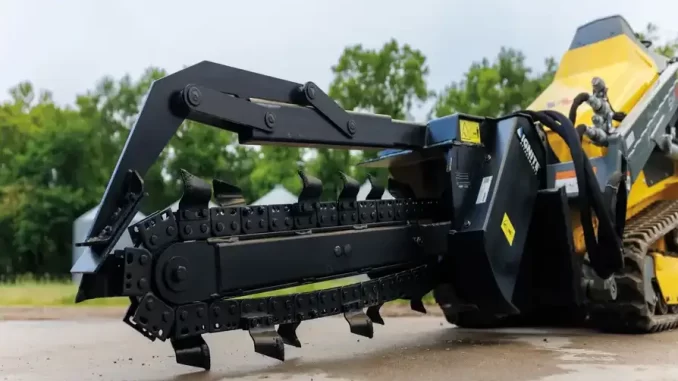
In many applications, contractors rely on compact trenching attachments and specialized excavation tools to achieve this level of control. Sourcing reliable compact trenching attachments for precise excavation can support consistent trench dimensions while minimizing surface impact.

Applications in Utility and Infrastructure Projects
Urban Utility Installations
Urban utility projects often involve working in tight spaces with limited room for error. Controlled trench excavation is well suited for installing water lines, electrical conduit, and communication cables beneath streets and sidewalks. Narrow trenches reduce the size of pavement cuts and allow for quicker restoration using smaller patch areas.
Municipal standards frequently specify maximum trench widths to protect road integrity. Adhering to these requirements through controlled excavation helps contractors avoid penalties and reduce long term maintenance concerns related to surface degradation.
Landscaping and Property Preservation
In residential and commercial landscaping projects, surface appearance is a primary concern. Excessive excavation can damage root systems, turf, and hardscape features, increasing restoration time and cost. Controlled trench excavation allows contractors to complete underground work while preserving surrounding vegetation and design elements.
By limiting soil displacement, contractors can often reuse existing materials during backfill and restoration. This approach supports faster site recovery and improved customer satisfaction.
Role of Equipment Selection in Cost Control
Matching Equipment to Job Requirements
Choosing the right equipment plays a critical role in achieving controlled trench excavation. Oversized machines can make it difficult to maintain narrow trench profiles, particularly in confined areas. Equipment designed for precision trenching enables operators to work efficiently without disturbing adjacent surfaces.
Contractors increasingly prioritize precision trenching solutions for utility installation to improve control and reduce post excavation repair needs. These solutions support consistent results across varying soil conditions and project types.
Operator Skill and Consistency
Even with the right equipment, operator skill remains essential. Trained operators understand how to maintain steady trench depth, manage spoil placement, and avoid unnecessary widening during turns or adjustments. Consistent operation reduces rework and minimizes surface damage that would otherwise increase restoration costs.
Ongoing training and adherence to project specifications ensure that controlled trenching techniques are applied correctly from start to finish.

Long Term Benefits Of Controlled Trenching
Faster Restoration and Project Completion
Controlled trench excavation simplifies the restoration process by reducing the area that must be repaired. Smaller patches of asphalt or concrete cure faster and require less finishing work, allowing projects to move forward without extended downtime. In landscaped areas, limited disturbance enables quicker reestablishment of turf and plantings.
These efficiencies contribute to shorter project schedules and improved coordination with other trades. Faster restoration also minimizes disruption to surrounding properties and public spaces.
Improved Surface Longevity
Minimizing excavation width helps preserve the structural integrity of surrounding surfaces. Narrower cuts reduce stress points in pavement and decrease the likelihood of cracking or settlement over time. This results in longer lasting repairs and fewer callbacks related to surface failures.
From a lifecycle cost perspective, controlled trench excavation supports better long term performance of restored surfaces. Owners and municipalities benefit from reduced maintenance, while contractors enhance their reputation for quality workmanship.
Reducing surface restoration costs is a critical objective for modern excavation and utility projects. Controlled trench excavation offers a proven approach by limiting surface disturbance, improving precision, and supporting efficient restoration. Through careful planning, proper equipment selection, and skilled operation, contractors can manage excavation dimensions more effectively and avoid unnecessary repair expenses.
As infrastructure demands increase and project sites become more constrained, controlled trenching methods will continue to play an important role in cost management and surface preservation. By adopting these practices, construction professionals can deliver reliable results while protecting both budgets and built environments.