












































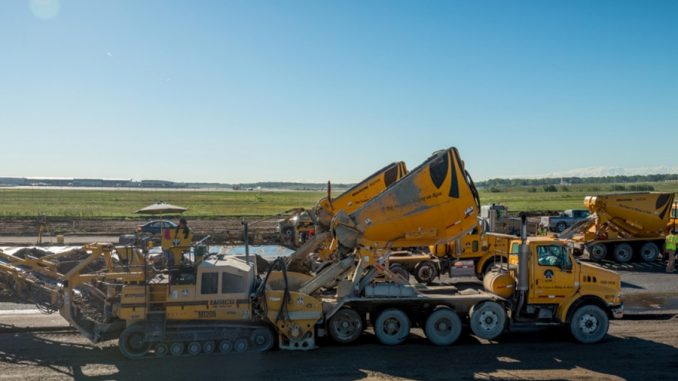
Large-scale paving projects depend on precise coordination between batching, transportation, and placement to maintain concrete quality from plant to paver. As project footprints grow and pour durations extend, the risk of material segregation, slump loss, and premature setting increases significantly. Effective concrete delivery practices are essential to ensure uniform strength, surface finish, and long-term durability across miles of pavement.
Maintaining fresh, homogeneous concrete at the point of placement requires careful attention to equipment selection, mix behavior, haul logistics, and discharge control. When these factors are aligned, contractors can improve productivity while reducing rework, rejected loads, and performance variability across the paving operation.
Understanding Segregation Risks During Transport
Concrete segregation occurs when coarse aggregate separates from the cement paste and fine materials during handling or movement. In paving operations, segregation often develops during loading, transport, or discharge rather than during placement itself. Extended haul distances, vibration, and repeated stopping can all contribute to uneven material distribution within the load.
Once segregation begins, it cannot be fully corrected at the jobsite. Areas with excess paste may exhibit shrinkage cracking, while aggregate-rich zones can suffer from poor consolidation and reduced surface quality. Maintaining uniformity during delivery is therefore critical to achieving consistent pavement performance across the entire pour.
Mix Design Considerations for Long Hauls
Aggregate Gradation and Stability
Well-graded aggregates play a key role in reducing segregation risk during transport. Proper particle size distribution allows aggregates to interlock, limiting movement within the mix under vibration or slope. Gap-graded or poorly proportioned mixes are more prone to separation during long hauls and repeated handling.
Contractors working on large paving projects often collaborate with producers to adjust gradation curves specifically for delivery conditions. These adjustments help maintain cohesion without sacrificing workability or finishing characteristics.
Water Management and Slump Retention
Excess water increases the likelihood of segregation while also accelerating bleed water formation during placement. For large pours, slump retention is often achieved through admixtures rather than water addition. This approach preserves mix stability while allowing sufficient working time at the paver.
Maintaining consistent water content across all loads is especially important when concrete is delivered using high-capacity transport systems designed for continuous paving operations, such as specialized concrete delivery systems that minimize remixing during transit.

Transportation Methods and Equipment Selection
Controlling Vibration and Movement
Transport equipment introduces vibration that can destabilize concrete if not properly managed. Road conditions, vehicle suspension, and speed all influence the internal movement of materials during hauling. Smooth acceleration, steady travel speeds, and controlled braking help preserve mix uniformity.
Equipment designed specifically for paving applications often reduces internal turbulence compared to conventional hauling methods. These designs help limit aggregate migration and maintain consistent material distribution until discharge.
Managing Load Volume and Discharge Rates
Overloading transport units can increase segregation risk by amplifying internal pressure and movement. Maintaining rated load capacities allows concrete to move as a cohesive mass rather than stratifying under its own weight.
Controlled discharge rates are equally important. Rapid dumping can cause paste separation, especially when feeding conveyors or placing directly ahead of slipform pavers. Gradual, steady discharge improves material flow and placement consistency.
Maintaining Freshness During Extended Pours
Temperature Control and Scheduling
Concrete temperature rises during transport, particularly in warm weather or during peak production hours. Elevated temperatures accelerate hydration, reducing available placement time and increasing finishing challenges. Scheduling deliveries during cooler periods and shading transport units where possible can help preserve workability.
For long-duration paving operations, sequencing loads to minimize idle time at the paver is essential. Continuous placement reduces the risk of cold joints while allowing crews to maintain consistent finishing rhythms.
Coordination Between Plant and Placement
Effective communication between the batch plant and paving crew ensures that production rates match placement capacity. Delays at either end of the process increase the likelihood of material degradation before placement.
Modern paving projects often rely on synchronized delivery planning to maintain fresh concrete at the point of discharge. This coordination supports continuous paving while reducing waste from rejected or expired loads.
Preventing Segregation During Placement
Transfer Points and Material Handling
Every transfer point presents an opportunity for segregation. Whether concrete is transferred from transport units to conveyors or directly to grade, minimizing drop height and impact reduces separation risk. Smooth transitions and consistent flow paths help preserve mix integrity.
Equipment designed for controlled placement allows concrete to be delivered precisely where needed without excessive handling. These systems support uniform distribution ahead of slipform pavers and across variable paving widths.
Consistency Across Multiple Loads
Large paving projects may involve hundreds of individual loads over several days or weeks. Maintaining consistency across these deliveries is critical to achieving uniform pavement performance. Variations in slump, temperature, or aggregate distribution can lead to visible surface differences and long-term durability concerns.
Standardized delivery procedures and continuous monitoring help contractors identify deviations early and make adjustments before issues propagate across the project footprint.

Quality Control and Monitoring Practices
Visual Inspection and Field Testing
Visual inspection during discharge provides immediate indicators of segregation, such as uneven flow or aggregate accumulation. Field testing for slump, air content, and temperature confirms that delivered concrete meets project specifications at the point of placement.
Consistent documentation of these parameters allows contractors to track trends and refine delivery practices throughout the project lifecycle.
Adapting to Changing Site Conditions
Large paving sites often experience changing haul routes, traffic patterns, and environmental conditions. Flexibility in delivery planning allows crews to respond to these variables without compromising concrete quality.
As projects progress, contractors may adjust routing, timing, or handling methods to maintain optimal delivery performance while meeting production targets.
Long-Term Benefits of Optimized Delivery Practices
Investing in best practices for concrete delivery reduces the likelihood of surface defects, strength variability, and premature maintenance. Uniform placement improves load transfer, ride quality, and overall pavement lifespan, delivering measurable value to owners and contractors alike.
By focusing on segregation control, freshness preservation, and coordinated logistics, paving teams can achieve reliable results even on the largest and most complex projects. Advanced paving concrete transport solutions play a key role in supporting these outcomes by enabling controlled, consistent delivery from plant to placement.