





Telescopic telehandlers have become one of the most versatile material handling machines on modern construction sites. Their ability to lift, place, and maneuver loads across uneven ground makes them a practical alternative to forklifts, cranes, and other lifting equipment in many applications. However, selecting the right telehandler is rarely straightforward. Lift capacity, maximum reach, jobsite layout, and ground conditions all play a role in determining which type of machine will perform safely and efficiently.
Contractors who treat telehandlers as interchangeable risk underutilizing their equipment or introducing safety challenges into daily operations. Understanding how different telehandler configurations perform under real jobsite conditions is essential for making the right choice.
Understanding Lift Capacity and Reach Tradeoffs
Lift capacity and reach are often viewed as separate specifications, but in practice they are closely linked. As a telehandler’s boom extends outward or upward, its available lifting capacity decreases due to changes in leverage and stability. This relationship is defined by load charts, which outline safe operating limits at various boom angles and extensions.
Selecting a telehandler based solely on maximum lift capacity can be misleading. A machine capable of lifting heavy loads at low heights may offer significantly reduced capacity when reaching forward or working at elevation. Contractors must evaluate how materials will actually be placed on site, whether that involves setting loads onto upper floors, reaching over obstacles, or positioning materials at extended distances.
Understanding this lift and reach balance helps ensure that the telehandler chosen can handle real-world demands without operating near its limits on a routine basis.
Evaluating Jobsite Conditions Before Equipment Selection
Jobsite conditions often dictate telehandler performance more than raw specifications. Terrain, space constraints, and access points all influence how effectively a machine can operate. Rough or uneven ground places additional demands on stability and traction, while confined sites limit maneuverability and boom positioning.
Ground bearing capacity is another important factor. Telehandlers working on soft soils or recently disturbed surfaces may require wider footprints or stabilizing features to maintain safe operation. In urban or congested projects, overhead obstructions and tight working envelopes can limit boom extension paths, making some configurations more suitable than others.
Assessing these factors early in the planning process allows contractors to select equipment that matches site realities rather than adapting workflows to equipment limitations.

Fixed Telescopic Telehandlers for General Construction Tasks
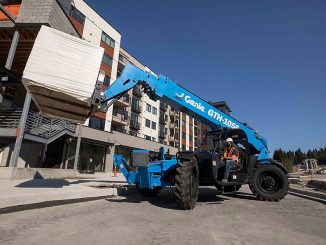
Fixed telescopic telehandlers are commonly used across a wide range of construction projects due to their simplicity and versatility. With a straight boom design, these machines excel at lifting and placing materials in forward-facing applications such as pallet handling, loading trucks, or placing materials onto slabs and elevated platforms.
Their straightforward operation makes them well suited for general contractors who need a dependable material handling solution without complex setup requirements. Fixed telehandlers typically offer strong lift capacities at moderate reach, making them effective for repetitive lifting tasks where materials are moved along predictable paths.
On open jobsites with adequate space to reposition the machine as needed, fixed telehandlers provide an efficient balance between performance, cost, and ease of use.
Rotating Telescopic Telehandlers in Confined or Complex Layouts
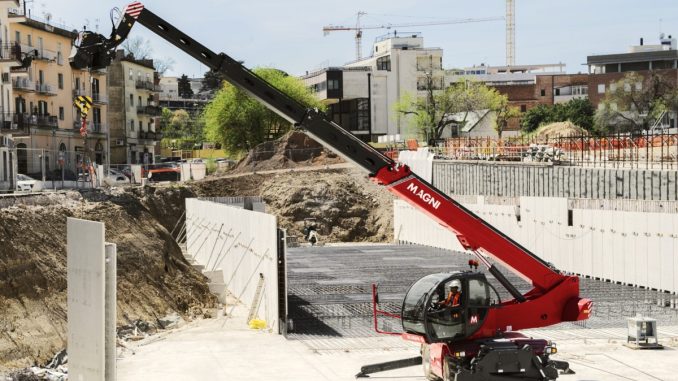
Rotating telescopic telehandlers introduce an additional degree of flexibility by allowing the upper structure to rotate independently of the chassis. This capability can significantly reduce the need to reposition the machine when working in tight spaces or around obstacles.
On congested sites, rotating telehandlers allow operators to place loads across multiple work zones from a single position. This can improve productivity and reduce ground disturbance caused by frequent repositioning. They are particularly useful in urban construction, renovation projects, and sites where access routes are limited.
The added versatility comes with increased operational complexity. Operators must be trained to understand rotational dynamics, load charts, and stability considerations specific to rotating machines. When used correctly, rotating telehandlers can streamline material placement while enhancing site efficiency.
Heavy Duty Telehandlers for High Capacity Applications
Heavy duty telehandlers are designed for applications that require higher lift capacities and robust structural performance. These machines are commonly used in infrastructure, industrial construction, and large-scale material handling tasks where standard telehandlers may not provide sufficient capacity or reach.
With reinforced frames, higher-rated booms, and powerful drivetrains, heavy duty telehandlers can handle larger loads while maintaining stability across challenging terrain. Their increased size and weight often require more space to operate safely, making them better suited for open sites with fewer spatial constraints.
Contractors selecting heavy duty telehandlers must balance capacity requirements against site limitations. While these machines offer significant lifting power, their size can limit maneuverability in confined environments.
Matching Telehandler Type to Jobsite Workflow
Selecting the right telehandler involves more than matching specifications to a single task. Contractors should consider how the machine will be used throughout the project lifecycle. Tasks may evolve from initial material staging to elevated placement and ongoing logistics support.
A jobsite that requires frequent changes in lift direction or placement angles may benefit from the flexibility of a rotating telehandler. Projects with repetitive forward-facing lifts and ample space may be better served by fixed configurations. High load demands or specialized materials may necessitate heavy duty machines.
By aligning telehandler type with workflow patterns, contractors can reduce idle time, minimize repositioning, and improve overall site productivity.

Safety Considerations in Telehandler Selection
Safety remains a central factor in telehandler selection and operation. Load charts must be clearly understood and followed, particularly when working at extended reach or near capacity limits. Stability is influenced by boom position, load weight, ground conditions, and machine setup.
Operator visibility and control also play important roles. Clear sightlines, responsive controls, and predictable machine behavior help reduce the risk of accidents during lifting and placement. Training and familiarization are especially important when introducing rotating or high capacity telehandlers to a site.
Selecting equipment that aligns with operator skill levels and site safety requirements helps create a more controlled and predictable working environment.
Planning for Long Term Equipment Efficiency
Telehandlers often serve multiple roles on a single project, making long-term efficiency an important consideration. Versatility, attachment compatibility, and ease of maintenance all influence total equipment value over time.
Contractors who select telehandlers based on realistic jobsite demands rather than peak specifications are more likely to achieve consistent performance and lower operating costs. Machines that are well matched to site conditions tend to experience less wear, fewer safety incidents, and higher utilization rates.
Taking a strategic approach to telehandler selection supports both immediate project needs and long-term fleet efficiency.
Making an Informed Telehandler Decision
Choosing the right telescopic telehandler requires a clear understanding of lift requirements, reach demands, and jobsite conditions. Fixed, rotating, and heavy duty telehandlers each offer distinct advantages depending on how and where they are used.
By evaluating site layout, workflow patterns, and safety considerations alongside equipment capabilities, contractors can select telehandlers that enhance productivity without introducing unnecessary complexity. The right choice is not defined by maximum specifications alone, but by how effectively the machine supports daily operations in real working conditions.
How do lift capacity and reach affect telehandler performance?
A telehandler’s lift capacity decreases as the boom extends, so reach and load must be matched to jobsite needs.
When should a rotating telehandler be used instead of a fixed telehandler?
Rotating telehandlers are best for confined sites or complex layouts where repositioning a fixed machine is impractical.