




























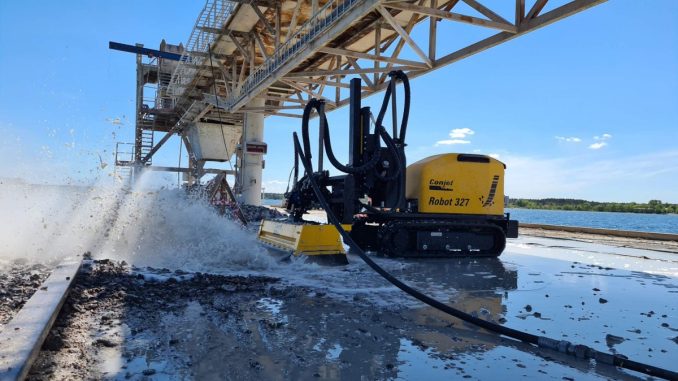
Selective concrete removal is one of the most critical phases in bridge and dam rehabilitation. Aging infrastructure requires precision, consistency, and structural protection during repair work, especially when reinforcing steel must remain intact. Hydrodemolition robots have emerged as a reliable solution for these demands, using high-pressure water to remove deteriorated concrete without damaging sound material. Their growing adoption across transportation and water infrastructure projects reflects a broader shift toward safer, more controlled, and more sustainable concrete removal methods.
As owners and contractors face stricter performance requirements and tighter shutdown windows, many are turning to automated hydrodemolition systems to improve removal accuracy and jobsite efficiency while minimizing long-term structural risk.
Selective Removal for Critical Structures
Bridges and dams present unique challenges that conventional mechanical methods often struggle to address. These structures typically contain dense reinforcement, complex geometries, and load-bearing elements that must remain undisturbed during repairs. Selective concrete removal focuses on eliminating only weakened or contaminated concrete while preserving the integrity of the surrounding structure.
Hydrodemolition uses ultra-high-pressure water jets to exploit microcracks and material weaknesses within deteriorated concrete. Because the process follows the natural fracture paths of the material, sound concrete remains intact. This makes the method especially effective for bridge decks, pier caps, spillways, and dam faces where uniform depth control is essential.
How Hydrodemolition Robots Work
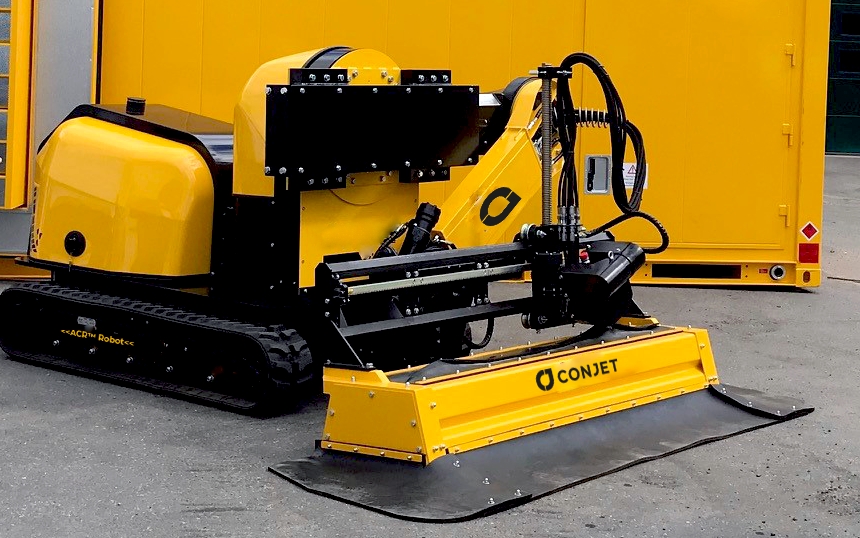
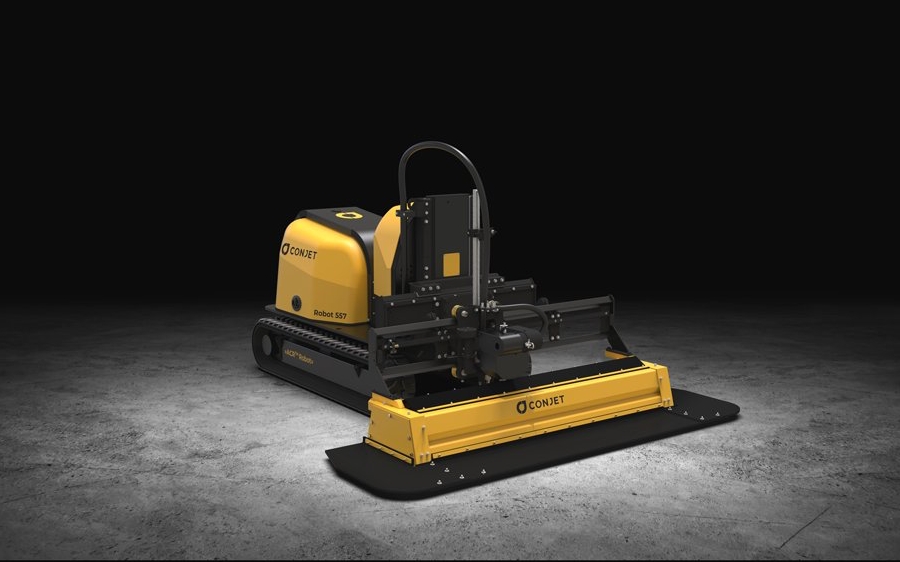
Robotic hydrodemolition systems consist of a remotely operated carrier, a programmable cutting head, and a high-pressure pumping unit. Water pressures commonly range from 20,000 to over 40,000 psi depending on application requirements and material conditions. The robotic carrier moves the cutting head across the surface in controlled passes, maintaining consistent standoff distance and removal depth.
Automation allows operators to define precise removal patterns, depths, and speeds before work begins. Once programmed, the robot executes the plan repeatedly with minimal variation. This consistency is difficult to achieve with handheld or mechanical tools, particularly over large surface areas common on bridge decks and dam structures.
Protection of Reinforcement and Substrate
One of the most widely documented benefits of hydrodemolition is its ability to clean and preserve reinforcing steel. Unlike jackhammers or breakers, water jets remove concrete without inducing vibration or impact stress. As deteriorated material is stripped away, reinforcing bars are exposed, cleaned, and left free of microfractures.
Preserving reinforcement condition is essential for long-term repair performance. Clean steel surfaces improve bond strength with repair materials and reduce the likelihood of future delamination. For dam spillways and bridge decks exposed to constant moisture, this advantage is particularly significant.
Advantages Over Mechanical Concrete Removal
Mechanical concrete removal methods rely on impact energy, which can introduce microcracking into surrounding concrete. These cracks may not be visible during construction but can compromise durability over time. Hydrodemolition avoids this issue by eliminating mechanical shock entirely.
Noise and vibration reduction is another key benefit. Many bridge and dam projects occur near active roadways, waterways, or populated areas. Hydrodemolition robots generate significantly less noise than pneumatic breakers and produce no vibration transmission through the structure. This helps contractors comply with environmental and operational restrictions without sacrificing productivity.
Improved Worker Safety and Site Control
Robotic operation allows workers to remain at a safe distance from the removal zone. Operators control the process remotely, reducing exposure to flying debris, noise, and repetitive strain injuries. Safety improvements are especially valuable on elevated bridge decks or confined dam galleries where access is limited.
Jobsite control also improves through automation. Consistent removal depths reduce over-removal, material waste, and rework. The result is a more predictable workflow that aligns well with tight rehabilitation schedules and phased construction plans.
Applications in Bridge Rehabilitation
Bridge decks are among the most common applications for robotic hydrodemolition. Chloride contamination, freeze-thaw damage, and corrosion often affect the top layers of concrete while deeper structural components remain sound. Hydrodemolition allows contractors to remove damaged concrete to a specified depth without weakening load-bearing elements.
Pier caps, abutments, and barrier walls also benefit from selective removal. Complex shapes and varying thicknesses can be addressed through programmable passes, ensuring uniform preparation before repair overlays or protective coatings are applied.
Applications in Dam Repair and Maintenance
Dams require careful material removal due to their massive scale and constant exposure to hydraulic forces. Spillways, stilling basins, and intake structures often suffer from cavitation damage and surface erosion. Hydrodemolition robots can remove compromised concrete while maintaining smooth, well-profiled surfaces for repair materials.
Because water collection and treatment systems are typically required during hydrodemolition, the method integrates well with dam site environmental controls. Captured water can be filtered and reused, reducing contamination risks in sensitive waterways.
Surface Preparation and Bond Performance
Beyond removal, hydrodemolition creates an ideal surface profile for bonding. The process leaves a rough, irregular texture that enhances mechanical interlock between existing concrete and repair materials. This surface condition supports longer-lasting repairs and reduces the likelihood of delamination under cyclic loading.
For bridges and dams subjected to traffic loads, thermal movement, and water pressure, improved bond performance is critical to extending service life.
Productivity and Project Efficiency
While hydrodemolition may require higher upfront equipment investment, productivity gains often offset initial costs. Automated systems can operate continuously with minimal downtime, delivering consistent removal rates across large areas. Reduced rework, faster repair cycles, and lower labor demands contribute to improved overall project economics.
Contractors working on large-scale infrastructure projects increasingly rely on robotic concrete removal solutions to meet performance specifications while maintaining schedule certainty. As rehabilitation volumes increase globally, efficiency advantages continue to drive adoption.
Environmental and Sustainability Considerations
Hydrodemolition aligns well with sustainability goals in infrastructure rehabilitation. Reduced vibration and dust improve air quality on site. Water used during the process can be captured, treated, and reused, limiting environmental discharge. Selective removal also preserves more of the existing structure, reducing material consumption and demolition waste.
These factors make hydrodemolition particularly attractive for publicly funded bridge and dam projects where environmental compliance and lifecycle performance are closely scrutinized.
The Future of Selective Concrete Removal
As infrastructure continues to age, demand for precise, repeatable, and low-impact repair methods will grow. Advances in automation, remote monitoring, and data integration are expected to further enhance hydrodemolition performance. Robotic systems are likely to play an increasingly central role in bridge and dam rehabilitation strategies worldwide.
For contractors and asset owners seeking reliable outcomes, high-precision hydrodemolition technology represents a proven path toward safer operations, longer-lasting repairs, and improved lifecycle value.