














Modern construction projects increasingly demand precision, control, and efficiency when working in rock and reinforced material environments. Excavator attachments play a critical role in meeting those demands, especially in urban construction, tunneling, quarrying, and demolition settings where traditional blasting or large breakers may not be suitable. Among the most widely used precision attachments are drum cutters and pulverizers, each offering distinct advantages depending on material type, project constraints, and desired output. Understanding how these tools work and when to use them is essential for contractors looking to improve productivity while maintaining site safety and control.
Understanding Drum Cutters in Excavation Work
How Drum Cutters Operate
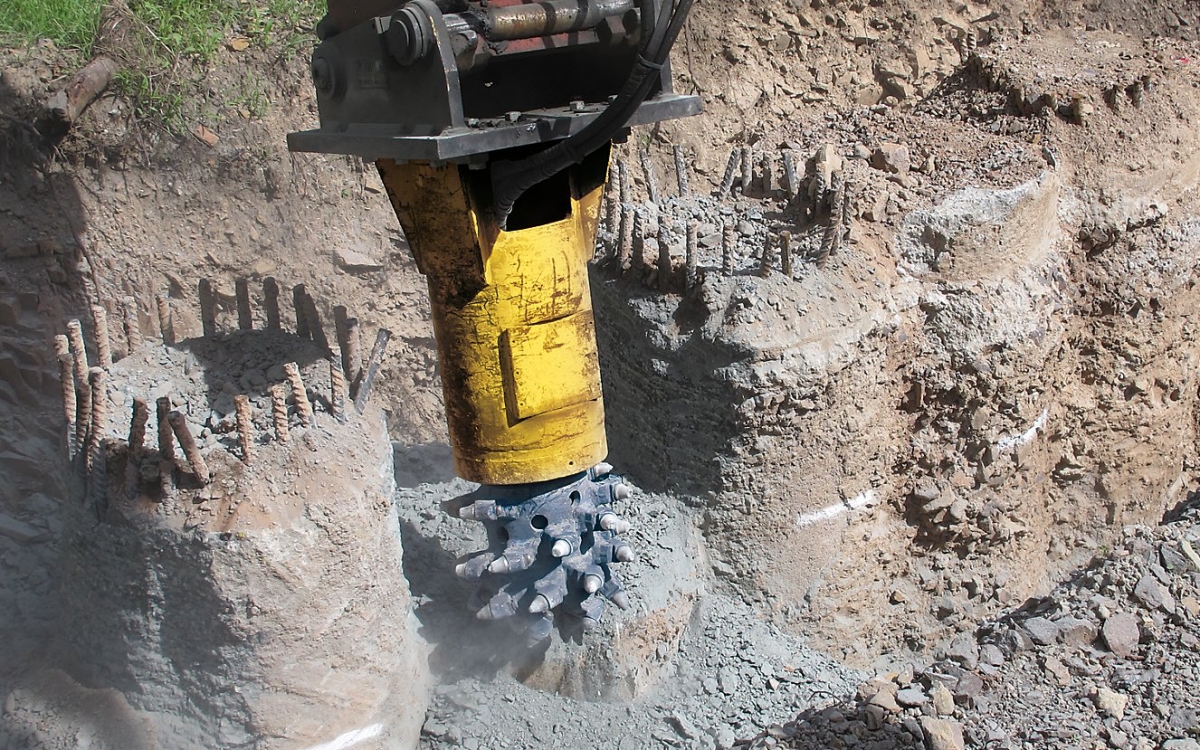
Drum cutters are hydraulic attachments equipped with rotating drums fitted with picks or teeth that mechanically cut into rock, concrete, or frozen ground. Mounted to excavators, these attachments grind material through continuous rotation rather than impact force. This cutting action allows operators to remove material in a controlled and predictable manner, making drum cutters particularly useful in applications where vibration and noise must be minimized.
Unlike percussive tools, drum cutters rely on torque and consistent contact with the surface. This operating principle enables precise profiling, trenching, and scaling work, especially in confined spaces or near existing structures. The controlled nature of drum cutting also reduces the risk of overbreak, which can be costly in both time and material remediation.
Common Applications for Drum Cutters
Drum cutters are frequently used in tunneling, trench excavation, foundation preparation, and underwater construction. They are also well suited for quarry operations where selective material removal is required. In urban construction, drum cutters are often chosen because they generate lower vibration levels compared to hydraulic breakers, helping contractors comply with strict environmental and structural regulations.
For projects requiring consistent material sizing or smooth excavation surfaces, many contractors rely on specialized excavation attachments designed for precision cutting and profiling, particularly when working with hard rock formations or reinforced concrete sections.
Pulverizers and Their Role in Material Processing
How Excavator Pulverizers Work
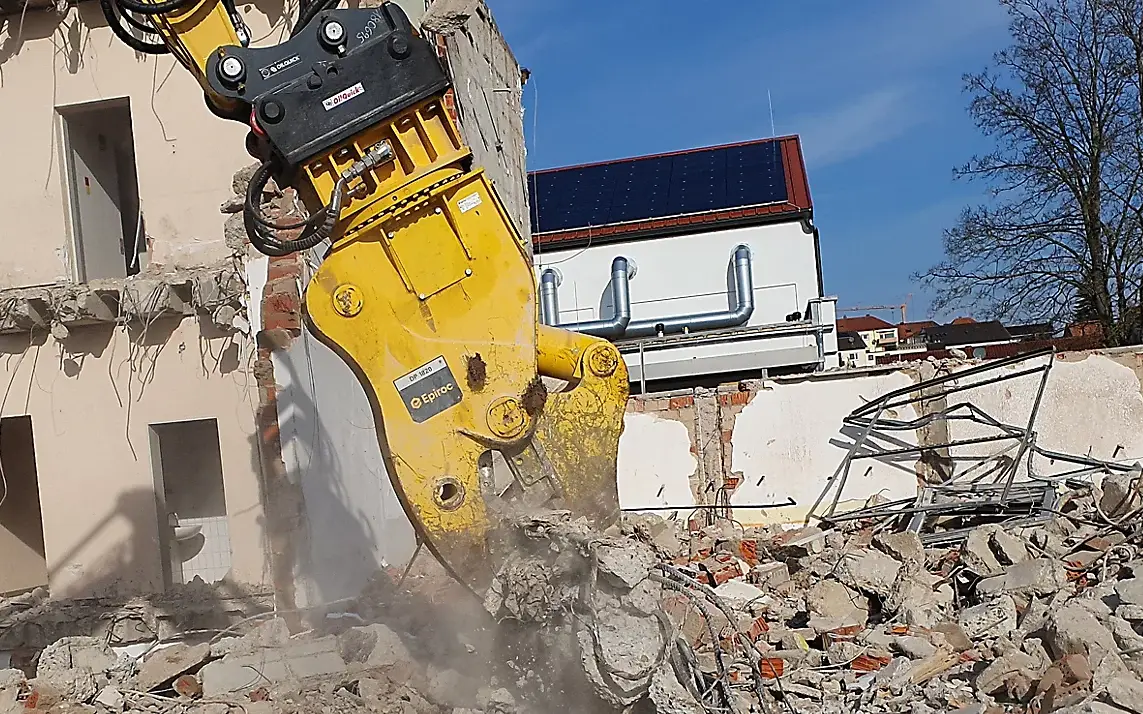
Pulverizers are attachments designed to crush and separate materials, most commonly concrete and reinforced concrete. They typically feature a fixed lower jaw and a movable upper jaw powered by a hydraulic cylinder. As material is compressed between the jaws, concrete is fractured while embedded steel reinforcement is exposed for removal.
Unlike drum cutters, pulverizers focus less on cutting and more on crushing force. This makes them ideal for secondary demolition and material recycling tasks. By breaking concrete into manageable sizes and freeing rebar, pulverizers support efficient on-site material handling and downstream recycling processes.
Primary Uses in Demolition Projects
Pulverizers are widely used in building demolition, bridge dismantling, and infrastructure rehabilitation. Their ability to process material directly at the demolition site reduces the need for additional handling equipment and off-site crushing operations. This can significantly lower transportation costs and improve overall project efficiency.
In demolition workflows, pulverizers are often used after primary demolition tools have brought down structures. They excel at reducing large concrete sections into smaller, transportable pieces while preparing steel for separation and recycling.
Comparing Drum Cutters and Pulverizers for Jobsite Needs
Precision Versus Crushing Power
The key distinction between drum cutters and pulverizers lies in their function. Drum cutters offer precision and controlled material removal, making them ideal for excavation and surface preparation tasks. Pulverizers, on the other hand, provide high crushing force suited for breaking down already loosened or demolished material.
Choosing between the two depends largely on whether the job requires cutting into intact rock or concrete, or processing material that has already been separated from its original structure. In many complex projects, contractors may use both attachments at different stages of the workflow.
Material Type and Project Constraints
Material hardness, reinforcement content, and site limitations all influence attachment selection. Drum cutters perform well on hard rock, frozen ground, and reinforced concrete where precision is required. Pulverizers are better suited for concrete demolition where steel separation and volume reduction are the primary goals.
Noise, vibration, and dust control are also important considerations. Drum cutters typically produce lower vibration levels, which can be critical in sensitive environments. Pulverizers, while powerful, may generate higher impact forces depending on application and technique.
Selecting the Right Attachment for Your Excavator
Excavator Size and Hydraulic Capacity
Proper attachment selection must account for excavator size, operating weight, and hydraulic output. Both drum cutters and pulverizers require sufficient hydraulic flow and pressure to operate efficiently. Using an attachment that exceeds the excavator’s capacity can lead to reduced performance, increased wear, and potential equipment damage.
Manufacturers provide compatibility guidelines based on excavator class, which should always be followed. Matching the attachment to the machine ensures optimal performance and extends service life for both components.
Long-Term Productivity and Maintenance Considerations
Maintenance requirements differ between attachment types. Drum cutters involve wear parts such as picks or teeth that require periodic replacement based on material hardness and operating conditions. Pulverizers also experience jaw wear and hydraulic component stress, particularly during heavy demolition work.
Contractors evaluating attachment investments should consider not only upfront cost but also long-term maintenance, downtime, and productivity gains. Well-selected attachments can significantly improve jobsite efficiency and reduce overall operating costs when matched correctly to application demands.
